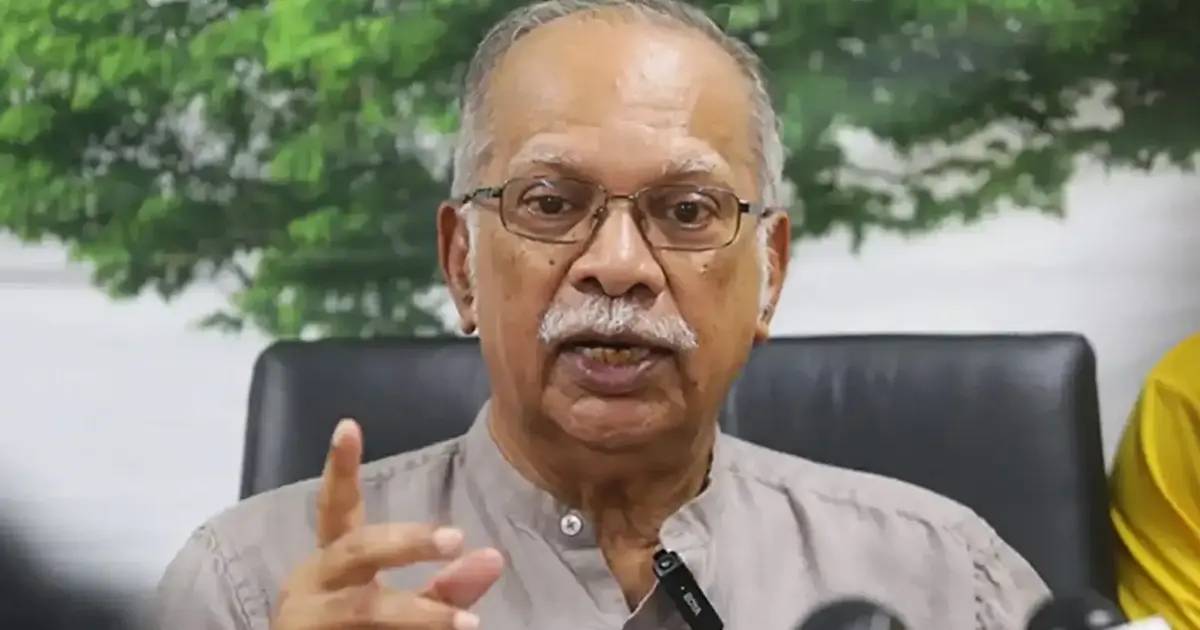
The Perikatan Nasional opposition coalition is struggling to resolve deepening fractures within its ranks, with senior political figures now openly questioning whether recent emergency sessions are addressing the coalition's most pressing challenge. Urimai chairman Ramasamy has raised concerns that the coalition's leadership is failing to tackle the core issue threatening its cohesion: the deteriorating relationship between Bersatu and PAS, and what Bersatu's future role should be if tensions continue to mount.
Ramasamy's critique suggests that yesterday's emergency meeting, convened to address coalition-wide concerns, missed a critical opportunity to confront the fundamental question of whether Bersatu can continue functioning within the PN framework given the widening rift separating it from PAS. The tension between these two significant components of the opposition coalition has become increasingly visible in recent weeks, with disagreements over policy direction and coalition strategy creating an atmosphere of mistrust and uncertainty among members.
The Perikatan Nasional coalition, which includes Bersatu, PAS, and smaller partners, was constructed as a unified alternative to the ruling government. However, the relationship between Bersatu and PAS—two pillars intended to provide complementary political support—has deteriorated noticeably. These divisions have exposed structural weaknesses in how the coalition manages internal disputes and makes collective decisions, raising questions about whether it can function effectively as a cohesive political force.
For Malaysian political observers, the instability within Perikatan Nasional carries broader implications for the opposition landscape. Unlike coalitions built on explicit ideological alignment or formal power-sharing agreements with clear mechanisms for dispute resolution, PN appears vulnerable to the kind of personality-driven conflicts and strategic disagreements that can fracture opposition movements. The failure to establish clear protocols for addressing such tensions suggests that future disputes may prove even more damaging if left unresolved.
The situation is particularly consequential for Bersatu, the party founded by former Prime Minister Mahathir Mohamad. While Bersatu brought significant political capital to the coalition when it was formed, its position has arguably weakened relative to PAS, which has strengthened its organizational presence and electoral appeal in recent years. This shifting balance of power within the coalition may be partly driving the tensions that Ramasamy identifies as unaddressed by coalition leadership.
PAS, as the largest component by membership and organizational reach, may perceive itself as having less incentive to accommodate Bersatu's policy preferences or strategic direction. Conversely, Bersatu may feel marginalized within a coalition structure where it lacks the organizational machinery to match PAS's influence. These structural imbalances create the kind of winner-take-all dynamics that emergency meetings struggle to resolve if they avoid directly confronting the allocation of power and influence.
Ramasamy's intervention highlights a broader pattern visible in Malaysian opposition politics: the tendency for coalitions to form rapidly in response to electoral threats but to lack the institutional maturity needed to manage internal conflicts once formed. Without explicit mechanisms for power-sharing, dispute resolution, or strategic consensus-building, such coalitions often deteriorate as component parties pursue divergent interests. The emergency meeting's apparent avoidance of the Bersatu-PAS question suggests coalition leaders may lack either the political will or the structural tools to address fundamental disagreements.
The timeline for resolving this crisis remains uncertain, but the political costs of prolonging it are mounting. Voters evaluating whether to support the Perikatan Nasional coalition in future elections will be observing whether it can demonstrate internal cohesion and effective decision-making. A coalition perceived as internally dysfunctional risks losing electoral credibility, particularly among swing voters who might otherwise consider supporting the opposition.
For Bersatu specifically, the current ambiguity about its coalition status creates organizational uncertainty that could accelerate internal dissension or defections. Party members and leaders need clarity about whether the party has a viable long-term future within PN or whether alternative political arrangements should be contemplated. Extended periods of uncertainty typically benefit neither the party seeking clarity nor the coalition attempting to maintain stability.
The broader regional context also matters. Southeast Asian opposition coalitions have frequently struggled with the same coordination problems now visible in PN. Thailand's opposition movements, Indonesian coalition politics, and Philippine alliance dynamics all demonstrate how difficult it is to maintain multi-party coalitions without strong institutional frameworks. Malaysia's PN appears vulnerable to similar pressures unless leadership actively works to build more robust governance structures.
Ramasamy's call for the coalition to directly address Bersatu's future suggests that continued avoidance of this conversation will only deepen existing fractures. Coalition members need to engage in honest discussion about whether the Bersatu-PAS partnership remains viable, what adjustments to coalition structure might alleviate tensions, or whether the coalition requires fundamental restructuring. Postponing these conversations typically makes eventual resolution more difficult and acrimonious.
The stakes extend beyond coalition management into Malaysian electoral competition more broadly. An opposition coalition unable to manage internal disputes effectively cannot credibly present itself as a viable governing alternative. Whether Perikatan Nasional chooses to address Ramasamy's concerns directly will signal whether the coalition's leadership recognizes the urgency of this moment and possesses the political maturity to confront uncomfortable questions about its future.