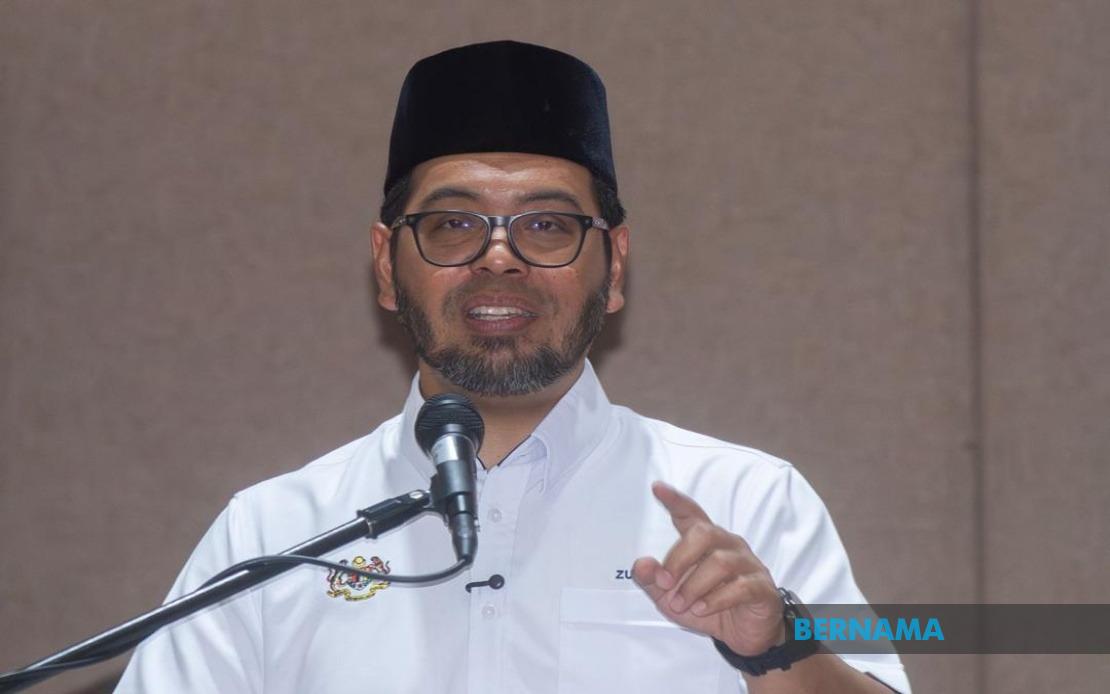
Minister in the Prime Minister's Department (Religious Affairs) Dr Zulkifli Hasan has sounded a stark warning about the consequences of unregistered marriages in Malaysia, particularly for vulnerable children whose fundamental rights and welfare hang in the balance. Speaking in Labuan while launching the 2026 Federal Territories Syariah Law Literacy Programme, Dr Zulkifli underscored how couples who have lived as spouses for decades without formalising their unions through proper legal channels expose their families to cascading problems that ripple across education, healthcare, citizenship and financial security.
The minister's intervention addresses a persistent reality in parts of Malaysia: some couples continue to marry outside their registered areas or through unauthorised marriage registrars, circumventing the requirements set out in the Islamic Family Law (Federal Territories) Act 1984 (Act 303). This pattern represents more than mere administrative negligence. Dr Zulkifli stressed that the ramifications of postponing or avoiding marriage registration are substantial and long-lasting, affecting multiple dimensions of family life and individual welfare. The issue has become significant enough to warrant dedicated government action through literacy programmes and targeted outreach.
Children emerge as the primary victims of unregistered marriages, facing compounded disadvantages that can fundamentally alter their life trajectories. Without proper marriage registration, obtaining birth certificates becomes an unnecessarily complicated process—a document that serves as the foundation for all subsequent identification and legal recognition. This cascading barrier then prevents access to formal education systems, as schools typically require certified birth documentation. Healthcare facilities similarly struggle to provide services without proper identity verification, leaving children vulnerable to gaps in preventive care and medical treatment. Beyond these practical obstacles, the legal ambiguity surrounding a child's lineage creates deeper identity and citizenship complications that can haunt them into adulthood.
The inheritance and financial dimensions of unregistered marriages present another layer of vulnerability that exposes families to prolonged conflict. When a death occurs without clear legal marriage recognition, disputes over inheritance ('faraid') become inevitable and frequently bitter, as surviving family members lack statutory clarity regarding succession rights and asset distribution. Wives in such arrangements face particular hardship, unable to claim maintenance ('nafkah') or severance payments ('mutaah') to which they would legally be entitled. The absence of official documentation transforms what should be straightforward financial protections into murky legal territory, leaving widows and children without recourse when family breadwinners pass away.
Dr Zulkifli's remarks also highlight concerns about paternity and lineage recognition, challenges that extend beyond mere administrative paperwork. When marriages lack official registration, questions about the legitimacy of children's lineage can arise, creating psychological and social stigma alongside legal complications. This ambiguity undermines the entire Islamic legal framework designed to protect family relationships and establish clear rights of inheritance, guardianship and succession. The minister framed these protections not as onerous bureaucratic hurdles but as essential safeguards that prevent family disputes and secure generational welfare.
The Federal Territories government has responded with a proactive and compassionate approach rather than punitive measures. Dr Zulkifli emphasised that authorities aim to facilitate resolution rather than assign blame, indicating a recognition that many unregistered marriages stem from misunderstanding, logistical barriers or circumstances beyond couples' immediate control. The 2026 Syariah Law Literacy Programme represents this shift in strategy, deploying interactive counters and offering direct assistance to residents grappling with outstanding registration issues or confusion about marriage law requirements. This collaborative framework enlists the Federal Territories Islamic Religious Department (JAWI), the Federal Territories Islamic Religious Council (MAIWP), Federal Territories Syariah Court, the Legal Aid Department, and other government and non-governmental bodies.
The breadth of institutional cooperation underscores how marriage registration failure permeates multiple sectors of governance and social welfare. Tabung Haji, the pilgrimage savings organisation, and Yayasan Pembangunan Ekonomi Islam Malaysia (YAPEIM) join traditional religious and judicial authorities in the initiative, recognising that financial institutions and developmental bodies must also respond to marriage registration gaps. The involvement of the Legal Aid Department signifies an understanding that many couples requiring assistance lack resources to navigate complex legal processes independently. This multi-agency approach reflects mounting recognition that marriage registration is not merely a religious matter but a comprehensive social infrastructure issue.
For Malaysian families, particularly those in the Federal Territories, the minister's intervention carries immediate practical implications. Couples with unresolved marriage registration issues now have clear pathways toward regularisation, with dedicated government support designed to minimise bureaucratic friction. Dr Zulkifli's messaging reframes Islamic family law compliance as protective rather than restrictive, positioning syariah requirements as frameworks ensuring security rather than imposing burdens. This rhetorical shift acknowledges that compliance has often been framed defensively by authorities, potentially discouraging voluntary registration among populations already deterred by perceived complexity.
The broader Southeast Asian context amplifies the significance of Malaysia's marriage registration concerns. Across the region, informal or unregistered unions remain widespread, particularly in communities where access to formal legal systems is limited or where traditional practices predate modern state structures. Malaysia's explicit government action signals a regional model for addressing this challenge through education, accessibility and institutional coordination rather than enforcement alone. The programme's emphasis on literacy suggests recognition that many couples simply lack knowledge of registration requirements and consequences, representing a surmountable barrier rather than persistent resistance.
Children's vulnerability remains central to the policy rationale. Birth certificates, educational access and healthcare provision represent foundational needs for child development and social mobility. When marriage registration failures obstruct these basic entitlements, entire cohorts of Malaysian children face disadvantages that compound across their lifespans. This generates long-term costs for society through reduced human capital development, increased health disparities and perpetuated cycles of legal and social marginalisation. Dr Zulkifli's emphasis on children's interests reflects both moral commitment to vulnerable populations and pragmatic recognition of developmental economics.
The Federal Territories Syariah Law Literacy Programme thus addresses not merely technical registration deficiencies but fundamental questions of family stability, child welfare and social cohesion. By clarifying marriage law requirements, providing direct assistance and removing perceived barriers to registration, the initiative attempts to align family structures with legal frameworks that protect all members. Success depends partly on sustained awareness campaigns and continuing ease of access to registration services, requiring commitment beyond the initial programme launch. The involvement of multiple stakeholders suggests institutional understanding that marriage registration success demands coordinated effort across religious, judicial, educational and social service sectors.

