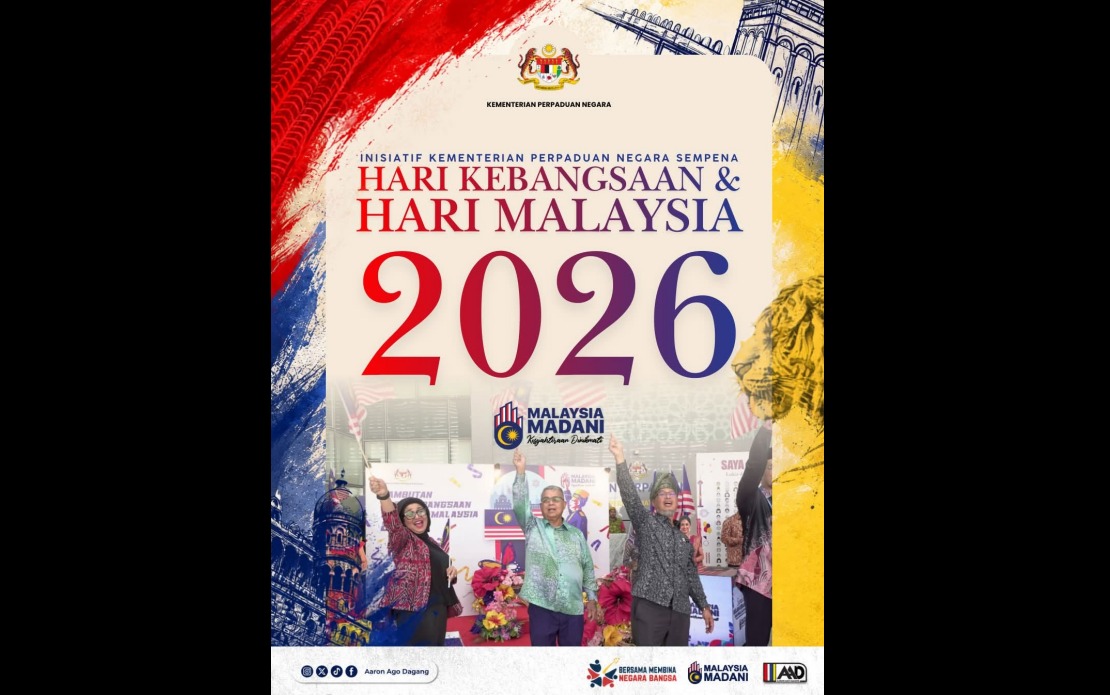
The National Unity Ministry has unveiled an ambitious slate of eleven programmes designed to deepen Malaysians' connection to their nation during the 2026 National Day and Malaysia Day commemorations. The initiatives, announced by Minister Datuk Aaron Ago Dagang, represent a comprehensive approach to nation-building that weaves together themes of history, heritage, and civic pride. By bundling these activities around two key national moments, the ministry aims to create sustained momentum for unity-building across the country.
The 2026 National Unity Integration Movement stands as the cornerstone initiative, functioning as an overarching framework within which the other programmes will operate. This movement is intended to serve as a coordinating mechanism that brings together various stakeholder groups, from government agencies to civil society organisations and the private sector. By positioning unity as an integrative rather than divisive concept, the ministry signals an understanding that national identity in a multicultural democracy requires active, deliberate effort to maintain and strengthen.
Among the specific programmes, Malaysia's Merdeka Children Celebration targets younger generations directly, recognising that patriotic sentiment and national consciousness must be cultivated early. This initiative acknowledges that children and young people represent the cornerstone of long-term national cohesion. By creating dedicated spaces for youth to engage with national themes through age-appropriate activities, the ministry hopes to foster emotional attachments to Malaysian identity that persist into adulthood.
The Exhibition on Independence offers an educational component that presents the factual and emotional narrative of Malaysia's journey toward self-governance. Such exhibitions serve multiple purposes: they educate those unfamiliar with the nation's founding struggles, they reinforce existing knowledge among citizens, and they provide tangible spaces where people can reflect on shared historical experience. The educational value extends beyond mere information transfer, as exhibitions create opportunities for intergenerational dialogue and cultural exchange.
A dedicated programme honouring Tun Abdul Razak, Malaysia's first Prime Minister, recognises the significance of individual leadership in shaping the nation's early trajectory. By highlighting this foundational figure, the ministry anchors contemporary national identity in proven historical examples of statesmanship and vision. This personalisation of history makes abstract concepts of nationhood more concrete and relatable to ordinary citizens who can identify with individual achievement and dedication to public service.
The Pesta Bola Merdeka Exhibition taps into the powerful appeal of sports as a unifying force. Football, or bola, holds particular cultural resonance across Malaysian society, transcending ethnic and religious boundaries through shared passion for the game. By incorporating sports heritage into the broader unity agenda, the ministry recognises that patriotism and national identity are not purely intellectual or ceremonial matters but are lived through popular culture and community participation.
Night at the Museum represents an innovative approach to cultural engagement, transforming museum spaces into dynamic venues for evening events that attract broader audiences than traditional daytime visits. This initiative reflects understanding that people engage with cultural content in diverse ways and at varied times. By extending access to museums during evening hours and potentially combining cultural content with entertainment or social elements, the programme makes engagement with national heritage more accessible and appealing to working adults and families.
The Rukun Negara Oratory Competition directly addresses the civic component of national unity by encouraging young people to articulate their understanding of the five national principles. Public speaking competitions serve dual purposes: they develop communication skills while simultaneously requiring participants to deeply internalise and articulate the foundational values of the nation. The competitive element also makes participation more engaging than passive reception of information.
Minister Datuk Aaron Ago Dagang emphasised that these initiatives align with a broader nation-building aspiration centred on strengthening national identity and fostering a genuine sense of belonging among all Malaysians. This framing is significant because it positions unity work as affirmative rather than defensive—building something positive rather than merely reacting to threats or divisions. The ministry's commitment to embracing Malaysia's diversity of ethnicities, religions, cultures, and regions within this nation-building framework suggests an inclusive approach rather than an assimilationist one.
The timing around 2026 National Day and Malaysia Day provides strategic clustering of these initiatives, allowing the ministry to concentrate resources and public attention during moments when Malaysians are already inclined toward reflection on national themes. These twin celebrations, falling within months of each other, offer extended opportunities for engagement across multiple platforms and settings. For Malaysian readers, the relevance lies in recognising that these programmes will likely touch communities nationwide, from urban centres to more remote areas, depending on implementation strategy.
From a Southeast Asian perspective, Malaysia's emphasis on deliberate unity-building through cultural and educational programmes reflects regional patterns seen in other diverse nations. The approach acknowledges that national cohesion requires continuous investment and cannot be taken as given, even in relatively stable democracies. The ministry's framework—emphasising history, heritage, and shared values rather than imposed uniformity—offers a model potentially relevant to other multicultural societies navigating similar tensions.
The success of these eleven initiatives will ultimately depend on implementation quality and resource allocation. Public engagement will hinge on how effectively the ministry communicates the relevance of these programmes to daily life and demonstrates tangible benefits from participation. The coming months will reveal whether these well-intentioned programmes translate into genuine strengthening of patriotic sentiment and national identity, or whether they remain largely ceremonial exercises that fail to resonate beyond already-committed audiences.

