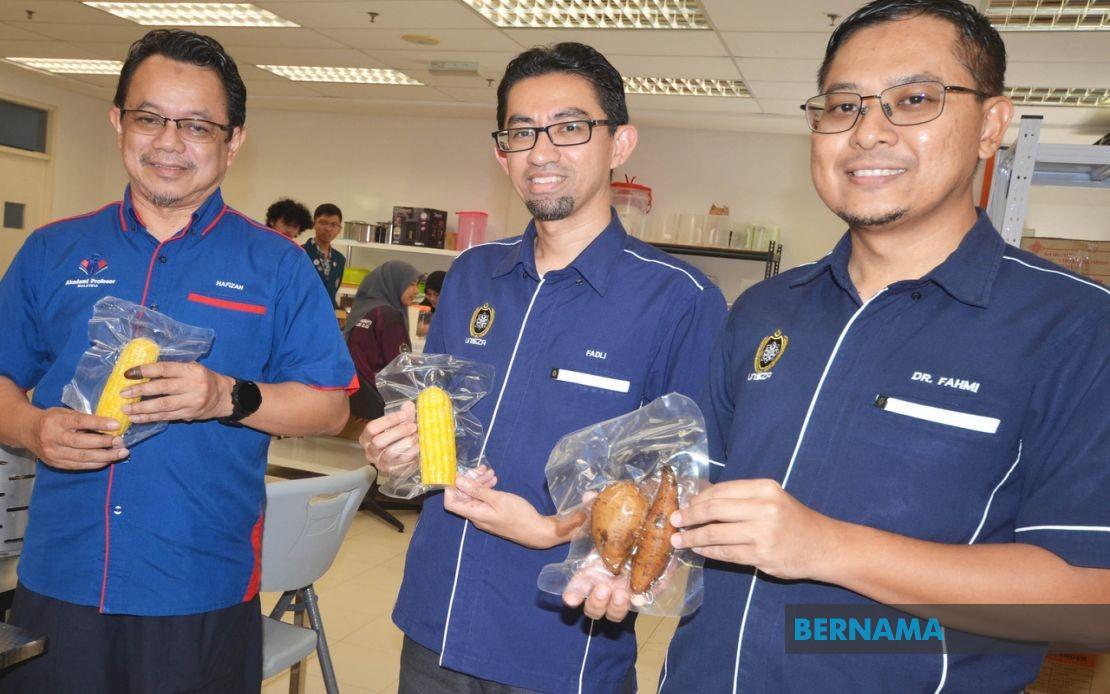
Universiti Sultan Zainal Abidin's (UniSZA) newly launched Dapur Komuniti represents a tangible response to a persistent challenge facing rural farmers across Malaysia's East Coast: the inability to profitably market fresh agricultural produce. Operating in tandem with the Sustainable Community Farm at UniSZA's Besut campus, the initiative functions as both a food innovation laboratory and an economic multiplier for one of Terengganu's agricultural heartlands, where traditional farming practices have long struggled against structural disadvantages in supply chains and market access.
The problem that prompted UniSZA's intervention is both straightforward and deeply entrenched in Malaysia's agricultural economics. According to Prof Dr Hafizan Juahir, dean of the faculty overseeing the initiative, farmers in Besut face a crushing squeeze between limited market access and powerful intermediaries who dictate terms. Sweet potatoes, a staple crop in the region, exemplify this predicament. Farmers in Besut have historically received less than RM2 per kilogramme for their output, yet identical produce commands significantly higher prices when it reaches consumers in Kuantan and major urban centres. This substantial price differential—sometimes doubling or tripling the farm-gate price—reflects not premium quality but rather the compounding effects of logistical friction and farmers' disconnection from modern retail channels.
The digital divide compounds these traditional market failures. Many Besut farmers lack the technical literacy or infrastructure to leverage online platforms for direct-to-consumer sales, leaving them entirely dependent on networks of middlemen who capture disproportionate value. When produce cannot be shifted through conventional channels, it spoils in warehouses or fields, representing both a financial catastrophe for farming households and a systemic waste of resources in a region where agricultural development remains critical to rural livelihoods. This cycle perpetuates poverty and discourages younger generations from entering farming, accelerating depopulation of rural areas.
UniSZA's response reframes unsold or lower-grade produce not as waste but as raw material for value-addition. The Dapur Komuniti converts surplus agricultural output into shelf-stable products with extended commercial viability—potentially preserving produce for more than a year. An exemplary case is the development of pickled Terengganu Sweet Melon, manufactured from melons of insufficient visual quality for fresh market sale. By processing these otherwise-discarded fruits into a distinctive regional product, the university simultaneously reduces agricultural waste, creates additional revenue for farmers, and potentially builds export-quality branded products that carry the Terengganu provenance.
This value-addition strategy addresses multiple failure points in the current system simultaneously. Rather than allowing farm surpluses to evaporate during seasonal gluts, the kitchen facility transforms them into stable-value commodities. The economics are compelling: a RM2 per kilogramme sweet potato becomes a premium product with substantially higher per-unit returns once processed. More importantly, this shifts farmer dependency away from spotty market demand for fresh produce toward consistent supply relationships with a processing facility, providing income stability that encourages continued agricultural investment and rural resilience.
The initiative extends beyond produce transformation into human capital development. UniSZA is establishing the Dapur Komuniti as an accredited training centre for the Malaysian Skills Certificate (SKM) in food processing, in coordination with the Department of Skills Development. This institutional positioning means that university students can graduate simultaneously with bachelor's degrees and industry-recognised SKM Level 3 qualifications, making them immediately deployable into food processing and value-added agriculture sectors. The dual credential system bridges a persistent gap between academic credentials and employer requirements, particularly acute in technical food production roles.
The training mission extends deliberately beyond the traditional university cohort. UniSZA explicitly targets Malaysian Armed Forces veterans and other community members who require income-generating skills for economic self-sufficiency post-transition. This targeting reflects an understanding that rural economies require multiple entry points for skill acquisition and entrepreneurship, not just formal tertiary education. A retired serviceperson equipped with food processing certification could establish a small-scale operation, processing local produce for regional markets or e-commerce platforms—creating both personal income and local employment.
For Malaysian policymakers and agricultural development agencies, the UniSZA model offers a scalable template for addressing chronic oversupply and farmer impoverishment. Rather than subsidising production or managing surpluses through destruction, the approach invests in infrastructure and training that enable value-capture at farm level. This model aligns with broader Malaysian development objectives around rural diversification, youth employment, and food security. If replicated across other East Coast agricultural zones—whether in rice, coconut, tropical fruits, or aquaculture—such initiatives could materially improve rural household incomes whilst reducing food waste and enhancing Malaysia's agri-food value chains.
The initiative also signals shifting institutional engagement between universities and rural communities. Rather than treating rural areas as research laboratories, UniSZA positions itself as an active partner in economic problem-solving. This engagement model strengthens community trust in higher education institutions and can position universities as engines of regional development rather than extractive knowledge producers. For communities, it means expertise and capital deployment directly toward challenges they face daily.
Looking forward, the success of Dapur Komuniti hinges on several factors beyond its current operations. Market development for pickled melons and other processed products requires consistent quality, effective branding, and distribution strategies reaching target consumers. The SKM accreditation pathway must translate into genuine employment outcomes or sustainable entrepreneurship, not merely credential accumulation. Supply relationships with Besut farmers must remain stable and remunerative, avoiding scenarios where processing facilities become just another intermediary extracting farmer surplus. If UniSZA sustains commitment to these dimensions, the Dapur Komuniti could evolve into a model influencing rural economic development strategies across Malaysian university systems and development frameworks.

