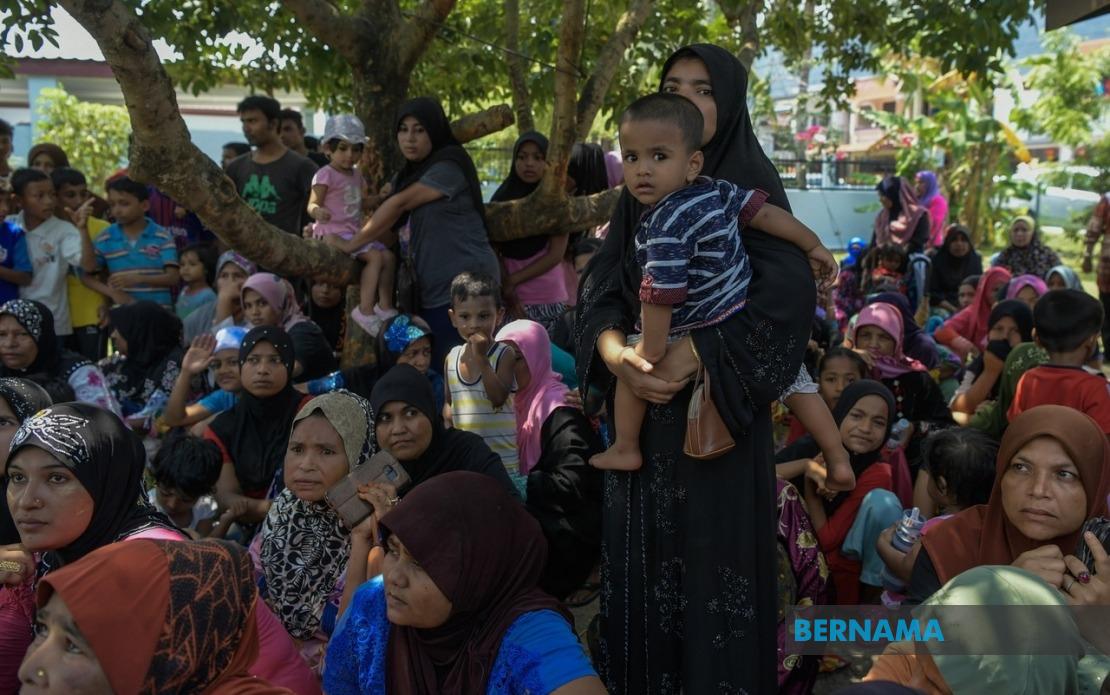
Malaysia's government has moved to dispel widespread misconceptions about refugee documentation, with Economy Minister Datuk Akmal Nasrullah Mohd Nasir emphasizing that UNHCR cards offer no protection from the country's legal framework. Speaking during the Global Supply Crisis Briefing on July 13, Akmal Nasrullah underscored that individuals holding such cards remain fully subject to Malaysian law enforcement and must face investigation and prosecution for any criminal offences they commit. The clarification comes amid growing public unease regarding the status and management of refugees within the country.
The minister's statement directly addresses a critical gap in public understanding about what refugee documentation actually represents. The UNHCR card, issued by the United Nations High Commissioner for Refugees, functions solely as recognition of a person's refugee status for international humanitarian purposes. It neither confers citizenship rights, nor does it create any exemption from national laws or law enforcement procedures. This distinction has become increasingly important as Malaysia grapples with managing a significant refugee population while maintaining public confidence in security and rule of law.
The government's clarification was prompted by presenting concerns raised during the National Economic Action Council (MTEN) meeting, which was chaired by Prime Minister Datuk Seri Anwar Ibrahim at Parliament. The Home Ministry (KDN) specifically brought forward issues concerning refugee management, with particular emphasis on the documentation system, its vulnerability to abuse, and the human trafficking networks that exploit gaps in enforcement. Officials recognised that public anxiety over these matters reflects legitimate security concerns that demand transparent governmental communication and robust administrative response.
In response to these challenges, the Immigration Department is actively rolling out the Refugee Registration Document (DPP) Programme, a comprehensive initiative designed to establish stronger control mechanisms. The programme incorporates biometric registration systems that create verifiable identity records, coupled with extensive background screening to identify security risks. This technological approach enables authorities to distinguish between genuine refugees and individuals who may be exploiting the system, a crucial capability given the involvement of organised smuggling and trafficking syndicates in refugee movements across Southeast Asia.
Enforcement operations are being intensified as part of a coordinated national response. Authorities plan to expand integrated operations specifically targeting human smuggling networks, human trafficking syndicates, document fraud, and illegal border crossings through unauthorised routes. These operations move beyond reactive policing to include advanced technological monitoring, with data analytics and surveillance systems deployed to identify emerging risks and support proactive enforcement action. The approach reflects recognition that managing refugee flows effectively requires both intelligence gathering and on-the-ground operational capability.
Resource allocation demonstrates the government's commitment to strengthening border and internal security infrastructure. The government has allocated RM1.2 billion across several agencies for projects directly related to border control and security enhancement. This substantial investment underscores the priority placed on preventing smuggling, trafficking, and illegal entry while simultaneously managing legitimate refugee flows. The scale of funding indicates that Malaysian authorities recognise refugee management as integral to national security architecture, not merely a humanitarian or immigration matter.
Border administration capacity is being expanded through acceleration of the Malaysian Border Control and Protection Agency's operational scope. This agency's expanded remit will streamline how Malaysia manages its borders, reducing coordination gaps and enabling faster response to emerging threats. Enhanced border management protects not only against security threats but also prevents the exploitation of refugees themselves, as stronger enforcement deters traffickers and smugglers from operating with impunity. For Malaysian citizens, more effective border control contributes directly to community safety.
The government's simultaneous focus on food security and manufacturing sector resilience reflects the interconnected nature of national challenges during this period. The same council meeting that addressed refugee management also discussed Malaysia's ability to maintain stable food supplies and sustain manufacturing competitiveness amid global supply chain disruptions. This broader policy context matters for understanding why refugee management receives attention: it forms part of a comprehensive national security and economic strategy rather than functioning as an isolated policy domain. Effective governance requires balancing multiple competing priorities within a single integrated framework.
For the broader Southeast Asian region, Malaysia's approach carries significance given the concentration of refugees in the region. Countries across Southeast Asia host hundreds of thousands of refugees and asylum-seekers, yet refugee management frameworks remain inconsistent and sometimes contradictory. Malaysia's emphasis on clarifying the limited scope of UNHCR protection, combined with investment in verification technology and enforcement capacity, potentially influences how other regional governments approach similar challenges. The approach balances the humanitarian dimension of refugee protection with legitimate state interests in security and rule of law.
The public communication strategy adopted by Akmal Nasrullah addresses a fundamental governance challenge: building and maintaining public confidence in refugee management systems. Misconceptions about UNHCR documentation can erode trust in government institutions and fuel anxiety within communities. By clearly explaining what refugee cards do and do not do, the government creates space for more informed public discourse. This matters particularly in Malaysia, where demographic diversity means that discussions of refugee policy inevitably intersect with broader concerns about immigration, integration, and community cohesion.
Looking forward, the effectiveness of Malaysia's refugee management framework will depend partly on implementation fidelity across multiple agencies. The DPP Programme, expanded border operations, and enhanced data analytics represent necessary infrastructure, but their impact relies on consistent application and adequate resourcing at all levels of government. Corruption or inconsistent enforcement would undermine the clarity that the Economy Minister sought to establish. Building institutional capacity to detect and prevent abuse of refugee documentation requires sustained attention and resources beyond the initial funding commitment.
The clarification that UNHCR cards confer no immunity from Malaysian law also sends an important signal to potential asylum-seekers themselves. Individuals considering irregular movement to Malaysia should understand that refugee status provides no special treatment under criminal law. This reality, when clearly communicated, may influence migration decisions. For those already in Malaysia, the government's message emphasises that their security depends on compliance with national laws regardless of their refugee status. This reinforces the principle that refugee protection operates within, not outside, the framework of national legal systems.

