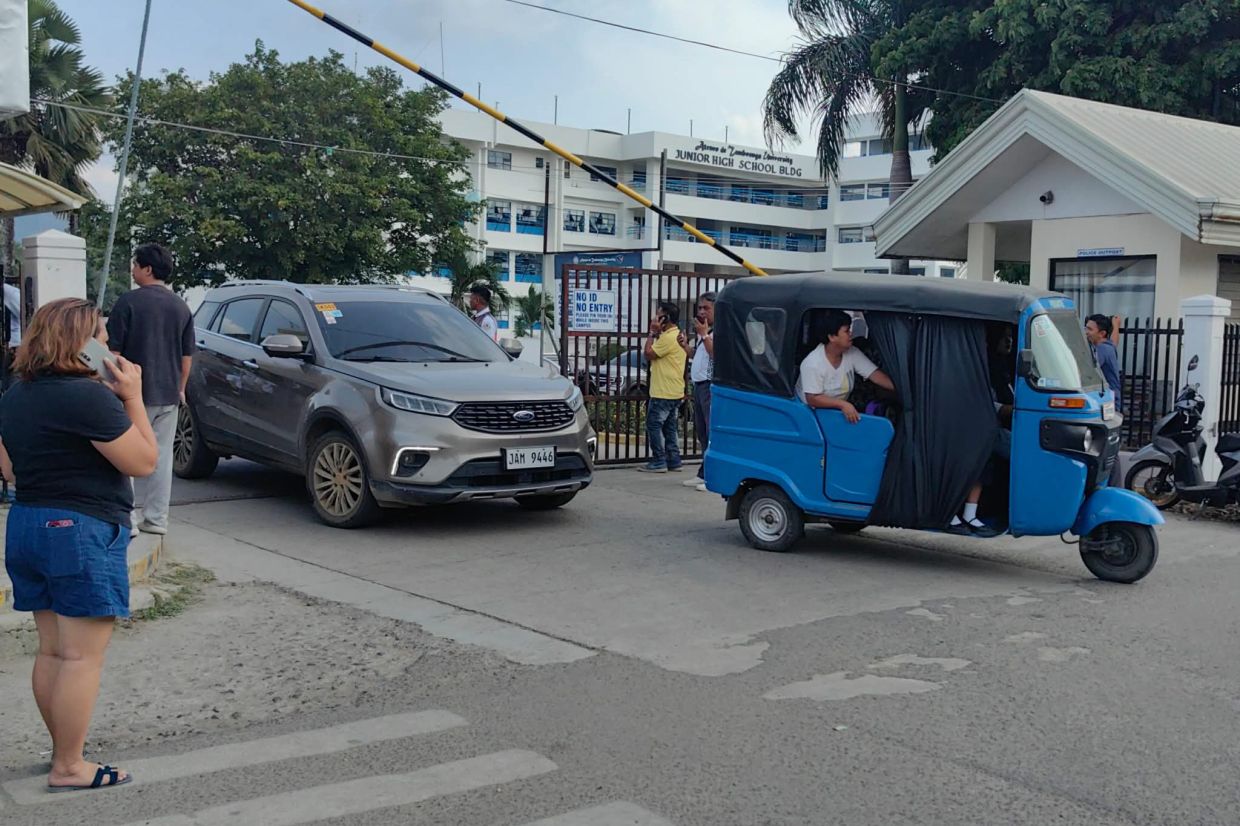
The Philippines faces an unfamiliar crisis. Within eight weeks, school shootings struck Tacloban in July and Zamboanga in August—incidents that historically have been rare in a nation where such mass casualty events were once viewed as distinctly American phenomena. Yet these two incidents have triggered a cascade of copycat threats, stabbings and weapons discoveries across campuses nationwide, prompting alarm amongst educators, policymakers and mental health professionals who recognise they are witnessing a fundamental shift in how violence manifests in Filipino society.
This emerging threat arrives in a country where firearm ownership is already widespread—the Philippines ranks among Southeast Asia's highest in gun prevalence—but where school-based shootings were never the vector through which that access translated into casualties. The sudden cluster of incidents has prompted soul-searching about what has changed, and the answers point to a convergence of cultural, psychological and technological factors that have created what specialists describe as a "perfect storm" of conditions enabling violence amongst schoolchildren.
The immediate policy response itself revealed the depth of official uncertainty. The Department of Education announced nationwide active shooter drills scheduled for August 25, a measure that seemed reasonable on its surface but was hastily cancelled after psychologists warned that simulating armed attacks in schools would likely retraumatise children already exposed to ongoing threats and natural disasters. This reversal highlighted a more fundamental problem: the absence of coherent institutional frameworks for understanding or responding to this novel form of crisis within Philippine contexts.
Senator Risa Hontiveros has emerged as a leading voice demanding accountability and structural reform. Her hearings into the shootings and nihilistic violent extremism have documented a troubling pattern and pointed toward an uncomfortable historical reality. Hontiveros and many experts have traced the cultural foundations of this violence to the six-year drug war conducted under former president Rodrigo Duterte, during which tens of thousands were killed with widespread impunity. That campaign, she argues, fundamentally altered how violence functions within Filipino political culture—transforming it from an aberration into an accepted instrument of governance and problem-solving. Duterte now faces trial at the International Criminal Court in The Hague on allegations of crimes against humanity stemming from those killings.
Sociologist Filomin Gutierrez of the University of the Philippines Diliman cautions against drawing mechanistic causal chains, yet acknowledges that the drug war created a broader cultural backdrop in which violence became normalised as a legitimate means of resolving problems. The psychological dimension is subtly but significantly different from direct causation. Psychologist Peejay Bengwasan, a board member of the Psychological Association of the Philippines, explains that prolonged exposure to political messaging that glorifies or justifies violence does not directly programme aggressive behaviour, but rather increases the probability that individuals will view aggressive acts as normalised, acceptable responses to grievance or distress. A child repeatedly immersed in a climate treating violence as routine solution-making begins internalising that framework—not because they have absorbed a conscious instruction, but because normalisation operates at the level of background assumption.
This cultural vulnerability has become especially dangerous when combined with the digital reality of contemporary Filipino adolescence. Government data reveals that 60 percent of Filipino children aged 10 to 17 possess internet access and are active users—a generation raised within digital spaces rather than encountering social media as an adult addition to primarily face-to-face lives. The Tacloban and Zamboanga shooters were 14, 15 and 14 years old respectively, all products of this digital nativity. Unlike older generations who developed offline social foundations before encountering online networks, Filipino teenagers today encounter strangers with radically different values and worldviews at an age when susceptibility to outside influence remains high and judgment about manipulation still developing.
Cybersecurity expert Angel Redoble's testimony to the Senate revealed the systematic operational methods through which extremist networks exploit these vulnerabilities. Recruiters identify lonely or socially isolated children on mainstream platforms—online games, social media forums—then migrate them toward private servers and encrypted messaging applications where trust-building can progressively shift toward isolation, coercion and psychological blackmail. Algorithmic targeting makes the process increasingly efficient. Within these closed groups, status accumulates through escalating demonstrations of commitment, with increasingly extreme rhetoric and behaviour earning standing within the hierarchy. This system culminates in what Redoble termed "status through brutality"—wherein the most extreme violent acts confer social standing and validation for individuals who experienced isolation and invisibility in their physical communities. By this logic, real-world violence becomes not merely an outlet for distress but an achievement worthy of celebration within the extremist subculture.
Police statistics provide concrete evidence of the scale. Authorities reported handling 74 cases involving nihilistic violent extremism and rescuing 42 minors, with 30 of those aged 15 or younger. Simultaneously, the authorities have identified troubling evidence of copycat dynamics, with social media posts glorifying the Tacloban shooters appearing within hours of the attack and footage of the Zamboanga incident continuing to circulate and be reposted, potentially inspiring further incidents through the visibility and notoriety these attacks achieve.
Yet the internet does not operate in a social vacuum. Gutierrez identifies a deeper paradox within Filipino society itself—one that complicates simplistic narratives about digital corruption of previously intact communities. The Philippines prides itself on familial closeness and strong communal bonds, and these remain genuine for many. However, this strength creates corresponding vulnerability for those who fall outside these networks. Individuals perceived as different, strange, problematic or weak experience profound isolation within a society where inclusion in tight social circles is the default expectation. The pathways through which marginalised individuals might integrate into mainstream community life become sealed off precisely because of how thoroughly bonded existing groups are. For such individuals, alternative subcultures and online extremist networks offering unconditional acceptance become attractive precisely because they provide what mainstream society withholds.
Bengwasan adds that this isolation intersects with trauma exposure endemic to the Philippine experience. Children here contend with typhoons, floods, earthquakes and ongoing societal violence at rates higher than most developed nations. Different children process such distress through different psychological pathways—some internalise it as anxiety or depression, while others manifest it through aggressive behaviour. Schools themselves constitute critical social worlds where adolescents learn whether they occupy positions of popularity, acceptance or invisibility within peer hierarchies. For those occupying the lowest rungs, the prospect of using spectacular public violence to overturn imposed identities and "write their own biography" becomes psychologically coherent, even seductive. The research on mass shooters in other contexts repeatedly identifies this dynamic—perpetrators seeking not merely to cause harm but to transform their social status from invisible or despised to infamous and consequential through singular acts of devastating violence.
Addressing this convergence demands intervention at multiple points simultaneously. Cultural shifts normalising violence require explicit political messaging rejecting such frameworks and modelling alternative problem-solving approaches. Digital vulnerabilities necessitate both algorithmic auditing to reduce exploitative targeting and education enabling adolescents to recognise recruitment and manipulation tactics. Critically, institutional capacity must expand dramatically—schools require trained counsellors, teachers must develop skills identifying distressed and isolated students, and mental health services need resources matching the scale of the challenge. Singapore and South Korea, facing different but related threats, have implemented comprehensive school-based mental health screening and early intervention programmes that the Philippines might adapt to local contexts. Community reintegration pathways must be created for those at risk of extremist recruitment, offering status and belonging through prosocial rather than violent channels.
The Philippines confronts something genuinely new—not merely the violence itself, which has historical roots, but its coalescence into a specifically adolescent, school-based phenomenon. The nation's response will determine whether this represents a temporary crisis or the beginning of an entrenched pattern. The convergence of normalised violence, digital accessibility and social atomisation creating this moment is not accidental; it is the direct product of specific policy choices and cultural shifts. Reversing it will require comparable intentionality and institutional commitment across governance, education, mental health and community spheres.

