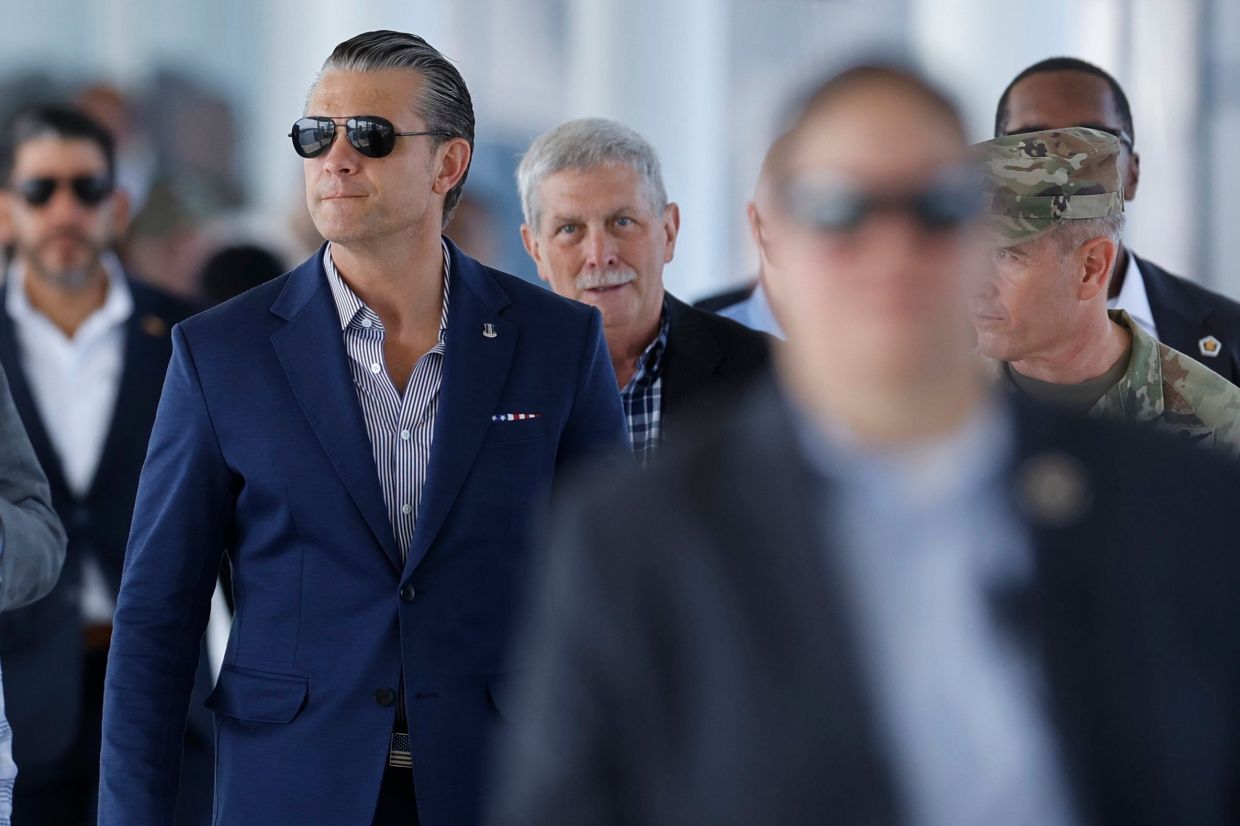
Political uncertainty surrounding the position of Pete Hegseth as United States Defence Secretary has cast a shadow over the nascent improvement in military relations between Washington and Beijing, threatening to disrupt a diplomatic thaw that has gathered momentum over recent months. Multiple unnamed sources within defence circles have suggested Hegseth faces serious jeopardy in his role, citing an intractable disagreement over Iran policy combined with sustained negative media scrutiny. The timing of these rumours could not be more delicate, arriving at a moment when the two superpowers are deliberately attempting to rebuild institutional trust and prevent military miscalculation.
The broader context for these concerns involves a genuine warming of US-China defence ties that has developed during Donald Trump's second term. Following Trump's meeting with Chinese President Xi Jinping in Beijing in May, observers noted a palpable shift in tone and substance across multiple channels of military engagement. Personnel familiar with these interactions reported that contact between the defence establishments has resumed at nearly every operational and strategic level, with one assessor describing current conditions as the strongest in over a decade. This represents a significant turnaround from the fractious relationship that characterised much of the preceding years, when military dialogue had become sporadic and often confrontational.
Hegseth himself has publicly acknowledged this improvement, declaring at a defence conference weeks after the Beijing summit that bilateral military relations had reached a level of health not seen in many years. He specifically credited Trump and Xi's commitment to building a constructive partnership as extending into the military domain, suggesting institutional buy-in at the highest levels. More recently, a high-level Pentagon delegation including Alvaro Smith, deputy assistant defence secretary for China, Taiwan and Mongolia, met with Chinese vice-minister for foreign affairs Ma Zhaoxu in Washington. Smith's comments during that engagement explicitly attributed progress in repairing the military-to-military channel to Hegseth's leadership, underscoring how closely the Defence Secretary has become identified with the reconciliation effort.
The potential disruption caused by Hegseth's possible departure has prompted analysis among Chinese scholars and officials about the cascading effects. Zhao Minghao, professor at Fudan University's Institute of International Studies, argued that Trump might require a high-profile resignation to absorb responsibility for tensions with Iran, a fairly typical move ahead of US midterm elections. However, Zhao also flagged a genuine substantive concern: losing Hegseth would require any successor to rebuild personal relationships and institutional trust with Chinese counterparts such as Defence Minister Dong Jun. The professor noted that Hegseth has already conducted multiple meetings with Dong Jun, including encounters in Malaysia and during Trump's Beijing visit, meaning that established working relationships would be severed and would need to be reconstructed from scratch with a new administration figure.
Yet not all analysis suggests catastrophic consequences. Multiple American sources indicated that Hegseth's exit would not necessarily derail military engagement if his replacement possessed an appropriate temperament towards Beijing. The key variable, according to these observers, involves whether the incoming Defence Secretary would be a China hawk or someone willing to continue the current accommodative approach. One source characterised existing military contacts as functioning very smoothly, suggesting institutional momentum might survive leadership transitions. This assessment implies that the bureaucratic structures and lower-level working relationships have become sufficiently established to withstand personnel changes at the top, at least in the absence of a dramatically hardline replacement.
Interestingly, Chinese officials have reportedly developed considerable confidence in Ely Ratcliffe Colby, a senior Pentagon official, who has been instrumental in recent negotiations. Colby met with Ma during the same Washington engagement and contributed to what Beijing's foreign ministry characterised as an unusually substantive exchange. According to a source with knowledge of Chinese assessments, officials in Beijing have been impressed by Colby's pragmatic framing of Taiwan's strategic importance, his comment that the self-governed island does not constitute a vital existential interest for the United States having evidently resonated positively with Beijing's strategic planners. Should Colby remain at the Pentagon in a senior position regardless of who becomes Defence Secretary, his presence could provide continuity and reassure Beijing that the broader strategic shift toward stable military engagement remains intact.
The Taiwan question sits at the heart of US-China military relations, and Colby's comments take on particular significance in that context. The People's Republic regards Taiwan as a breakaway province and has consistently reserved the option of military force to achieve reunification. The United States, following a diplomatic arrangement made decades ago, does not officially recognise Taiwan's independence but maintains strong informal ties and is statutorily obligated to supply the island with defensive weapons systems. This inherent tension has historically generated military friction and miscalculation risks between Washington and Beijing, making any statements about prioritisation and escalation thresholds particularly consequential.
Zhao suggested that if Colby remained embedded within the Pentagon hierarchy, institutional continuity in military exchanges would be more likely to persist. He further noted that military engagement between the two countries has resumed at various operational levels precisely because Trump and Xi have committed to building relations predicated on mutual strategic stability. The professor interpreted this formulation as fundamentally about restoring and strengthening defence exchanges, suggesting that both leaders view military transparency and dialogue as essential infrastructure for preventing conflict spirals. Given that Xi Jinping is scheduled to visit Washington next month in what will be his first state visit to the United States since 2015, military-to-military relations will almost certainly feature prominently on the bilateral agenda.
The looming presidential visit makes the timing of Hegseth's job insecurity particularly awkward for both governments. Xi's Washington trip represents a major diplomatic occasion where both sides have invested considerable political capital, and any signs of instability or uncertainty in the American defence establishment could complicate the symbolism and substance of the visit. Senior Pentagon officials will likely be called upon to participate in various state functions and working sessions, and the absence of a clear, established Defence Secretary could inject confusion into an event designed to project confidence and bilateral purpose. For Malaysia and other Southeast Asian nations monitoring these developments, the stakes involve the broader regional security architecture, as US-China stability—or instability—reverberates throughout the region's strategic calculations and alliance arrangements.
The broader question raised by current events involves whether institutional relationships between two defence establishments have become sufficiently robust to weather political turbulence at the cabinet level. The answer appears partially yes, with working-level relationships and established channels of communication proving more resilient than senior personalities. However, the loss of a committed advocate for military engagement at the Defence Secretary level could dampen momentum and require renewed effort to rebuild trust. For now, the uncertainty remains, with the ultimate impact depending on both the probability of Hegseth's departure and the identity and orientation of any successor.

