The US Open women's championship gets underway this Sunday at Flushing Meadows with an unusually uncertain landscape at the top of the seeding order, creating genuine opportunities for past winners Coco Gauff and Iga Swiatek to add another trophy to their collections. The vulnerability of the tournament's elite represents a rare alignment of circumstances that could reshape the competitive balance heading into autumn, particularly relevant for Southeast Asian tennis followers tracking the sport's evolving power dynamics.
Aryna Sabalenka, the top seed, arrives in New York attempting to secure an unprecedented third consecutive US Open title—a feat that would place her among tennis royalty. Yet her campaign is shadowed by a troubling pattern of underperformance during the season's backend. Since completing the Sunshine Double earlier in the year, Sabalenka has conspicuously failed to reach a single major final, a dramatic reversal that suggests her dominance may be slipping at precisely the moment when defending a crown demands peak consistency. Her struggles have centred on the pressure moments that separate champions from contenders, with former world number four Mary Joe Fernandez noting that Sabalenka has surrendered substantial leads in several events, leaving her decidedly vulnerable heading into the tournament.
The second seed, Elena Rybakina, confronts an even more immediate obstacle: a leg injury sustained during her exit from the Cincinnati Masters. This injury casts genuine uncertainty over her ability to compete at the demanding level required to progress through a major championship. For Malaysian readers and the broader Southeast Asian tennis community, such questions about elite player fitness carry particular weight, as the region's own emerging talents must navigate similarly unforgiving injury landscapes to break through at the sport's highest echelon.
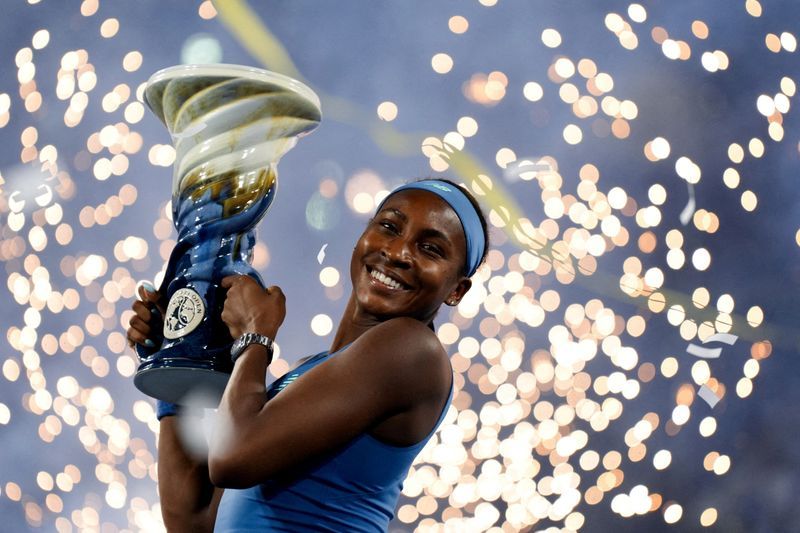
By contrast, Gauff has constructed compelling momentum during the North American hard court swing. The 2023 champion rehabilitated her previously troubled serve into a genuine weapon, guiding her to the Toronto semifinals before capturing her maiden title of the season in Cincinnati. Her triumph in Ohio carried the hallmarks of genuine confidence and mastery, characteristics essential for navigating the US Open's pressure-laden environment. As a perennial favourite with New York crowds, Gauff can harness the vocal support of the Flushing Meadows faithful, a factor that historically provides American players tangible advantage within these walls.
Swiatek arrives in New York carrying fresh momentum after dismantling Rybakina in the Toronto final to claim her first trophy since an inconsistent campaign threatened to derail her standing among elite competitors. The Polish champion had weathered considerable domestic criticism for a season marked by quarter-final exits at every major championship, forcing a meticulous reconstruction of her game ahead of the North American swing. Her journey back to form exemplifies the psychological resilience demanded of top-tier professionals navigating the psychological and physical toll of professional tennis at the highest level.
The broader competitive landscape extends far beyond these established champions. Mirra Andreeva, a Russian teenager, has already claimed a maiden major title at Roland Garros this year, suggesting that the next generation possesses the capability to challenge established hierarchies. Czech player Linda Noskova similarly captured headlines with a breakthrough Wimbledon title last month, indicating that depth in the women's field has intensified considerably. Alexandra Eala of the Philippines demonstrated her credentials by defeating four-time major champion Naomi Osaka and Jessica Pegula to capture the Washington WTA 500 title earlier this month, suggesting that geographical diversity in women's tennis continues expanding toward South and Southeast Asia.
Naomi Osaka, the 2018 and 2020 US Open champion, returns to Flushing Meadows having gradually reclaimed her standing after taking 2023 away for maternity leave. Although she has not captured a title since her 2021 Australian Open triumph, her recent resurgence—including a run to June's Bad Homburg final—has rekindled supporter optimism that another major championship remains within reach. The New York crowd's traditional affection for Osaka provides additional psychological scaffolding as she seeks to remind the sport's establishment of her enduring credentials.
America's broader representation at this championship carries particular weight following a dispiriting trend at 2024's first three majors, wherein the United States failed to produce a single finalist in the women's singles draw. Gauff and Jessica Pegula, ranked fourth and third respectively, therefore compete not merely for personal glory but to restore American women's tennis to the prominent position it has historically occupied. This national narrative adds contextual significance to the tournament that extends beyond individual achievement.
ESPN commentator Patrick McEnroe observed that while the women's championship cannot reasonably be characterized as wide open, between six and eight distinct players possess legitimate winning credentials—an unusually expansive competitive window that reflects both the advancement of multiple rising talents and the simultaneous vulnerability of traditionally dominant figures. This diffusion of championship probability creates a tournament genuinely open to multiple narrative outcomes rather than a coronation of seeded superiority.
For Malaysian and Southeast Asian tennis observers, the US Open's competitive uncertainty carries broader significance. The emergence of players like Eala demonstrates that the region's tennis infrastructure continues producing internationally competitive professionals capable of defeating multiple-time major winners. Simultaneously, the vulnerability of established champions at this moment suggests that generational transitions within elite women's tennis proceed at accelerating pace, potentially creating expanded opportunities for emerging players from traditionally underrepresented regions to establish themselves among the sport's hierarchy.

