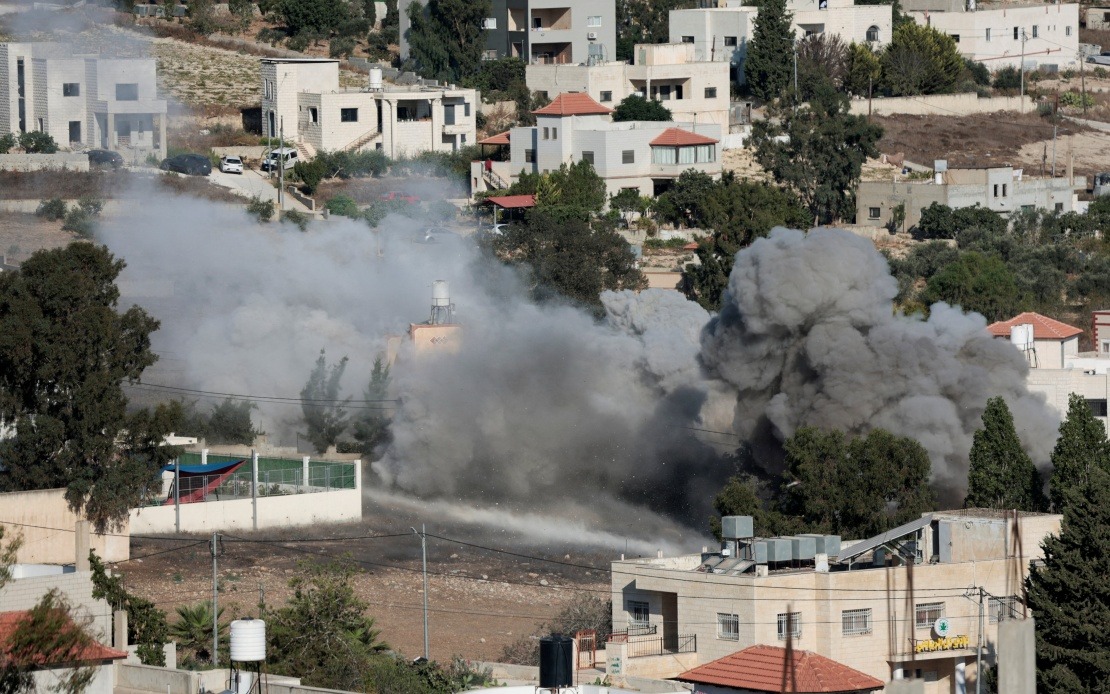
The United Nations Human Rights Office operating in the Occupied Palestinian Territory has escalated its criticism of Israeli settler activities, describing the frequency and severity of attacks against Palestinians as having crossed into unacceptable territory. In a formal statement released on Thursday, the office demanded that Israeli authorities take decisive action to curb the violence by removing settlers engaged in assaults, illegal land seizures, and expansion of Jewish settlements across Palestinian areas.
The UN body highlighted a particularly disturbing pattern of escalation centred around Qusra, a village situated south of Nablus in the West Bank. Following the establishment of a new Israeli colonial outpost in the area during November 2025, settlers have systematically expanded their control into adjacent Palestinian territories while intensifying a campaign of harassment against local residents. The documented abuses span a troubling spectrum of violence and intimidation tactics, from forced entry into homes and physical beatings to the deliberate destruction of property through vandalism, looting and arson. The UN office specifically noted that these attacks have extended to religious sites, with settlers targeting a local mosque as part of their campaign.
One of the most extreme incidents documented by the UN occurred in July, when settlers from the Ras al-Ain outpost near Qusra orchestrated a coordinated assault on Palestinian households. The settlers cut off water and electricity supplies to three homes, effectively placing the families under siege. By August 9, the situation had deteriorated further when settlers erected barriers and physically blockaded all access points to the homes, preventing residents from leaving to obtain supplies or seek assistance. This confinement affected approximately fifteen people, including at least two children, who were trapped inside their residences without access to basic utilities or food.
What distinguishes this incident as particularly alarming in the eyes of international observers is the role—or rather the passivity—of Israeli state security forces. When Palestinian families appealed to Israeli military personnel positioned at the scene to intervene and restore their freedom of movement, soldiers made no effort to enforce law and order. Furthermore, Israeli forces actively obstructed humanitarian assistance by preventing paramedics, human rights monitors, and journalists from reaching the confined families. This apparent complicity or deliberate indifference on the part of state authorities suggests a systematic problem rather than isolated incidents of settler vigilantism.
The UN Human Rights Office characterized these actions as part of a broader strategy of ethnic pressure. The office stated that criminal acts perpetrated by settlers, whether directly supported by Israeli state authority or simply tolerated by it, have rendered daily existence unbearable for affected Palestinian households. The underlying objective, according to the UN assessment, is to psychologically and physically coerce Palestinians into abandoning their homes and ancestral lands, thereby facilitating the expansion of Israeli settlements through intimidation rather than legal purchase or negotiation.
Israeli forces only intervened partially when international pressure mounted. On August 12, soldiers removed the physical barrier that settlers had erected, but did not expel the settlers themselves, who continued maintaining their cordon around the homes through Thursday. This half-measure has left the three Palestinian families in an extraordinarily precarious position, with their displacement appearing increasingly imminent. The UN warned that the window for preventing forcible eviction and displacement is rapidly closing.
The UN Human Rights Office grounded its demands within established international legal frameworks. The International Court of Justice has previously determined that all Israeli settlements in occupied territories are illegal under international law and constitute violations of the Geneva Conventions. On this basis, the UN office reiterated that Israel must immediately cease all settlement expansion, withdraw all colonists from the West Bank, and terminate its military occupation of Palestinian territories.
However, recognizing that a complete end to occupation may face political obstacles, the UN also articulated interim obligations that Israel must observe under international humanitarian law. Most critically, Israel bears responsibility for ensuring the physical security of the Palestinian population living under its military control. This obligation encompasses preventing settler attacks, conducting thorough investigations when violence occurs, and imposing meaningful punishments on perpetrators commensurate with their crimes. The UN stressed that perpetrators, their supporters, and officials who tolerate such violence must all face accountability mechanisms.
For Southeast Asian observers and policymakers, this situation illustrates the intersection of military occupation, settler colonialism, and the failure of international enforcement mechanisms. Malaysia and other regional nations have consistently advocated for Palestinian self-determination at the United Nations, and such escalating incidents underscore why this advocacy persists. The case of Qusra demonstrates how occupation creates conditions where state security forces can effectively become complicit in protecting settlers rather than the civilian population, inverting the fundamental duty of occupation forces to maintain order and prevent lawlessness.
The broader implications extend to questions about the credibility of international humanitarian law itself. When established bodies like the International Court of Justice declare settlements illegal, yet those settlements continue to expand and violence against civilians intensifies, it raises fundamental questions about whether the international legal order possesses sufficient enforcement capacity. For nations in Southeast Asia that depend on international law to protect their sovereignty and territorial integrity, the apparent impotence of these mechanisms when applied to powerful states carries significant strategic implications.

