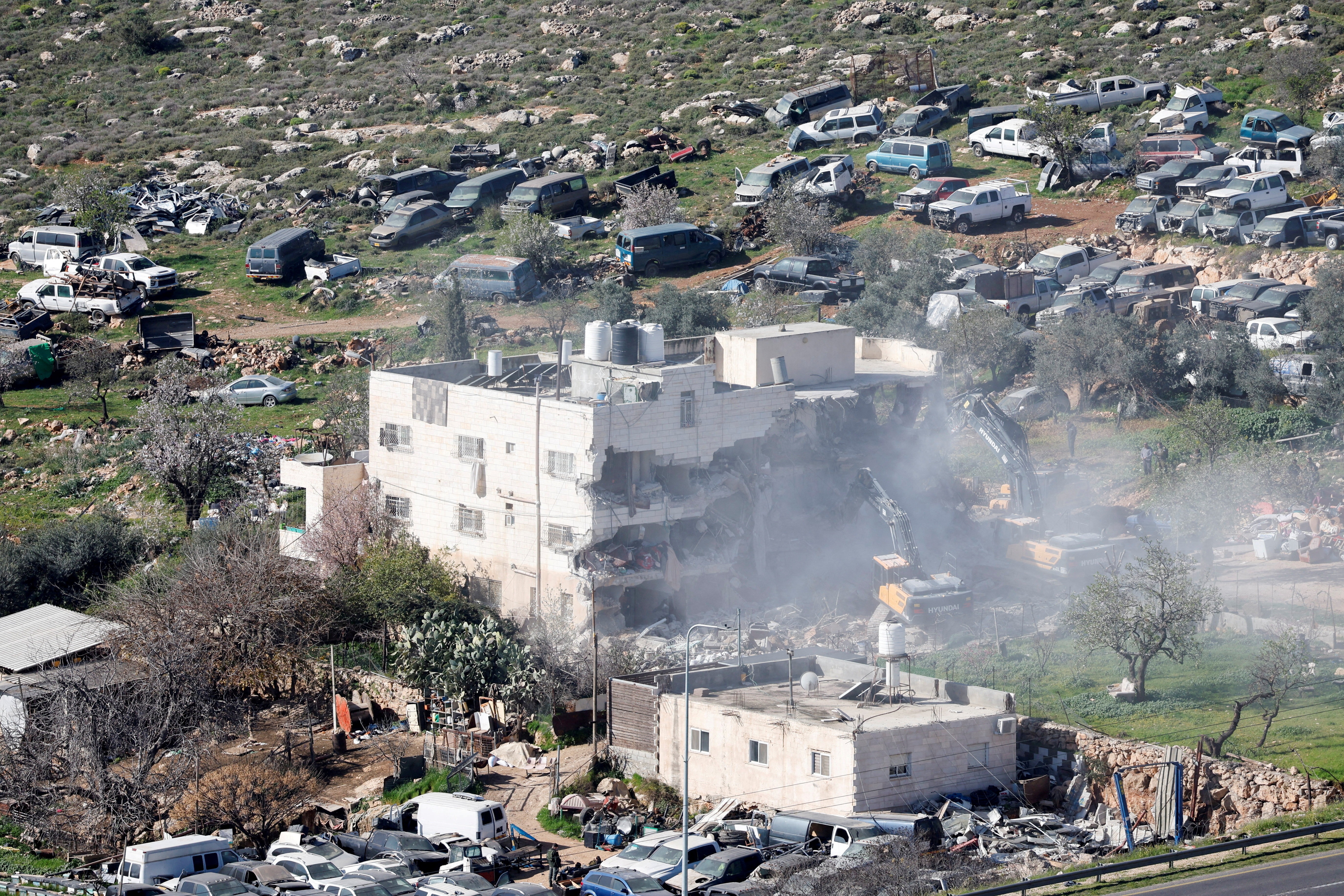
United Nations Secretary-General Antonio Guterres has declared alarm at reports of fresh illegal Israeli settlement outposts in the occupied West Bank, urging Israel to halt further expansion in the disputed territory. Speaking through his spokesperson Stephane Dujarric during a Wednesday press briefing at UN headquarters in New York, Guterres articulated deep concern about developments centred on the E1 settlement project, which would geographically divide the Palestinian territories and fundamentally undermine the prospect of a functioning independent Palestinian state.
The E1 zone represents a critical strategic area wedged between Jerusalem and the Dead Sea. If Israeli settlement activities proceed there as reported, the geographical consequence would be a severing of land connections between the northern and southern portions of the West Bank. This territorial fragmentation would render Palestinian governance and economic development substantially more difficult, if not impossible, to achieve in any meaningful way. The implications extend beyond mere geography—such a development would strike at the foundational conditions necessary for Palestinian self-determination and territorial cohesion.
Dujarric elaborated that the settlement expansion would carry "severe consequences for the territorial integrity of the occupied Palestinian territory," effectively presenting what UN officials characterise as "an existential threat to the two-state solution." This language reflects the UN's assessment that the architectural framework for future Israeli-Palestinian coexistence—a vision underpinning international peace efforts for three decades—would become structurally incompatible with Israeli facts-on-the-ground in the form of expanded settlements and military control.
Guterres has called upon Israel to refrain from undertaking additional steps toward settlement construction and to align its actions with relevant UN Security Council resolutions. The UN chief has also pointed to the International Court of Justice's advisory opinion issued on July 19, 2024, as the legal benchmark against which Israel's conduct should be measured. This court opinion represents one of the most consequential international legal pronouncements on the Israeli-Palestinian conflict in recent years, carrying symbolic weight far beyond its non-binding character.
The ICJ's advisory opinion presented a sweeping assessment of Israel's legal standing in the occupied Palestinian territories. The court determined that Israel's continued presence in those territories constitutes an unlawful occupation under international law. Beyond this primary finding, the court issued a series of specific directives it deemed Israel legally obligated to follow, thereby establishing a clear international legal standard against which member states and international bodies can evaluate Israeli government actions.
According to the ICJ ruling, Israel bears the responsibility to terminate its presence in the occupied Palestinian territory "as rapidly as possible." The court further mandated that Israel must immediately cease all new settlement activity, including the outpost expansions that have now triggered Guterres's alarm. Additionally, the court determined that Israel should evacuate all settlers currently residing in the occupied territories, a directive that would reverse decades of settlement expansion and demographic change. The ICJ also declared that Israel bears responsibility to provide reparation for damage caused by its military operations and settlement policies.
For Malaysian policymakers and the broader Southeast Asian region, the UN chief's intervention carries multilayered significance. Malaysia has long maintained principled opposition to Israeli settlement expansion and has supported Palestinian self-determination within international forums. The Guterres statement reinforces the position that the UN system itself regards settlement activities as fundamentally incompatible with international law and peace prospects, thereby validating the diplomatic stance that Malaysia and other nations in the region have consistently advocated.
The E1 settlement issue exemplifies how settlement expansion transcends abstract territorial disputes and instead implicates concrete questions of Palestinian viability as a state. A Palestinian state fragmented into non-contiguous enclaves separated by Israeli settlements and military zones would lack the territorial and economic coherence necessary to function as a viable modern nation-state. This reality has long concerned Middle Eastern analysts and international peace negotiators, who recognise that territorial contiguity represents a prerequisite for any durable Palestinian political entity.
The timing of the UN chief's statement also reflects international concern that settlement expansion appears to be accelerating rather than slowing. Multiple reports from international human rights organisations and UN monitoring mechanisms have documented an uptick in both official settlement construction and informal outpost establishment in recent months. This trend suggests that diplomatic appeals and international legal opinions have thus far failed to generate sufficient pressure or incentives for Israel to modify its settlement policy, raising questions about the efficacy of non-binding international mechanisms.
Guterres's invocation of the ICJ advisory opinion underscores the UN's effort to ground its diplomatic pressure in the most authoritative available international legal framework. By explicitly linking his settlement concerns to the court's July 2024 opinion, Guterres attempted to strengthen the normative weight of his statement and to signal that the UN views settlement expansion not merely as a political issue but as a legal violation requiring remedial action. This framing shifts the conversation from negotiable political positions toward ostensibly non-negotiable legal obligations.
The international legal developments and UN diplomatic pressure reflected in Guterres's statement represent the global community's attempt to establish binding legal constraints on settlement expansion, even as direct Israeli-Palestinian negotiations remain suspended. The question of whether such pressure proves sufficient to alter facts-on-the-ground in the occupied territories remains fundamentally unresolved and will likely continue shaping international relations in the Middle East for years to come.

