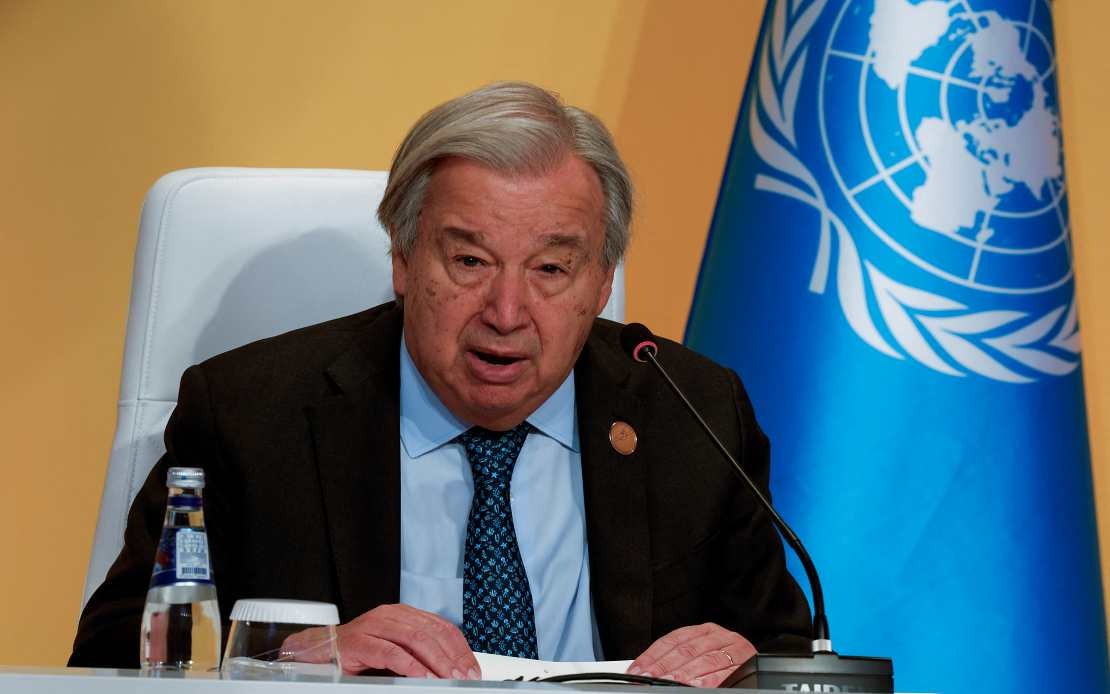
The United Nations leadership is sounding the alarm over rapidly deteriorating security conditions in the Persian Gulf, with Secretary-General Antonio Guterres expressing acute concern about the pattern of military escalation unfolding across one of the world's most strategically vital waterways. Through his official spokesperson, the UN chief outlined a litany of recent hostile actions involving multiple parties, from Iranian attacks on commercial shipping in the Strait of Hormuz to retaliatory American strikes against Iranian targets and subsequent Iranian attacks on neighbouring countries. The cascade of incidents has triggered urgent diplomatic appeals for all sides to exercise restraint and pursue negotiated settlements rather than continued military brinkmanship.
The spokesperson's statement represents a carefully calibrated but unambiguous signal that the UN is monitoring the situation with grave concern. Guterres has made explicit calls for immediate steps to reduce tensions, though such appeals from New York often carry limited weight when regional actors are locked in tit-for-tat cycles of retaliation. The emphasis on "maximum restraint" reflects the international community's fear that miscalculation or further provocation could trigger a broader conflict with implications stretching far beyond the Gulf itself. Each incident in recent weeks appears designed to send a political message while maintaining some threshold of escalation control, yet this delicate balance risks breaking down entirely if patterns continue unchecked.
The situation carries profound implications for Malaysia and other Southeast Asian nations, which depend heavily on secure maritime trade routes and stable energy supplies. Approximately one-third of global maritime trade passes through the Strait of Hormuz, making disruptions to shipping in these waters an economic concern for countries throughout the region and beyond. Sustained tensions could trigger insurance premium increases for vessels traversing the waterway, ultimately raising costs for Malaysian importers and exporters. Energy-dependent economies in Southeast Asia face particular vulnerability to oil price volatility triggered by geopolitical instability in the Gulf, potentially affecting inflation rates and economic growth across the region.
The UN chief's insistence on restoring "full freedom of navigation" in the Strait of Hormuz addresses a core anxiety for maritime nations worldwide. Commercial shipping has already faced documented hazards from alleged Iranian attacks on vessels, creating an atmosphere of uncertainty for shipowners and operators. Malaysia, as a significant trading nation with substantial maritime interests, has reason to support international efforts to ensure the strait remains open and secure. The principle of freedom of navigation underpins global commerce and has been a cornerstone of international maritime law, making threats to this principle a matter affecting countries far beyond the immediate Gulf region.
Guterres's statement places particular emphasis on the need for immediate bilateral engagement between Iran and the United States, marking a tacit acknowledgement that only direct talks between these principal antagonists can arrest the escalation spiral. The framing suggests that the UN views the current trajectory as fundamentally unsustainable and that continued military posturing will inevitably lead to more serious confrontation. The reference to "resuming negotiations" implies that previous diplomatic channels have existed but have atrophied or broken down, indicating that both parties once maintained some form of dialogue mechanism. Without such channels, accidental escalation becomes more likely, as misinterpretation of military actions could rapidly spiral into unintended conflict.
The secretary-general's warning that "full-scale hostilities would have catastrophic consequences" carries implicit recognition that the region stands at a critical juncture. The language employed—emphasizing impacts on "peoples of the region," "international peace and security," and "the global economy"—identifies a cascade of potential harms extending across multiple dimensions. Regional instability could displace populations, draw neighbouring countries into conflict, disrupt energy supplies worldwide, and create broader geopolitical realignment with unpredictable consequences. For Malaysia and Southeast Asia, even indirect consequences of Gulf conflict could prove economically destabilizing through supply chain disruptions and commodity price shocks.
The UN's diplomatic approach reflects traditional multilateral crisis management strategy, though observers note that such appeals often prove ineffective when underlying political tensions remain unresolved. Both Iran and the United States maintain deeply entrenched positions on nuclear diplomacy, regional influence, and strategic interests that transcend individual incidents. The Iranian leadership views American military presence in the Gulf as inherently destabilizing, while Washington perceives Iranian expansion of influence and missile capabilities as threatening regional partners and global stability. These fundamental disagreements cannot be bridged through rhetoric alone, requiring sustained negotiation addressing substantive security concerns on both sides.
The economic dimensions of continued escalation deserve particular attention for Malaysian policymakers. Energy prices have already experienced volatility in response to Gulf tensions, with crude oil prices sensitive to any developments suggesting potential supply disruptions. For Malaysia, which imports significant quantities of oil despite domestic production, price volatility translates directly into inflationary pressure and budgetary impacts. Regional supply chains increasingly depend on predictable energy costs, making Gulf stability an indirect but crucial factor in Southeast Asian economic performance. Additionally, maritime insurance costs affect all regional traders using international shipping routes, creating diffuse but measurable economic impacts throughout the region.
The broader geopolitical context reveals how Gulf instability intersects with other regional dynamics of concern to Southeast Asia. Any major conflict in the Gulf would inevitably draw international powers into the region, potentially diverting attention and resources from Indo-Pacific developments that directly affect Southeast Asian security and prosperity. Major powers currently competing for influence in Southeast Asia might become preoccupied with Gulf crisis management, altering the strategic environment and creating uncertainties for smaller nations seeking to balance relationships with multiple powers. Malaysia's policy of non-alignment and strategic autonomy carries particular salience in such scenarios, requiring careful navigation of competing pressures and interests.
The UN secretary-general's call for immediate diplomatic engagement recognizes that windows for negotiated resolution tend to narrow as military escalation progresses. Historical precedent suggests that once cycles of retaliation become entrenched, political costs of backing down increase substantially for leaders who have invested public commitment in hardline positions. Both Iranian and American leadership face domestic political constraints that limit flexibility in negotiations, yet the international community's interest in preventing catastrophic escalation justifies intensive mediation efforts. Neutral players and trusted intermediaries may prove essential in facilitating communication when direct bilateral engagement faces obstacles.
For Malaysia and the broader Southeast Asian region, the unfolding Gulf crisis serves as a reminder of interdependence in an increasingly interconnected world. Distant geopolitical tensions carry tangible implications for economic performance, energy security, and strategic stability across the region. While Southeast Asian nations cannot directly influence Iran-US dynamics, they have clear interests in advocating for de-escalation and supporting multilateral mechanisms promoting peaceful resolution of disputes. The UN's role in maintaining diplomatic channels and providing forums for negotiation, despite limitations, remains valuable in preventing dangerous escalation cycles from spiralling entirely beyond control.

