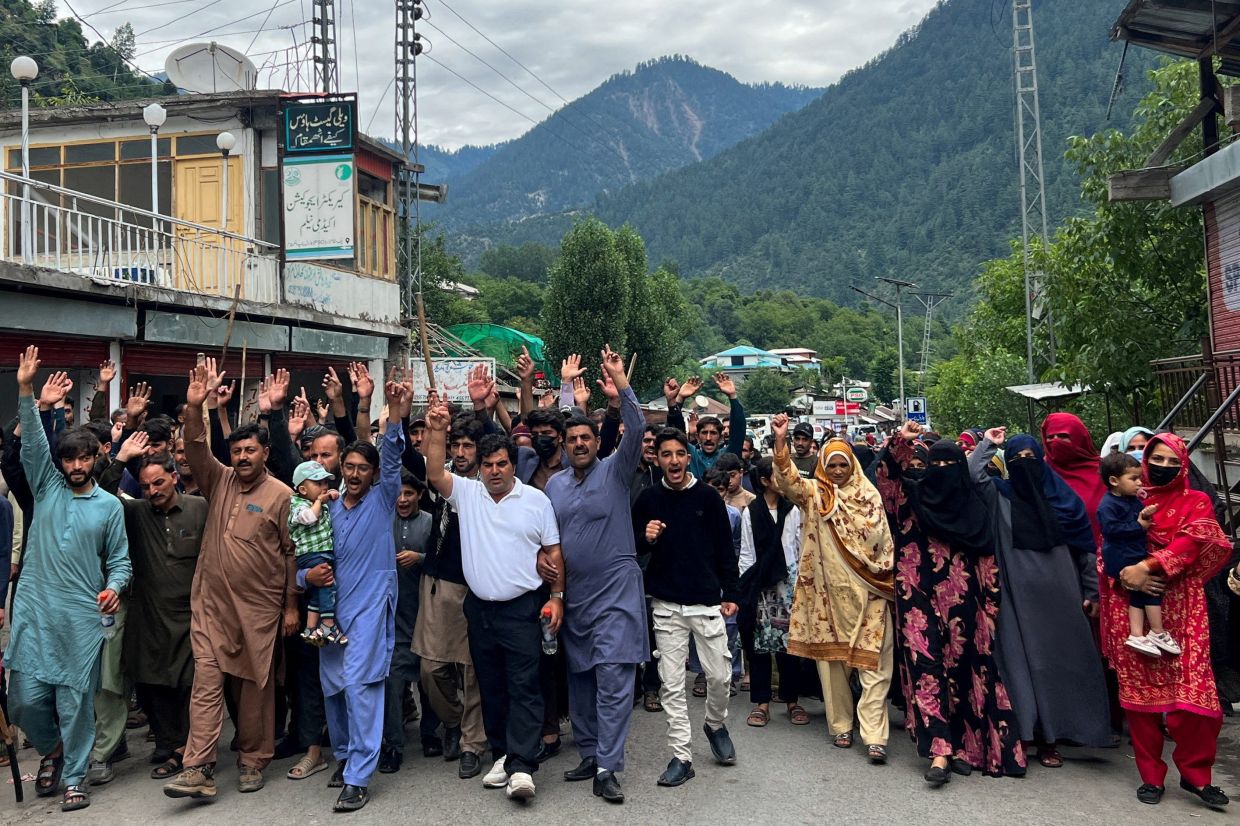
The United Nations has formally appealed for calm and independent investigations into what officials describe as a wave of violence that has claimed dozens of lives in Pakistan-administered Kashmir in recent weeks. UN High Commissioner for Human Rights Volker Turk made the call through his spokesman Jeremy Laurence in Geneva on Friday, responding to escalating tensions that have marked the lead-up to legislative assembly elections scheduled for July 27. The statement underscores mounting international concern over the humanitarian and political dimensions of unrest in this strategically sensitive Himalayan territory, where security and civilian deaths have mounted since June.
The casualty toll reflects a concerning pattern of violent confrontations between security forces and demonstrators affiliated with the Joint Awami Action Committee, an anti-government coalition that has mobilised citizens demanding economic restructuring and governance improvements. According to reports filtered through UN channels, the dead include both protesters and members of law enforcement, indicating the intensity and indiscriminate nature of the clashes. This represents a significant escalation from September of the previous year, when a similar surge in demonstrations centred around JAAC's grievances resulted in at least nine confirmed deaths, suggesting a cyclical pattern of tension in the region tied to electoral and political transitions.
The UN's particular focus on impartial investigation reflects international norms requiring transparent accountability mechanisms when civilian and security personnel casualties occur during internal unrest. Laurence emphasised that Turk seeks "prompt, thorough and impartial investigations into all deaths that have occurred due to the unrest, both amongst protesters and members of security forces," signalling that the organisation views documentation and judicial scrutiny as essential to preventing future violence and restoring public confidence in state institutions. This framing matters significantly for Pakistan's international standing, as allegations of disproportionate force during crowd control operations can trigger diplomatic pressure and scrutiny from multilateral bodies.
Contextualising the current upheaval requires understanding JAAC's motivations and the Pakistani state's response. The committee, which formally opposed the regional government's policies on taxation, development priorities, and resource allocation, has organised sustained campaigns despite facing a government ban imposed under anti-terrorism legislation last month. Pakistani authorities justified the proscription by citing threats to public order and national security, a rationale that human rights organisations have questioned as potentially overreaching. The fact that JAAC continued mobilising supporters despite this legal restriction suggests the depth of grassroots grievance and the population's willingness to defy state prohibitions, complicating the authorities' ability to maintain order.
The UN's criticism of the crackdown extends beyond merely monitoring deaths to encompassing broader civil liberties concerns. The rights office has flagged the detention of JAAC leadership figures, warning that criminalising a civil society organisation and imposing strict limitations on lawful gatherings represent serious encroachments on fundamental freedoms of expression, peaceful assembly, and association. These concerns resonate across the developing world, where governments sometimes weaponise counter-terrorism designations to suppress legitimate political opposition. Laurence specifically demanded that detained leaders receive legal representation and family access, while insisting on rigorous due process protections and fair trial guarantees, signalling UN scepticism toward the legitimacy of the ban and prosecutions.
Particularly troubling to international observers has been Pakistan's use of internet restrictions as a crowd management tool. The UN cautioned that throttling digital connectivity disproportionately curtails freedom of expression and access to information precisely when tensions run highest and public clarity becomes most vital. Disconnecting populations from communication networks prevents families from locating missing relatives, constrains journalists' ability to document events, and creates information vacuums that can fuel rumour and extremism. Laurence's explicit demand for "full internet access throughout the territory" reflects a hardening international consensus that digital restrictions during political crises constitute rights violations rather than legitimate security measures.
The deeper political context involves Kashmir's status as a disputed territory claimed entirely by both India and Pakistan since their 1947 independence from British colonial rule. The region has been partitioned between the two nations, with Pakistan administering its portion through direct federal government oversight, particularly in security and defence matters. This arrangement means that Kashmiri grievances regarding governance quality, economic opportunity, and political representation often cannot be addressed through normal democratic processes, as the Pakistani military maintains significant institutional influence over policy decisions. The upcoming legislative elections, therefore, carry symbolic rather than transformative weight for residents seeking meaningful autonomy or substantive reform.
For Malaysia and other Southeast Asian democracies, this situation offers instructive parallels regarding the dangers of prolonged territorial disputes and the militarisation of civilian governance. Pakistan's security-first approach to Kashmir reflects Cold War-era thinking that prioritises strategic control over public welfare, a model that has demonstrably failed to generate stability or prosperity. The UN's intervention—calling for inclusive political dialogue to address underlying grievances—implicitly suggests that treating Kashmir principally as a national security challenge rather than a political problem requiring accommodation and reform generates counterproductive cycles of protest and repression.
The timing of international scrutiny also matters strategically. By highlighting these concerns publicly before the July 27 elections, the UN is signalling to Pakistani decision-makers that electoral credibility depends on demonstrable restraint and respect for democratic norms. Regional and global media attention to election-related violence can shape Pakistan's international reputation and bilateral relationships, incentivising authorities to minimize visible abuses even if underlying governance problems remain unresolved. For Kashmiri residents and JAAC supporters, UN documentation and statements provide some degree of protective attention, though whether this translates into meaningful pressure on Islamabad remains uncertain.
Looking forward, the security forces face pressure to balance public order maintenance with demonstrably reduced use of lethal force during the electoral period. Pakistani officials will likely resist international characterisations of their actions as disproportionate, framing the unrest as orchestrated by anti-state actors rather than expressions of genuine economic discontent. However, the gap between government narratives and independent reporting from human rights monitors and media outlets will probably widen if violence continues, further complicating Pakistan's diplomatic position. The UN's call for "meaningful and inclusive political dialogue" ultimately acknowledges that security operations alone cannot resolve the fundamental tensions between Kashmiri aspirations and the state's security imperatives.

