Universiti Malaysia Pahang Al-Sultan Abdullah (UMPSA) is deepening its investment in student welfare, particularly for those from economically disadvantaged backgrounds, according to vice-chancellor Prof Dr Yatimah Alias. The institution's leadership views financial barriers to higher education as a critical challenge that must be systematically addressed through institutional support mechanisms. This commitment reflects a broader recognition across Malaysian universities that access to quality tertiary education should not be constrained by family economic circumstances, a principle increasingly important as the nation pursues its higher education expansion agenda.
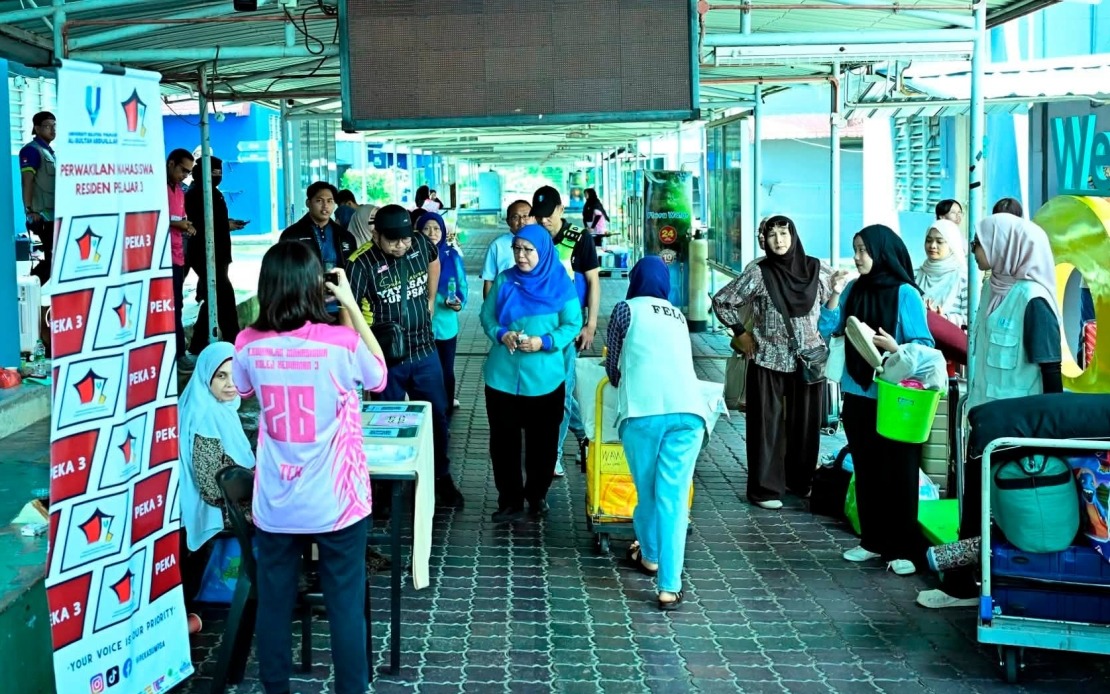
The university's approach encompasses multiple dimensions of student support designed to remove financial obstacles throughout a student's academic journey. Beyond covering tuition costs, UMPSA's framework includes monthly allowances that recognise the ongoing expenses students face, from accommodation and transportation to essential study materials. This holistic approach acknowledges that financial hardship extends beyond enrolment fees and that sustained support structures are necessary to prevent capable students from withdrawing due to resource constraints. During recent registration activities, Prof Dr Yatimah personally engaged with incoming cohorts, signalling that institutional commitment to welfare extends to visible leadership presence and not merely bureaucratic processes.
The recent scholarship distribution exemplifies this commitment in concrete terms. Twenty students received awards covering comprehensive educational expenses, providing them with financial predictability across their academic careers. Simultaneously, the university distributed Early Education Incentive payments of RM1,000 each to students identified as facing immediate financial need, funded through the UMPSA Foundation. These mechanisms operate on parallel tracks—one offering sustained support through scholarships and another providing rapid relief for urgent circumstances. The dual approach reflects sophisticated understanding that student financial crises are neither uniform nor predictable, requiring flexible institutional responses.
For Malaysian universities competing within an increasingly stratified higher education landscape, maintaining equitable access represents both a moral imperative and strategic priority. UMPSA's positioning as a comprehensive institution serving multiple student segments means that support for disadvantaged cohorts directly influences institutional diversity and the lived experience of campus communities. When economically marginalised students gain genuine access to quality education, campus environments become more representative of Malaysian society's socioeconomic composition. This diversity produces measurable learning benefits, as research across higher education contexts demonstrates that economically mixed student bodies generate richer educational experiences through varied perspectives and experiences.
The timing of these announcements coincides with UMPSA's registration period for new diploma students in the 2026/2027 academic session. The university recorded its highest intake since establishment, with 1,045 new diploma-level students completing registration. This expansion creates both opportunities and challenges regarding equitable resource distribution. Larger cohorts necessitate scaled institutional support systems, yet such expansion often strains financial assistance budgets. UMPSA's continued emphasis on welfare amid growth suggests institutional determination to expand access rather than concentrate opportunity among already-advantaged cohorts.
For Malaysian students from working-class and lower-middle-income families, institutional scholarships and allowances often prove decisive in pursuing higher education. Unlike developed economies where governmental financial aid systems are mature, Malaysian students frequently rely on institutional generosity or family resources to bridge funding gaps. Private sector scholarships and university-administered funds therefore occupy a crucial position within Malaysia's higher education financing structure. When institutions like UMPSA prioritise welfare investment, they effectively expand the feasible pathways through which capable but resource-constrained students can access credentials and opportunity.
The UMPSA Foundation's role in funding emergency assistance reveals how institutional fundraising channels can be directed toward student support. University foundations, typically dependent on alumni donations and corporate partnerships, possess discretionary capacity that core government funding lacks. By channelling foundation resources toward immediate student needs, UMPSA demonstrates institutional flexibility and responsiveness that purely government-funded models sometimes struggle to achieve. This model merits attention from other Malaysian institutions considering how to enhance student support within constrained fiscal environments.
Regional competition for student talent increasingly incorporates welfare provisions and financial support as recruitment factors. Malaysian students evaluating institutional options now routinely compare financial assistance packages alongside academic reputation and programme quality. UMPSA's visible commitment to welfare potentially enhances institutional competitiveness within the regional higher education marketplace. Furthermore, as demographic pressures affect cohort sizes, institutions offering superior welfare provision may capture student segments that might otherwise pursue international education or alternative qualification pathways.
The sustainability of UMPSA's welfare commitments depends on institutional resource strategies and financial planning across enrolment cycles. As student numbers expand, proportionate increases in support budgets become necessary to maintain per-student assistance levels. The university's framing of welfare as a priority reflects institutional positioning, yet translating commitment into practice requires consistent budgetary allocation amidst competing institutional demands. Monitoring whether welfare funding grows proportionally with student enrolment will indicate whether expansion maintains or dilutes support intensity.
Looking forward, UMPSA's trajectory suggests that Malaysian universities increasingly recognise student welfare as integral to institutional missions rather than peripheral charitable activity. This cultural shift carries significant implications for sectoral development. When major institutions prioritise access and support, they establish benchmarks that peer institutions must consider matching. Sector-wide improvement in student welfare provision could substantially reduce financial barriers limiting tertiary education access among lower-income cohorts, ultimately affecting national human capital development patterns and social mobility outcomes.

