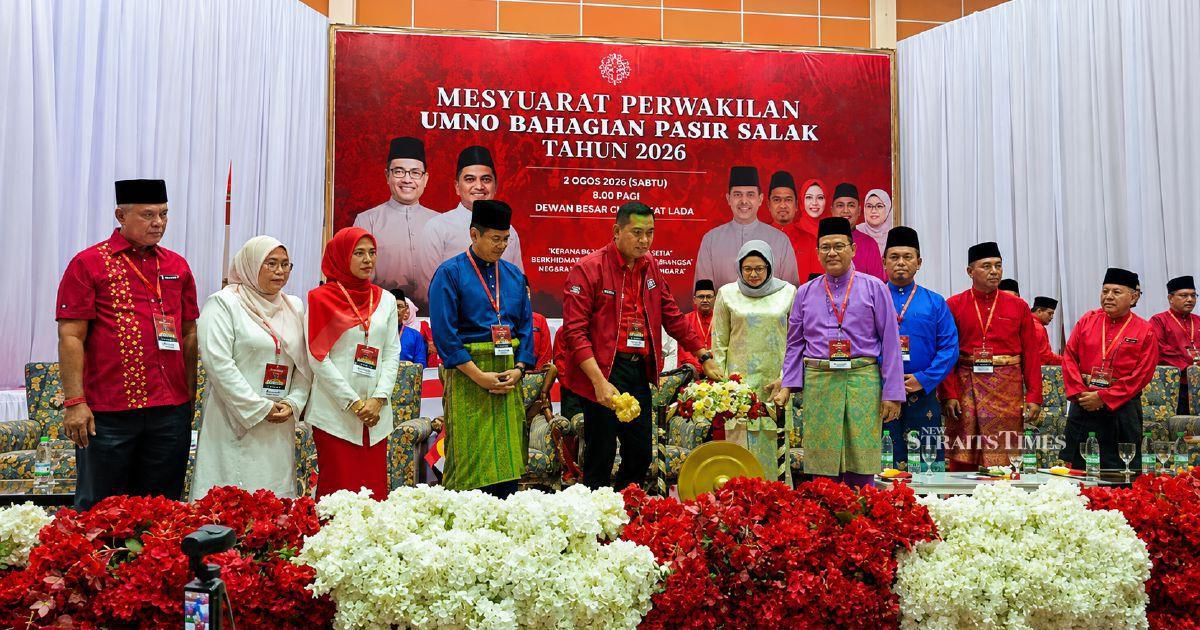
The deputy head of Umno's youth wing has thrown his weight behind empowering the party's divisional structure in determining how seats are allocated following the emerging political understanding between Umno and Perikatan Nasional. In remarks made at Pasir Salak, Datuk Dr Muhamad Akmal Saleh elevated the concerns of grassroots leaders, arguing that their accumulated electoral knowledge and ground-level influence deserve proper consideration when the party's central leadership negotiates coalition terms.
This intervention signals potential tension within Umno's decision-making hierarchy as the party calibrates its response to shifting political alignments. The Perikatan Nasional agreement marks a significant realignment in Malaysia's fractured coalition landscape, yet implementation remains fluid and contested at the divisional level. By championing the voice of grass-roots leaders, Akmal has identified a potential pressure point where national strategy could collide with local ambitions and electoral calculations.
The context matters considerably for understanding Malaysian politics. Umno divisions function as crucial intermediaries between the party's federal apparatus and ordinary members, embodying distinct regional interests and rivalries. In states like Perak, where Pasir Salak sits, divisional leaders often enjoy substantial autonomy and have historically resisted top-down directives that undermine their supporters' electoral prospects. Akmal's statement acknowledges this structural reality and implicitly cautions against forcing an agreement that bypasses the concerns of these gatekeepers.
Seat allocation has repeatedly proven to be the most contentious aspect of Malaysian coalition politics. Whether the Umno-Perikatan understanding involves reserved seats, rotating candidates, or open contests remains unclear, but whatever framework emerges will have winners and losers within Umno's own structure. Divisions that lose seats to Perikatan allies risk member dissatisfaction and reduced campaign machinery enthusiasm, potentially weakening Umno's electoral performance in those constituencies.
Akmal's intervention also reflects generational positioning within Umno's leadership. The youth chief has been navigating the party's direction through turbulent recent years, and backing divisional autonomy allows him to appear as a defender of grassroots interests rather than an instrument of top-down centralisation. This positions him favourably within party networks that value democratic consultation, even while acknowledging that such consultation must ultimately yield to binding leadership decisions.
The timing of these remarks carries strategic weight. With Malaysia's political landscape remaining volatile and another general election looming within constitutional timeframes, every coalition partner seeks to maximise electoral gains while minimising internal friction. If divisional dissatisfaction over seat allocations festers unaddressed, it could undermine party discipline and volunteer enthusiasm during crucial campaign phases. Akmal's advocacy for listening to grassroots concerns, therefore, serves both principled and pragmatic purposes.
For Southeast Asian observers, this dynamic exemplifies how federal Malaysian politics functions as a complex negotiation between national coalitions and state and divisional interests. Unlike more centralised systems, Malaysian parties must continuously balance top-level strategic imperatives with the territorial and personal interests of mid-level powerbrokers. The Umno-Perikatan understanding cannot succeed if it generates widespread resentment among the divisions tasked with executing electoral campaigns on the ground.
The unspoken tension in Akmal's statement involves who ultimately decides when divisional preferences conflict with national coalition requirements. If Umno's president and supreme council determine that the party's survival depends on accepting unfavourable seat allocations, divisional objections may prove insufficient to block such decisions. Yet ignoring these objections entirely risks internal rebellion, candidate defections to rival parties, and reduced voter mobilisation in affected constituencies.
Regional variations further complicate implementation. Divisions in Perak, Selangor, Johor, and other competitive states will calculate differently depending on their current electoral strength and future prospects. A division that previously held three seats but faces reduction to two will resist more vigorously than one experiencing net gains. Akmal's framework essentially requires the party's central leadership to justify allocations comprehensively to internal stakeholders, not merely impose them.
This episode also illuminates the broader challenge facing Malaysia's major parties as political alignments shift. Umno's post-2018 trajectory has involved multiple coalition recalibrations, each creating winners and losers within the party structure. Some divisional leaders have accumulated grievances over years of perceived unfair treatment or inadequate recognition. The Perikatan Nasional understanding presents another potential flashpoint, and Akmal's intervention suggests he recognises these accumulated tensions require careful management.
Looking forward, whether the party's leadership embraces Akmal's advice to consult divisions genuinely or treats such consultation as symbolic will reveal much about Umno's internal health. Genuine consultation requires willingness to modify agreements if divisional feedback reveals unworkable elements. Merely performing consultation while predetermined outcomes remain fixed will likely deepen cynicism among party activists and potentially drive organisational decline.
The sustainability of the Umno-Perikatan understanding ultimately depends partly on whether divisional leaders and grassroots members perceive it as legitimate rather than imposed. Akmal's remarks articulate this concern explicitly, signalling that any agreement lacking adequate internal buy-in carries inherent risks. As Malaysian politics continues evolving, managing such internal dynamics may prove as consequential as negotiating with coalition partners.

