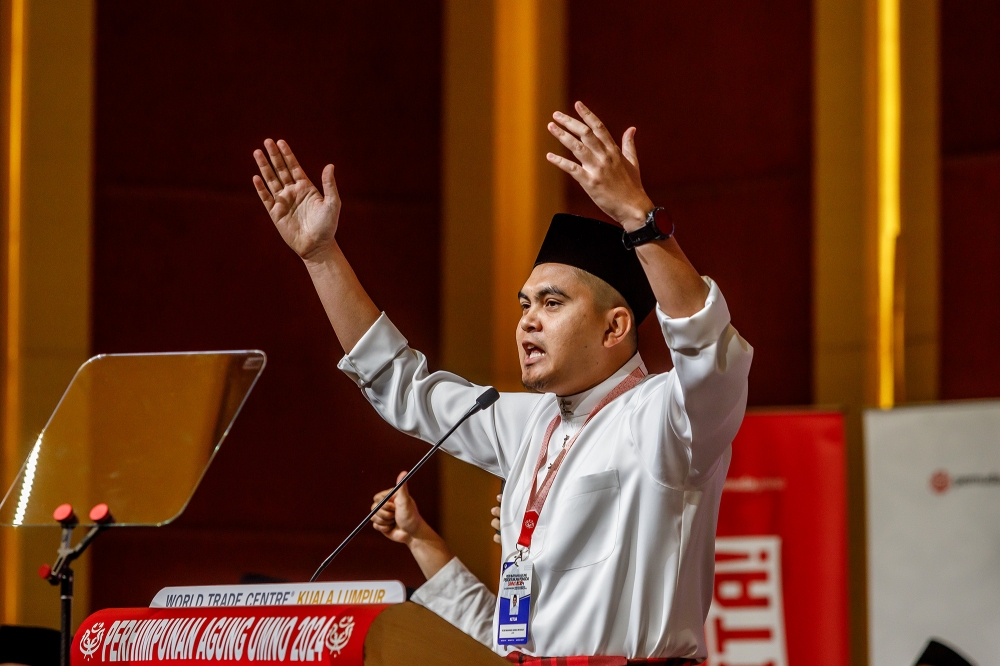
The debate over political party coalitions and government participation has intensified as Umno Youth chief Datuk Dr Akmal Saleh pushed back against what he characterises as inconsistent demands from the opposition. Speaking from a position of frustration with existing criticism, the Umno Youth leader has raised pointed questions about why Barisan Nasional components face pressure to withdraw from government when they form electoral partnerships elsewhere, whilst similar expectations are not equally applied to the ruling coalition's members.
This latest intervention reflects deepening tensions within Malaysia's fractious political landscape, where the lines between coalition loyalty and electoral flexibility have become increasingly blurred. The underlying dispute centres on how political parties should navigate the tension between maintaining their roles in government and pursuing independent electoral strategies outside formal coalition structures. For Malaysian voters and political observers, this debate carries significant implications about the stability and coherence of the nation's governance arrangements.
The core of Akmal's challenge appears directed at what he perceives as selective application of political principles. If the underlying principle is that parties in government must maintain exclusive loyalty to their coalition, he suggests this rule should operate uniformly across all political combinations. His rhetorical question effectively highlights the apparent double standard: why should Barisan Nasional face unique pressure to quit government positions when Pakatan Harapan coalition members similarly engage with external political arrangements to advance their interests.
This friction points to a broader Malaysian political reality. Since the complex power-sharing arrangements that emerged after the 2020 general election, the country has witnessed extraordinary fluidity in political partnerships. Parties have simultaneously occupied positions within government whilst maintaining separate electoral identities and pursuing opportunistic alliances. Such arrangements have become normalised to a degree that would have seemed unthinkable in earlier periods of Malaysian politics, when coalition discipline was typically more stringent.
The Umno Youth position gains particular resonance because it articulates a grievance shared by many observers: that criticisms of political conduct are frequently levelled selectively depending on which coalition is being judged. If preventing coalition partners from making independent electoral moves is genuinely desirable policy, then consistency would demand its universal application. The fact that such consistency does not appear to exist suggests that the principle itself may be more strategically motivated than principled.
Packatan Harapan Youth faces an awkward position in this exchange. The organisation would need to articulate why its coalition members should be exempted from the same expectations imposed on Barisan Nasional. Any attempt to justify differential treatment would likely expose inconsistencies that critics could exploit. Conversely, accepting the logic of Akmal's challenge would require acknowledging that either all parties should face such restrictions or none should.
For Malaysian political stability, this debate carries practical consequences. Coalitions function most effectively when member parties understand and accept the boundaries of their participation. When those boundaries are enforced inconsistently, it creates resentment and erodes the legitimacy of governance structures. Political leaders may increasingly feel justified in pursuing independent strategies outside coalition arrangements, knowing that similar moves by other parties faced no serious consequences.
The international dimension adds another layer. Observer nations and international political commentators often scrutinise Malaysian governance for signs of instability. Visible conflicts within government coalitions about the terms of participation can undermine Malaysia's image as a stable democratic nation with functioning institutional checks. Yet such conflicts are nearly inevitable when political parties feel they are being held to different standards than their competitors.
Umno's position in this debate also reflects its current strategic considerations. As Malaysia's historically dominant party, now sharing power in a complex arrangement, Umno seeks to protect its flexibility and freedom of manoeuvre. The party benefits from being able to pursue alliances and positioning itself as victim of unfair criticism serves strategic purposes beyond the immediate debate about coalition principles.
Moving forward, Malaysian political leaders will need to develop clearer frameworks governing coalition behaviour. Whether this involves written agreements specifying what actions constitute coalition breach, or whether it requires acceptance of greater political fluidity, remains to be determined. What seems evident is that the current ad hoc approach, where accusations of disloyalty emerge reactively based on perceived slights, cannot indefinitely sustain functional governance arrangements.
The Umno Youth challenge to Pakatan reflects genuine frustration with political inconsistency, but it also highlights the difficulty Malaysian political elites face in establishing legitimate, universally applicable principles for multi-party governance. Until such principles are established and consistently enforced, allegations of selective application will continue to undermine trust within governing coalitions and complicate Malaysia's broader democratic development.

