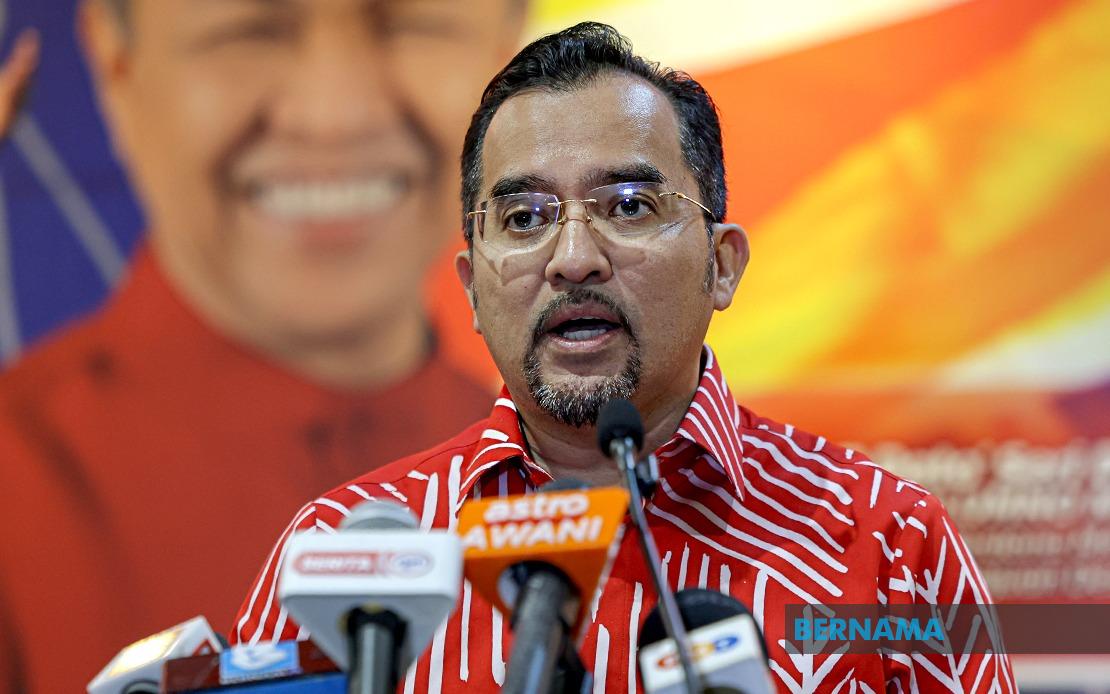
UMNO has taken a significant step toward flexibility in its electoral strategy by granting its state-level leadership broad authority to engage in political discussions with prospective coalition partners for the forthcoming election cycle. The mandate, approved during a Supreme Council gathering chaired by party president Datuk Seri Dr Ahmad Zahid Hamidi, represents a deliberate shift toward decentralized decision-making that recognizes the varying political dynamics across Malaysia's thirteen states and the federal territories.
The authorization, announced by UMNO secretary-general Datuk Dr Asyraf Wajdi Dusuki following the late evening meeting at Menara Dato' Onn in central Kuala Lumpur, signals that the party is preparing for multiple electoral scenarios rather than rigidly adhering to a single national coalition blueprint. This approach allows state leaders who understand their local political landscapes to seize opportunities for cooperation that might strengthen UMNO's position in diverse geographical and demographic contexts. Such flexibility has become increasingly important in Malaysian politics, where state-level considerations often diverge from national-level alliances.
Crucially, UMNO's Supreme Council emphasized that any such negotiations must be anchored in what the party describes as sincerity and trust rather than coercion or intimidation. This framing suggests an acknowledgment of past tensions within Malaysia's political ecosystem, where coalition arrangements have sometimes appeared transactional or built on unstable ground. By explicitly ruling out pressure tactics, UMNO appears to be signaling to potential partners that it seeks genuine alignment on shared principles rather than mere seat-sharing convenience. The statement carries particular weight given the complex landscape of federal and state-level coalitions that has characterized Malaysian politics since 2018.
The Supreme Council's decision also reflects UMNO's recognition that different state contexts require tailored political responses. A coalition arrangement that makes sense in an urban-dominated state like Selangor may not apply to rural-focused states, or to states where particular religious or communal considerations carry different political weight. Granting state leaders negotiating authority therefore represents pragmatism—the party's central leadership sets broad parameters while allowing regional flexibility that could prove advantageous in a multi-cornered contest.
Simultaneously, UMNO moved to strengthen its relationship with its primary Islamist ally by formally inviting PAS leadership to participate in the 2026 UMNO General Assembly, scheduled for September 9 to 12. This gesture, made at the same meeting, underscores UMNO's interest in maintaining cohesion within the broader Malay-Muslim political constituency even as state units explore other partnerships. The invitation represents both symbolism and substance—it keeps dialogue channels open with PAS while potentially laying groundwork for coordinated action at the national level.
Three companion events are being organized during the general assembly week, including the 2026 Malay Education Convention and the Malaysian Islamic Scholars Convention on September 8. These gatherings reflect UMNO's strategy of framing itself not merely as a political party but as custodian of broader Malay-Muslim institutional interests and intellectual discourse. For Malaysian readers, this multi-layered approach suggests UMNO is attempting to consolidate its traditional support base while simultaneously remaining open to tactical adjustments at the state level.
The party also reaffirmed its commitment to the rule of law and due process, stating unequivocally that no individual should be deemed guilty absent formal charges, trial, and conviction. This statement carries particular significance in the Malaysian context, where questions about accountability, institutional independence, and the treatment of political figures have periodically dominated headlines. UMNO's reiteration that it will not shield members or leaders from legal consequences—provided those consequences flow through proper judicial channels—attempts to position the party as respectful of institutional norms while simultaneously protecting against selective prosecution allegations.
The timing of these announcements is noteworthy given the Malaysian electoral calendar. The next general election is not constitutionally mandated until 2027, yet discussions about coalition arrangements are already intensifying across the political spectrum. UMNO's decision to formalize state-level negotiating authority suggests confidence that such discussions will prove productive, but also awareness that early positioning and alliance-building could yield advantages in a competitive political environment. Southeast Asian political observers have noted that Malaysia's coalition politics have become increasingly fluid, with configurations changing more frequently than in past decades.
For UMNO specifically, empowering state units reflects lessons from recent election cycles. State-level variations in support have sometimes undermined national coalition strategies, and conversely, strong state-level performance has sometimes provided platforms for national political influence. By institutionalizing decentralized negotiating authority, UMNO seeks to capture these advantages while maintaining overall party coherence through Supreme Council oversight of principles and parameters.
The implications for Malaysian politics extend beyond UMNO alone. Other major parties—particularly PAS, DAP, and PKR—will likely interpret these moves as signals about UMNO's electoral strategy and openness to various coalition configurations. The invitation to PAS may be read as reassurance of the foundational importance of that relationship, while the authorization for state-level negotiations suggests UMNO believes it can improve its position through flexible arrangements tailored to local conditions. This multi-pronged approach reflects the reality that Malaysia's political future will likely be determined by numerous localized contests rather than a uniform national narrative.
For Malaysian voters and observers, these developments underscore that coalition politics remain fluid and that major parties are actively preparing for electoral competition through both relationship maintenance and strategic flexibility. UMNO's decisions reflect a party attempting to navigate between institutional loyalty to core allies like PAS and opportunistic partnerships at the state level where local conditions warrant. How these authorized negotiations unfold across Malaysia's varied political landscape will significantly shape the trajectory toward the next general election and the composition of Malaysia's government.

