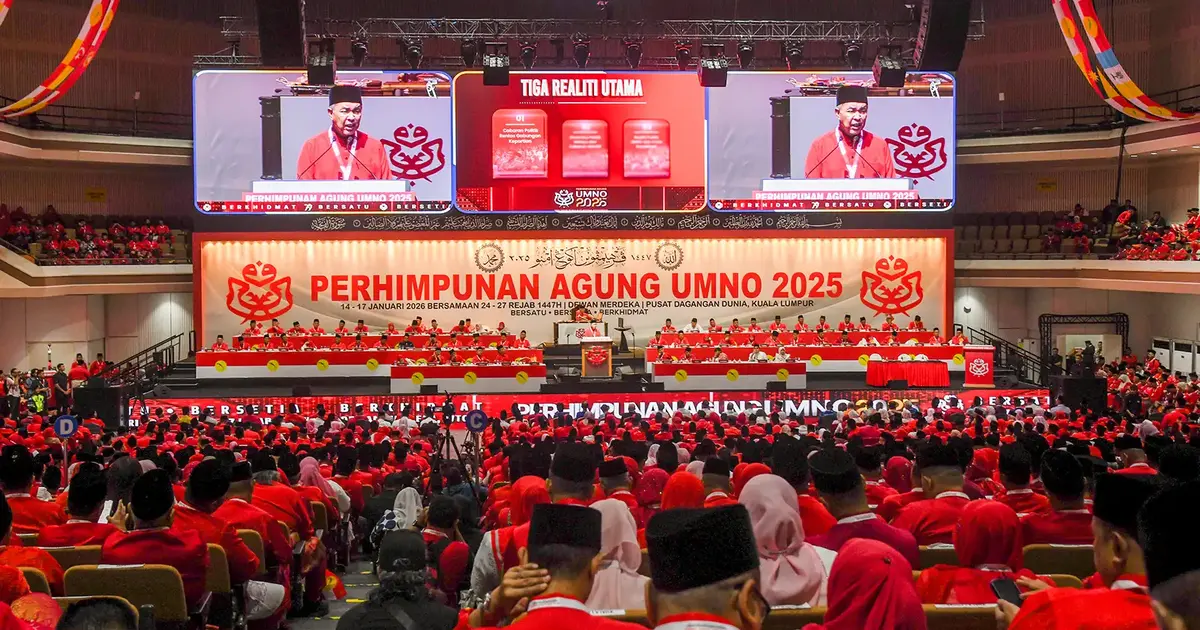
Umno division leaders across Negeri Sembilan are expressing considerable frustration over the coalition's seat allocation framework, which has granted Perikatan Nasional partners a significant portion of the state's electoral contests. The discontent centres on how the seat distribution has been structured between component parties, with internal party voices questioning the fairness of arrangements that appear to disadvantage Umno's grassroots mobilisation efforts in the state.
The core grievance focuses on Wawasan, a relative newcomer to the coalition that is contesting its inaugural election, receiving four seats in what party insiders regard as a disproportionately generous allocation. Division leaders have pointed out that a party with no proven electoral track record or established ground machinery in Negeri Sembilan has been positioned to contest a quarter of the seats allocated to PN, a distribution that contradicts conventional coalition negotiation principles where seat shares typically correlate with organisational strength and electoral viability.
This tension reflects deeper structural challenges within Malaysia's coalition politics, where multiple parties must negotiate seat divisions while maintaining internal party cohesion. When newer or smaller parties receive seemingly outsized allocations, established parties with stronger organisational presence and historical performance often face pressure from rank-and-file members who question leadership negotiating decisions. In Negeri Sembilan specifically, Umno's grassroots infrastructure remains substantially more developed than Wawasan's nascent party organisation, making the seat distribution appear incongruent with ground realities.
The allocation of 11 seats to PN partners means Umno itself receives a correspondingly reduced number of contests in Negeri Sembilan, directly affecting opportunities for party members to stand as candidates. For ambitious Umno politicians and aspiring candidates in the state, this distribution translates into fewer pathways to pursue elected office under their own party banner, creating tangible sources of personal disappointment alongside broader party-political frustration.
Wawasan's substantial allocation becomes particularly contentious when examined against the party's track record. As an organisation participating in its first general election cycle, the party lacks the voter relationships, campaign machinery, and name recognition that established parties have cultivated over decades. Division leaders worry that allocating four seats to an untested entity represents a gamble with precious coalition resources, especially when Umno's proven ability to deliver votes in these constituencies could potentially secure stronger results.
The reported dissatisfaction illustrates how coalition mathematics, while necessary for sharing power across multiple parties, inevitably generates internal tensions. Umno leaders who negotiated this arrangement presumably believed trading seats for other coalition benefits made strategic sense, but they now face the difficult task of justifying these decisions to division heads and candidate aspirants whose immediate interests appear directly harmed by the deal.
Negeri Sembilan's political composition adds another layer of complexity. The state has traditionally been competitive between Umno and Pakatan Rakyat, with electoral outcomes often determined by narrow margins. Every seat carries meaningful consequences for overall coalition performance, making seat allocation decisions particularly high-stakes. When leadership allocates seats to parties believed to have lower electoral competitiveness in specific constituencies, grassroots members naturally worry about surrendering winnable contests.
This situation also reflects broader challenges facing Umno as it attempts to maintain internal unity while operating within coalitions that include parties with divergent interests and capabilities. The party's division structure means that local leaders possess genuine organisational authority and constituency knowledge, allowing them to question national-level decisions when those decisions appear to contradict ground-level realities or disadvantage their divisions' electoral prospects.
For Malaysian observers tracking coalition stability, this reported discontent serves as an important indicator of potential tensions within the Barisan Nasional and PN arrangements heading into electoral contests. Coalition governments depend on maintained cohesion among component parties, and visible grassroots frustration, even when not translating immediately into party splits, can gradually erode the collaborative relationships that coalition politics requires. Division leaders' willingness to voice criticism through media channels suggests that internal consensus-building may have been incomplete when seat allocations were finalised.
The situation also raises questions about how Wawasan will perform in its allocated constituencies. If the party struggles to mount competitive campaigns or fails to translate seat allocations into actual victories, the controversy over its allocation will likely intensify retrospectively, potentially affecting future coalition negotiations. Conversely, if Wawasan unexpectedly performs strongly, it could vindicate the allocation decision and provide narrative support for coalition leaders' negotiating choices.
Moving forward, Umno leadership faces the challenge of reinforcing internal party discipline while acknowledging legitimate grassroots concerns about resource distribution. Division leaders' reported dissatisfaction suggests that coalition managers must provide compelling explanations for controversial allocation decisions or risk continued internal friction as campaigns intensify and candidates face the actual task of contesting allocated seats.

