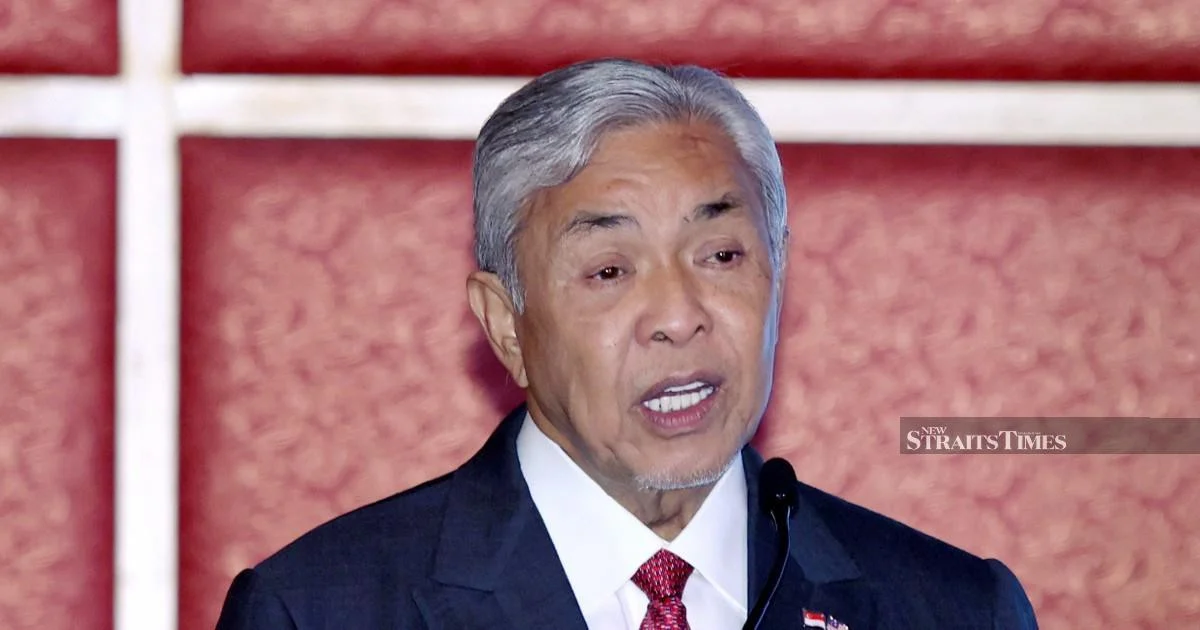
Umno president Datuk Seri Dr Ahmad Zahid Hamidi has flatly rejected assertions that his party has struck a deal with Pas over constituency allocations ahead of the Negri Sembilan state election, casting fresh doubt on the stability of their broader political alliance at a critical juncture in Malaysian politics.
The dismissal comes amid mounting speculation within coalition circles about the terms under which the two Islamist-leaning parties might contest in the Menteri Besar election-triggering polls in Negri Sembilan, one of Malaysia's crucial swing states. Zahid's public rebuttal signals potential friction over seat distribution—a perennial source of tension within the Barisan Nasional and Perikatan Nasional blocs during state and federal contests.
Negri Sembilan holds particular strategic significance for both Umno and Pas. The state has historically been a bellwether for national political shifts, and control of its state government influences the balance of power in the Dewan Rakyat's composition. For Umno, maintaining dominance in what it considers a traditional stronghold remains essential to its credibility among Malay-Muslim voters, while Pas views every contested seat as an opportunity to expand its Islamic credentials and grassroots penetration.
The timing of Zahid's statement underscores internal coalition disagreements that have repeatedly surfaced since Perikatan Nasional and Barisan Nasional formalised cooperation following the 2022 general election. Previous contests in various states have revealed competing interests between coalition partners, with each entity seeking to maximize seat counts. Pas's aggressive electoral strategy in recent years has frequently clashed with Umno's preference for maintaining incumbent representation, creating friction that occasionally boils over into public recriminations.
Zahid's categorical denial also reflects Umno's traditional anxiety about Pas expansion. The party has long feared that yielding too many contests to Pas erodes voter confidence in Umno's ability to represent Malay-Muslim interests. This concern intensified after Pas's strong performances in the 2018 and 2022 general elections, which demonstrated the party's growing organizational capacity and appeal among younger, more religiously inclined voters in both urban and rural constituencies.
The Negri Sembilan election assumes heightened importance given recent electoral volatility across Malaysian states. Governments that fail to manage coalition partnerships effectively risk fragmenting support, a lesson reinforced by recent state-level political upheavals. For Umno, demonstrating unity with Pas while maintaining electoral boundaries is a delicate balancing act that requires careful communication with party leadership and grassroots members who sometimes view Pas with suspicion.
Pas, conversely, has consistently pressed for expanded seat allocations in every coalition contest, arguing that its superior performance in recent elections justifies increased representation. Party leaders maintain that their organization extends into constituencies where Umno struggles with rural and semi-urban Malay voters, making Pas the natural choice in such areas. This argument carries weight given demographic shifts and voting pattern changes visible across Malaysia's electoral map.
The absence of a formal agreement, as Zahid maintains, does not necessarily indicate breakdown of coalition cooperation. Rather, it may reflect a decision by senior leadership to defer detailed seat negotiations until later in the election cycle, allowing time for internal consultations within both parties and with other Barisan Nasional and Perikatan Nasional component parties. Such postponement provides opportunity for cooling tensions and building consensus around contested seats through behind-the-scenes discussions.
For Malaysian voters and observers monitoring coalition stability, Zahid's statement carries implications beyond Negri Sembilan. The broader Barisan Nasional-Perikatan Nasional arrangement, which underpins the current federal government, depends on managing such disagreements without allowing them to escalate into damaging public disputes. The Negri Sembilan contest therefore becomes a test case for coalition discipline and the capacity of senior leaders to resolve contentious issues through negotiation rather than confrontation.
The state election also occurs in an environment of heightened political sensitivity nationally. With federal elections potentially within the medium term, all parties recognize that poor performances in state contests can diminish momentum and raise questions about electoral viability. This context makes seat negotiations unusually consequential, as each party calculates that optimal constituency selection could significantly impact both their absolute vote share and subsequent claims on future electoral positions.
Umno's handling of this situation will likely influence perceptions of its leadership under Zahid's stewardship. Party members and supporters scrutinize coalition negotiations closely, using them as barometers of Umno's political standing relative to rivals. Conceding too many seats to Pas risks communicating weakness, while refusing reasonable accommodation could strain the coalition partnership essential to Umno's continued participation in federal government.
Observers expect formal seat allocation announcements to emerge after consultations between Umno and Pas leadership conclude. The negotiations will probably involve not just Negri Sembilan but also future state contests and potential federal by-elections, allowing negotiators to construct packages that satisfy both parties by offering trade-offs across multiple electoral opportunities. Until such arrangements solidify, public statements like Zahid's likely serve to stake negotiating positions rather than reveal fundamental disagreements that threaten coalition cohesion.

