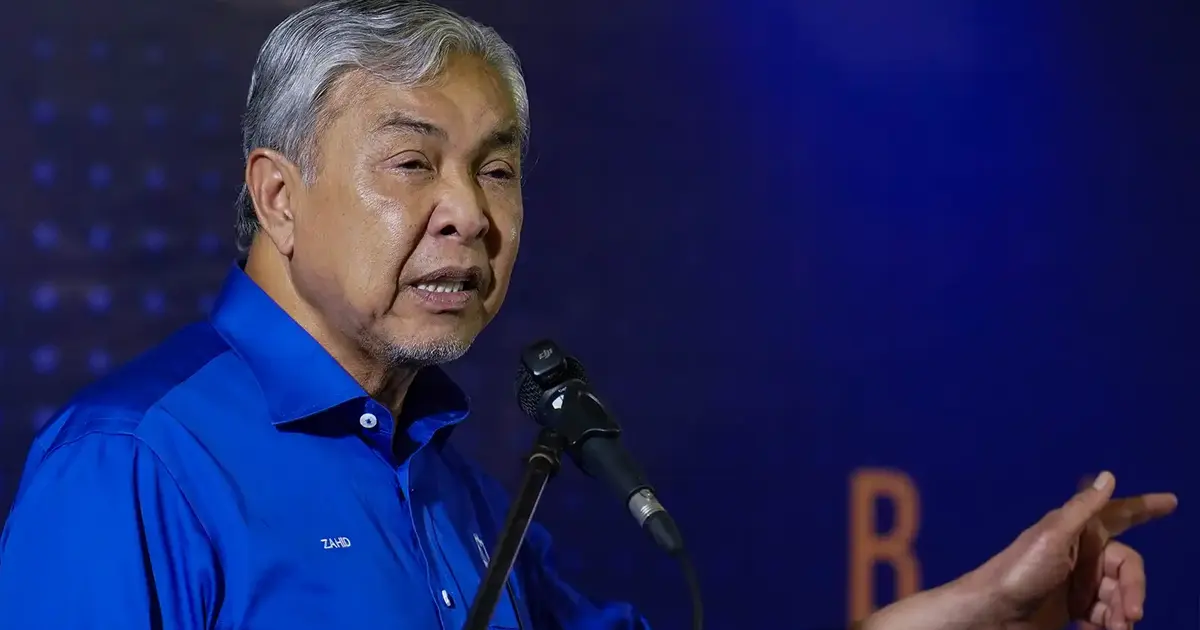
Umno deputy president Zahid Hamidi appears willing to pursue the prime ministerial position, while PAS seeks a return to government influence—dynamics that could facilitate a renewed partnership between the two parties, according to Puad Zarkashi, a senior figure within PAS. The observation underscores a significant shift in Malaysia's political landscape, where historical animosity and competing ideologies have given way to pragmatic considerations of electoral viability and ministerial power.
The trajectory of Umno-PAS relations has been marked by volatility and mutual suspicion since their formal partnership dissolved in the late 1990s. Beyond ideological differences—Umno's secular-nationalist orientation contrasting sharply with PAS's Islamic-focused platform—the parties have battled fiercely for the same electoral constituencies, particularly in the Malay-majority states. Yet Puad's remarks suggest that contemporary political imperatives may override historical grievances, at least temporarily. Both organizations face existential pressures from alternative power bases and shifting voter preferences, creating mutual incentive for cooperation.
Zahid's aspirations for the highest executive office represent a crucial ingredient in any potential alliance formula. As Umno seeks to consolidate its position following years of internal turbulence and electoral setbacks, a leader with evident ambition to reclaim the premiership could galvanize party machinery and mobilize grassroots support. The deputy president's profile carries symbolic weight within Umno—a party that has historically dominated Malaysian politics but has witnessed its supremacy eroded through internal divisions and shifting demographic realities. For PAS, alignment with an Umno leader harboring prime ministerial ambitions offers leverage in coalition negotiations, allowing the Islamic party to extract significant concessions regarding ministerial portfolios and policy influence.
PAS's strategic objective of returning to government speaks to the party's frustration with its current opposition status. The party has controlled Kelantan consistently and has intermittently governed Terengganu, yet remains excluded from federal executive power. This exclusion has constrained PAS's ability to implement its Islamic agenda and distribute patronage networks that sustain electoral support. A coalition arrangement would permit PAS to access federal resources and decision-making authority, strengthening its position in core constituencies while potentially expanding influence into regions where the party currently lacks significant presence.
The immediate political context makes such an arrangement plausible. Malaysia's fractured parliament and diverse coalition landscape have generated chronic instability, making majority-building exercises perpetually complicated. Any governing coalition requires assembly of disparate parties representing varied regional, ethnic, and ideological constituencies. Under such conditions, traditional rivalries yield to calculation of electoral mathematics. Umno and PAS together command substantial parliamentary representation and significant grassroots organizational capacity, particularly in peninsular Malaysia where both parties maintain deep institutional roots.
However, formidable obstacles persist in resurrecting this partnership. PAS has positioned itself as the defender of Islamic interests and Malay-Muslim concerns, while Umno has maintained more inclusive, multi-communal rhetoric—though this distinction has blurred considerably in recent years. The party bases harbor deep mistrust rooted in decades of competition and inflammatory campaign rhetoric. Umno's non-Muslim coalition partners and PAS's Islamist orientation create obvious friction points regarding governance priorities and symbolic initiatives. Additionally, personalities within both parties have accumulated grudges through years of acrimonious political combat.
Regional dynamics within Southeast Asia amplify significance of this potential realignment. Malaysia's political orientation influences broader regional stability and the balance of power among major Southeast Asian actors. A revitalized Umno-PAS coalition would signal a rightward ideological shift, potentially reshaping Malaysia's approach to regional diplomacy, Islamic-related policies, and engagement with neighboring nations. Countries monitoring Malaysian developments would assess implications for trade relationships, religious minority protections, and regional security cooperation frameworks.
Puad's characterization of both parties as possessing short-term objectives provides a revealing analytical framework. This framing acknowledges that coalition motivations stem from immediate political survival and opportunity-seeking rather than programmatic alignment or shared long-term vision. Such transactional alliances, while pragmatically rational, frequently prove brittle when political circumstances shift. Competing ambitions within either party, electoral disappointments, or emergence of alternative coalition possibilities could rapidly destabilize any agreement reached between Umno and PAS leadership.
For Malaysian voters and Malaysia's broader political trajectory, such developments warrant careful scrutiny. Coalition arrangements among established parties determine not merely which individuals occupy ministerial positions, but which constituencies exercise disproportionate influence over policy priorities, resource allocation, and national direction. An Umno-PAS coalition would likely emphasize economic nationalism, enhanced Islamic institutional roles, and Malay-Muslim-centric social policies—outcomes that would reshape Malaysia's identity and governance approach compared to coalitions incorporating significant non-Malay or secular-oriented participation.
The feasibility of this potential partnership ultimately depends upon whether both parties' leadership structures can overcome institutional resistance and manage expectations among party members accustomed to viewing the other as a political adversary. Zahid's control over Umno mechanisms and Puad's influence within PAS circles suggest at least some organizational capacity exists to pursue such negotiations. Yet transformation of preliminary signals into formal alliance agreements requires navigating party conventions, addressing grassroots skepticism, and establishing clear power-sharing arrangements acceptable to both organizations.
As Malaysian politics continues its volatile evolution, the possibility of Umno-PAS reconciliation represents one trajectory among several alternatives competing for realization. Whether this potential realignment materializes depends on calculations made by party elites responding to electoral pressures, shifting voter demographics, and broader regional political developments that remain in flux.

