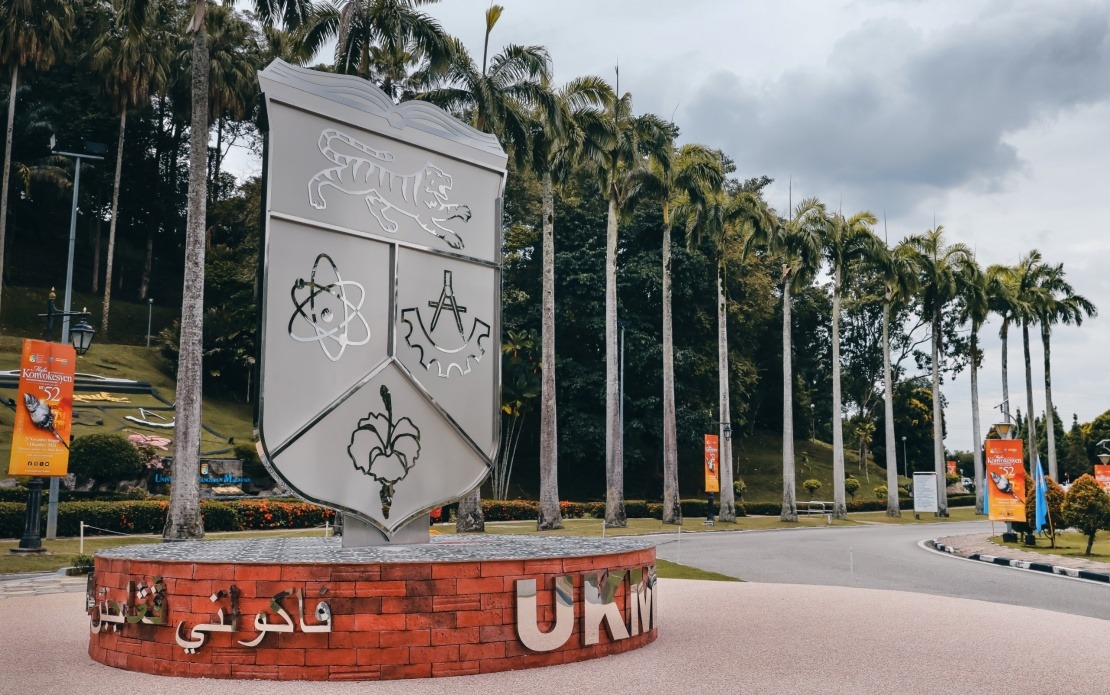
Universiti Kebangsaan Malaysia (UKM) has moved swiftly to counter misinformation spreading across social media platforms, issuing a detailed rebuttal to allegations regarding the composition of its student body. The institution categorically denied claims that international students outnumber local ones at a ratio of five to one, a narrative that has gained traction in online circles and raised concerns about the university's commitment to serving Malaysian students.
The university's official statement drew upon current enrollment figures maintained by its Academic Management Centre and the Centre for Continuing Education and Professional Studies. According to these records, UKM's total student population stands at 46,151 individuals, with international undergraduates comprising merely 3,917 of this figure. This data fundamentally contradicts the viral assertion, revealing a stark discrepancy between the claimed and actual proportions of foreign learners on campus.
When calculating the genuine ratio based on these figures, international undergraduates represent approximately eight percent of the overall student body. This translates to roughly one international student for every twelve enrolled learners, a composition vastly different from the sensationalized 5:1 claim that circulated online. The numerical correction highlights how significantly misinformation can distort public perception of higher education institutions and their enrollment policies.
The university has signaled its intention to address the spread of false narratives aggressively, warning that it will pursue legal remedies against individuals or entities responsible for disseminating defamatory or inaccurate information. This stance reflects growing frustration among Malaysian institutions with the speed and reach of unverified claims on social platforms, which can damage institutional credibility before fact-checking mechanisms activate. UKM's willingness to contemplate legal action underscores the severity with which it views reputation management in an increasingly hostile information environment.
UKM's foundational mission has always centered on advancing educational opportunities for Malaysian citizens, and the institution emphasized this historical commitment in its response. The university reaffirmed that the enrollment of international students represents a supplementary initiative rather than a substitution for local student admission. This clarification addresses a broader anxiety among Malaysian families that internationalization policies might inadvertently reduce opportunities for domestic applicants seeking university places.
The controlled admission of international students, according to the university's statement, aligns with broader governmental objectives outlined by the Ministry of Higher Education. Malaysia's strategy to internationalize its higher education sector aims to enhance institutional prestige, generate additional revenue streams, and expose local students to diverse academic perspectives. This policy direction has been consistently promoted by successive administrations as crucial for positioning Malaysian universities competitively on the global stage.
Internationalization in Southeast Asian higher education has become increasingly central to institutional planning and national education strategies. Universities across the region compete vigorously for international student enrollment, recognizing that foreign learners contribute financially to operational budgets while elevating academic rankings and research outputs. However, this pursuit must balance against domestic constituencies' legitimate expectations that national universities prioritize admission for citizens, a tension that UKM's situation illustrates clearly.
The university directed the public to rely exclusively on its official communication channels for accurate institutional information, implicitly critiquing the echo chambers that amplify unverified claims across social media. This appeal represents a broader challenge facing educational institutions in Southeast Asia: how to counter misinformation effectively when traditional authority structures compete with decentralized digital networks that facilitate rapid information dissemination regardless of accuracy. UKM's approach combines legal threat with institutional transparency, though questions persist about whether such strategies adequately address underlying trust deficits.
For Malaysian parents and prospective students evaluating university options, this incident underscores the importance of consulting official sources when assessing institutional composition and admission prospects. The episode also reflects evolving social anxieties about globalization's impact on national institutions and local opportunities, concerns that resonate across Southeast Asia as universities expand their international footprints. UKM's response indicates that Malaysian higher education institutions remain vigilant about protecting their reputations and clarifying their commitments to serving domestic populations, even as they pursue international excellence.

