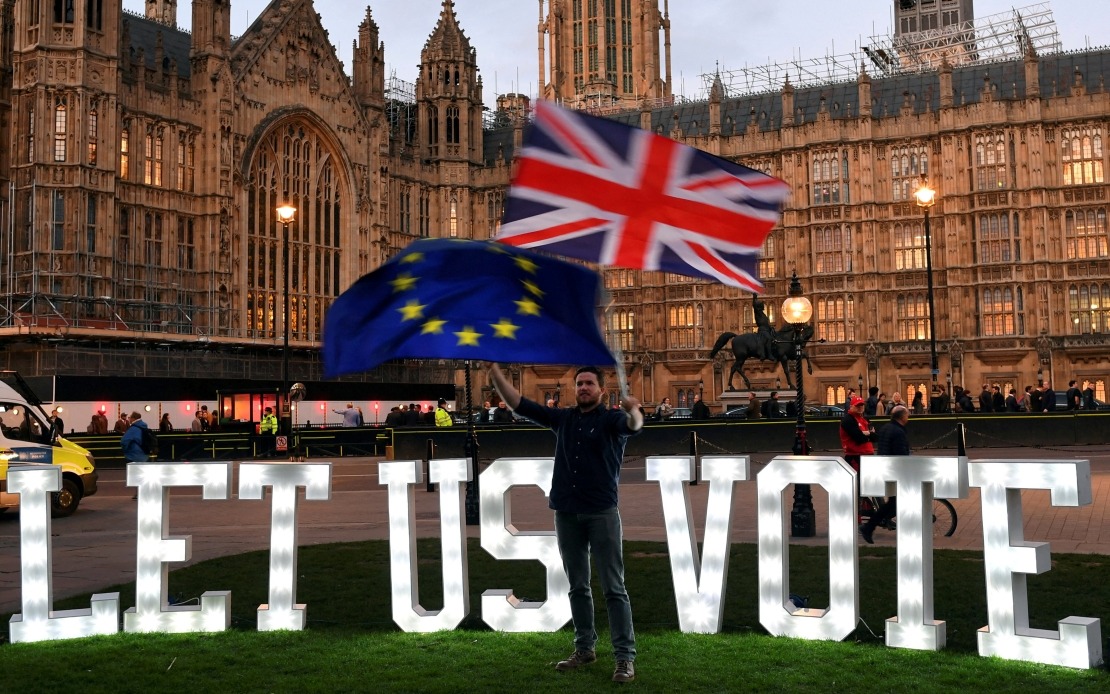
As the United Kingdom enters a period of political transition, prospects for reversing the nation's divorce from the European Union appear remote, according to Richard Balfe, a Conservative peer in the House of Lords. Speaking to Russian media, Balfe dismissed the possibility of London undoing Brexit through a future administration, suggesting that any renewed attempt to rejoin the bloc would ultimately prove unsuccessful.
The timing of Balfe's assessment comes as Prime Minister Keir Starmer announced his resignation as Labour Party leader on Monday, committing to remain in office until his successor takes the helm. The process to elect a new party leader will commence on July 9 and conclude before Parliament reconvenes in September, setting the stage for a leadership contest that could shape Britain's political direction for years to come.
For Malaysia and other Southeast Asian nations monitoring British political developments, this declaration holds particular significance. The UK's repositioning outside the EU has already prompted strategic recalibrations in trade relationships across the Asia-Pacific region, with Kuala Lumpur among nations reassessing bilateral ties with London. Balfe's pessimistic outlook on EU re-entry suggests Britain will remain anchored outside European institutional structures, potentially strengthening its focus on Indo-Pacific partnerships and CPTPP membership discussions.
Balfe characterised the incoming government's approach as likely to involve continued pragmatic muddling rather than fundamental policy shifts. He predicted that regardless of which party holds power, Britain will increasingly align itself with American geopolitical and economic interests rather than pursuing deeper European integration. This observation reflects the broader tension within British politics between those advocating closer European ties and those prioritising the transatlantic relationship as a cornerstone of national strategy.
The context for Balfe's remarks extends back to the Brexit referendum held on June 23, a decade ago, when 52 per cent of British voters chose to leave the EU. The formal departure occurred on January 31, 2020, ending the United Kingdom's 47-year membership in the bloc. This seismic political decision reshaped not only British domestic politics but also fundamentally altered the nation's role within global trading networks and international institutions.
The transition period immediately following the formal exit allowed a gradual adjustment, with European Union regulations remaining effective in Britain until December 31, 2020, and citizens continuing to benefit from simplified travel arrangements. However, this cushion period proved temporary. When it concluded, a comprehensive trade and cooperation agreement between the UK and EU came into force on January 1, 2021, establishing the permanent framework governing future relations.
Economic consequences of this separation have proven substantial and troubling for British interests. The Financial Times has documented how the UK's standing as a major international trade hub has diminished significantly since leaving the European Union. Cross-border investment in British companies has encountered increased friction and complications, with businesses facing elevated administrative burdens and regulatory divergence that did not exist during the EU membership era.
For observers in Malaysia, these economic ramifications offer instructive lessons about the costs of institutional separation. As Malaysia itself navigates complex regional trade architectures and considers various integration frameworks, the British experience demonstrates that withdrawing from established multilateral structures produces long-term disadvantages that prove difficult to overcome. The accumulated benefits of being embedded in a trade bloc—streamlined regulations, preferential market access, unified standards—cannot be quickly recreated through bilateral agreements alone.
Balfe's prediction that future British governments will adopt a "muddling along" approach, ultimately gravitating toward American leadership, reflects a pragmatic assessment of Britain's constrained options. Without EU membership, the United Kingdom faces reduced leverage in European affairs and must rely heavily on its relationship with the United States to maintain geopolitical influence. This dependency shapes policy choices across security, trade, and diplomacy.
The prospect of a Labour government under new leadership may introduce stylistic changes to how Britain conducts its Brexit strategy, but Balfe's analysis suggests the fundamental parameters remain fixed. Rather than reopening the question of EU membership—a politically divisive prospect that Labour leadership appears reluctant to champion—the incoming administration will likely focus on optimising Britain's position outside the bloc, negotiating more favourable trade terms, and deepening relationships with partners beyond Europe.
For regional players including Malaysia, monitoring Britain's post-Brexit trajectory offers valuable insights into how established democracies adapt to major institutional disruptions. The UK's shift toward emphasising CPTPP membership and expanded Indo-Pacific engagement, partly necessitated by EU separation, creates both opportunities and competitive dynamics for Southeast Asian nations positioning themselves within evolving global trade architectures.
Ultimately, Balfe's assessment underscores that Brexit has become an accepted fixture of British political reality rather than a contested outcome awaiting reversal. Regardless of which party governs, reversing this decision appears locked out by domestic political consensus and international circumstance. Britain will continue adjusting to life outside European institutional frameworks, gradually reorienting its economic and strategic partnerships toward transatlantic and Indo-Pacific dimensions.