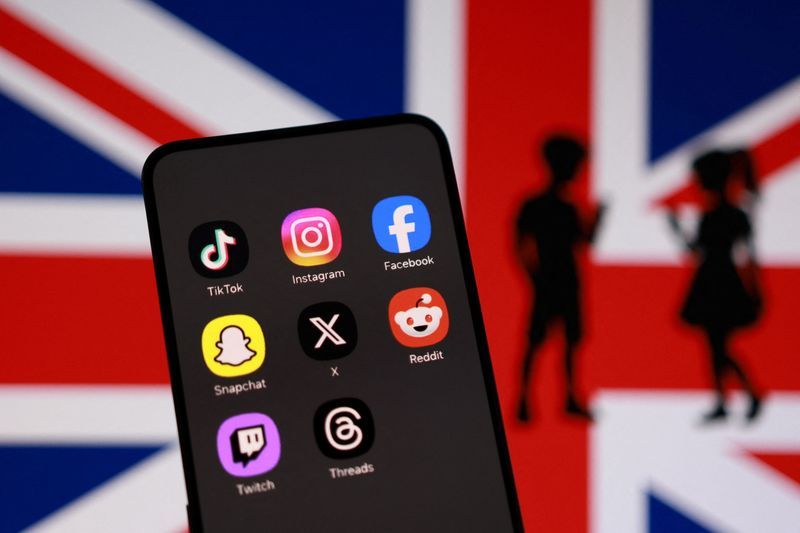
Britain's government is preparing to roll out a default overnight curfew on social media platforms for teenagers aged 16 and 17, marking the latest escalation in its attempt to protect young people from the potential harms of constant digital connectivity. Users in this age bracket will find themselves blocked from accessing social media apps between midnight and 6 a.m. unless they deliberately switch the default setting, a move announced on Tuesday that follows the government's earlier proposal to ban social media entirely for anyone under 16.
The measure reflects mounting anxiety among policymakers and parents worldwide about the psychological and physical toll that unrestricted social media use can inflict on adolescents. Sleep deprivation, anxiety, and declining mental health have become recurring concerns as young people spend increasingly late nights scrolling through feeds designed to maximise engagement. By establishing midnight as a hard boundary through default settings, the government aims to reclaim sleep schedules for teenagers and create protected time for education, family interaction, and offline activities.
Under the framework being developed, technology companies will also be required to disable by default the addictive features that platforms engineer into their products—infinite scroll, autoplay, and algorithmic recommendations specifically calibrated to keep users engaged. These so-called engagement mechanics have become hallmarks of social media design, deliberately crafted to encourage prolonged use. Making such features opt-in rather than automatic represents a fundamental shift in how platforms operate, effectively prioritising user wellbeing over metrics of daily active users and time spent.
The responsibility for implementation falls squarely on technology companies, with the government taking the unprecedented step of making compliance a legal requirement rather than a voluntary initiative. Online Safety Minister Kanishka Narayan told LBC Radio on Wednesday that the government is "forcing the tech companies to do it," emphasising that firms will face "very severe regulatory sanction" if they fail to conduct robust age verification. This hardline stance signals that Britain intends to use regulatory teeth to ensure compliance, moving beyond softer approaches that have historically allowed platforms considerable discretion.
The government's insistence on rigorous age verification stems from lessons learned elsewhere. Australia, which became the first country to implement a social media ban for children under 16, discovered that platforms were fundamentally failing at the initial hurdle of confirming users' ages. This technical failure rendered the entire regulatory framework ineffective, as tech companies struggled with—or showed reluctance toward—developing reliable age-checking mechanisms. Britain appears determined to avoid repeating this stumble, explicitly conditioning the success of its overnight curfew on companies' ability to verify that users are genuinely 16 or 17.
The timeline for implementation reflects the complexity of rolling out such measures across multiple platforms simultaneously. Regulations will be presented to parliament by the end of the year, with the actual enforcement beginning in spring 2027. This extended implementation window allows tech companies time to rebuild their systems while giving policymakers space to refine rules based on early feedback. However, the lag also creates uncertainty about whether platforms will invest genuinely in compliance or attempt to find technical workarounds that satisfy the letter rather than the spirit of the law.
Technology Minister Liz Kendall framed the initiative as essential for adolescent development, arguing that uninterrupted overnight periods would give young people the sleep necessary for school performance and family relationships. This messaging taps into broader parental anxiety about screen time while positioning the government as protective of child welfare. The emphasis on sleep aligns with neuroscientific evidence showing that adolescent brains require consistent sleep for cognitive development and emotional regulation, making the timing of the curfew—midnight to 6 a.m.—scientifically justified.
Notably, the major platforms—Meta, ByteDance (TikTok's parent), and Google (YouTube's owner)—declined to comment immediately when approached by media outlets. This silence could suggest either internal deliberation about compliance strategies or strategic quietness pending regulatory details. Each company operates under different regulatory regimes across jurisdictions, and Britain's move may foreshadow similar requirements across other Western democracies, making their response consequential for global operating models.
Criticism from the opposition Conservative Party, articulated by education policy chief Laura Trott, highlights a fundamental tension in the government's approach. Trott argued that a curfew users can easily disable lacks enforceability and logical consistency—if 16- and 17-year-olds should access social media, why impose a curfew at all; if they shouldn't, why make it optional? This critique points to the difficulty of crafting proportionate responses that respect teenager autonomy while imposing protective guardrails. The debate reveals how even well-intentioned regulation struggles to balance developmental needs, parental authority, and individual choice.
Recent legal developments in the United States have added pressure to this debate. Both Google and TikTok settled lawsuits brought by a minor claiming that social media platforms had damaged his mental health, providing evidence that courts increasingly recognise the potential harms these services pose to young users. These settlements, arriving just as Britain finalises its own approach, validate concerns that have driven policy in London and suggest platforms may be facing mounting legal exposure globally if they fail to demonstrate adequate safeguards.
For Malaysia and the broader Southeast Asian region, Britain's regulatory moves carry significant implications. As the world's largest social media markets by user base, Asian countries are watching how wealthy democracies approach digital regulation, and successful implementation of protective frameworks may encourage similar measures locally. However, Southeast Asia's more varied regulatory landscape, different cultural attitudes toward parental authority and adolescent autonomy, and lower compliance infrastructure present distinct challenges. Whether Britain's midnight curfew becomes a template for regional policy will depend heavily on demonstrating its practical effectiveness and public acceptance.
The broader significance of these measures lies in their challenge to Silicon Valley's assumption that platforms should operate with minimal friction or oversight. By making safeguarding the default rather than an optional extra, Britain is fundamentally shifting who bears responsibility for protecting young people—from parents and individuals to technology companies themselves. If successfully implemented, this approach could reshape how social media platforms are designed globally, prioritising user wellbeing at the point of product architecture rather than relegating protection to accessible-but-burdensome settings menus buried in user accounts.

