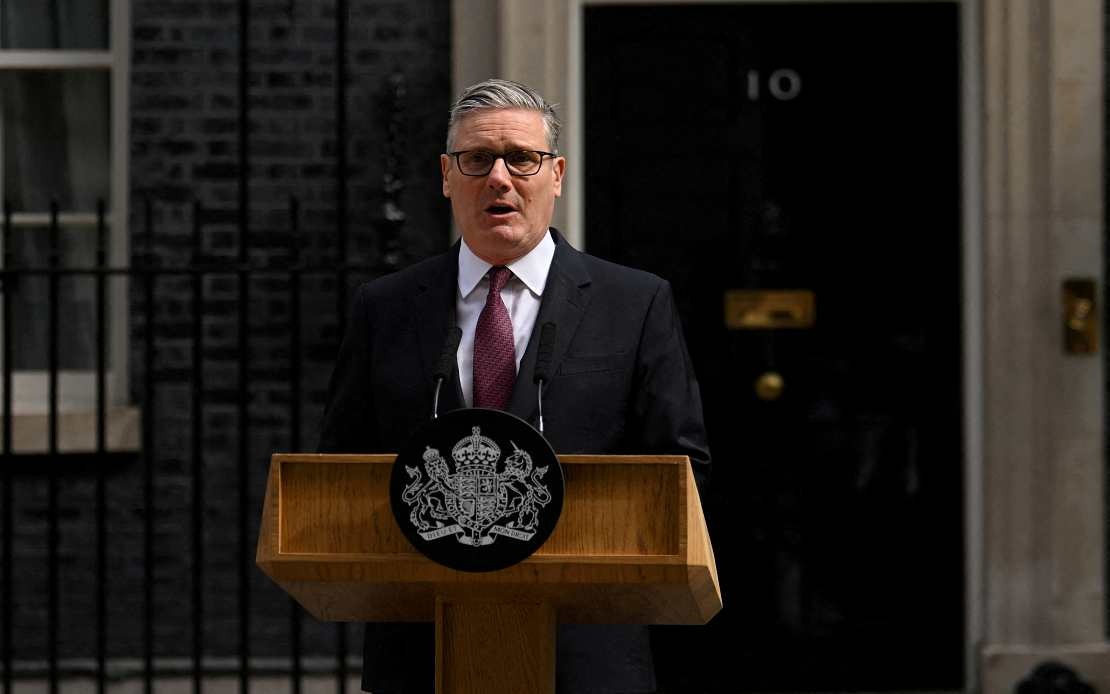
British Prime Minister Keir Starmer has made an urgent appeal for the swift renewal of ceasefire arrangements between the United States and Iran, citing deteriorating security conditions in the Strait of Hormuz and threats to commercial shipping in one of the world's most critical maritime corridors. Speaking from Paris on Monday following a "coalition of the willing" meeting with French, German and Ukrainian leaders, Starmer emphasised the gravity of the situation and the necessity for immediate diplomatic intervention to prevent further escalation in the Gulf region.
The British premier delivered a pointed condemnation of Iranian military actions, specifically targeting what he characterised as strikes on commercial vessels and operations directed at allied Gulf states. Starmer's forthright language reflected London's deep concern about the unravelling security architecture in the region and the potential consequences for international shipping and energy supplies. His remarks underscore a critical divide between military posturing and the diplomatic channels that remain available to resolve the underlying tensions fuelling recent hostilities.
Starmer signalled that the United Kingdom stands prepared to commit naval and logistical resources to restore maritime freedom of movement through the strait, a commitment that carries substantial implications for Britain's regional military posture and its relationship with Washington. The offer to deploy assets demonstrates London's willingness to shoulder responsibility for maintaining critical international shipping lanes, a role that reflects both British strategic interests and its broader commitment to maintaining global trade stability. This pledge also reflects growing Western concern that unilateral actions by either party could spiral into a broader conflict that would devastate global energy markets and disrupt supply chains across Asia and Europe.
The diplomatic impasse traces its roots to renewed military confrontation between the United States and Iran following the collapse of ceasefire arrangements. President Donald Trump has announced the reinstatement of comprehensive economic pressure on Tehran and indicated plans to impose transit fees on vessels navigating the Strait of Hormuz, a controversial approach that would essentially grant the United States unilateral control over one of the world's most essential waterways. These declarations represent a significant hardening of American policy and suggest Washington views the diplomatic window as having narrowed considerably.
Iran's effective closure of the strait earlier this year, which occurred during the escalating conflict involving Israel that commenced in late February, created severe disruptions to global maritime commerce and energy deliveries. The situation was expected to normalise following the signing of a memorandum of understanding designed to terminate the broader regional conflict in June, yet that agreement has clearly unravelled in the intervening weeks. The resumption of military exchanges between Washington and Tehran signals that the underlying disputes remain fundamentally unresolved and that neither side has confidence in the durability of negotiated settlements.
For Southeast Asian nations like Malaysia, the implications of sustained Strait of Hormuz tensions are profound and immediate. The region depends heavily on stable energy supplies and predictable maritime commerce through this chokepoint, which handles roughly one-third of global seaborne oil trade. Any prolonged disruption would translate directly into higher energy costs for regional economies, increased shipping insurance premiums, and potential supply chain disruptions affecting manufacturing sectors across the Association of Southeast Asian Nations. Malaysian shipping companies operating in the region face heightened operational risks and unpredictable transit costs, creating a drag on regional competitiveness.
Starmer's emphasis on the urgent need for ceasefire restoration and simultaneous negotiations on outstanding disputes reflects the Western preference for managed diplomatic de-escalation rather than continued military confrontation. His formula of combining ceasefire arrangements with parallel negotiations on substantive issues suggests that Western powers believe a comprehensive solution remains achievable if the immediate security situation stabilises. However, this optimistic framing must contend with the reality that both Washington and Tehran have hardened their positions and demonstrated willingness to use military force.
The involvement of French and German leaders in the Paris consultations indicates that this is not a purely Anglo-American concern but rather reflects broader European anxiety about Gulf instability. Europe's energy security and extensive commercial interests in the region give European powers a strong stake in rapid de-escalation. The presence of Ukrainian representation at these discussions suggests linkages between different regional crises in Western strategic thinking, though the connection between European security in the Black Sea and Gulf maritime disputes remains somewhat indirect.
The practical challenge confronting international diplomatic efforts lies in bridging the significant gap between the two sides' current positions and expectations. Trump's declaration of a reinstated blockade and demands for transit payments represent an extraordinarily assertive American stance that Iran is unlikely to accept without major reciprocal concessions. Meanwhile, Iran's recent military actions signal its determination to maintain leverage and demonstrate resolve to its domestic constituency and regional allies. Neither side appears prepared for the kind of comprehensive compromise that would produce a durable long-term settlement.
Looking forward, the trajectory of these negotiations will have consequences extending far beyond the immediate region. A successful British and European-led diplomatic initiative could demonstrate the viability of managing great power competition through negotiated frameworks rather than military escalation. Conversely, failure would reinforce the notion that military strength rather than diplomatic engagement determines outcomes in contemporary international relations. For regional powers including Malaysia and other ASEAN nations watching from Southeast Asia, the outcome will significantly influence perceptions of strategic stability and the reliability of international institutions in managing major power conflicts.

