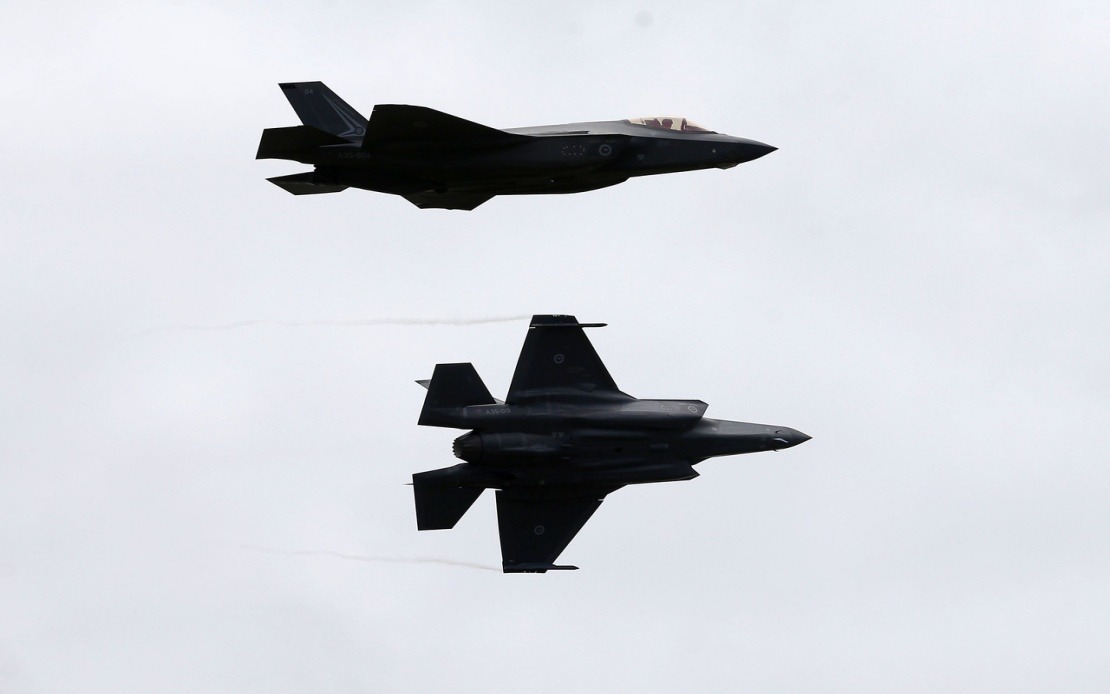
Three major defence powers—the United Kingdom, Italy and Japan—have formalized a substantial partnership by signing a £4.6 billion (US$6.1 billion) contract to accelerate development of an advanced stealth fighter aircraft. Announced in Berlin, the agreement represents a decisive step forward for the Global Combat Air Programme (GCAP), an ambitious international initiative designed to produce a sixth-generation combat aircraft that participating nations expect to deploy operationally by 2035.
The initiative reflects a strategic shift in how traditional Western powers and key Asia-Pacific allies are approaching defence capabilities in an increasingly contested security environment. Rather than pursuing independent domestic programmes, the three nations have chosen to pool resources, expertise and technological capabilities through a coordinated multinational effort. This collaborative model mirrors similar defence partnerships while offering significant cost-sharing advantages and accelerated development timelines compared to standalone national projects.
The contractual framework channels funding through Edgewing, a joint venture established in 2025 by three industrial powerhouses: BAE Systems from the United Kingdom, Leonardo from Italy, and Japan Aircraft Industrial Enhancement Co. Ltd. (JAIEC). These companies bring complementary expertise in advanced aerospace engineering, stealth technology and systems integration. The industrial consortium structure allows each nation to maintain stakes in the programme while leveraging private-sector efficiency and innovation capabilities that typically drive cutting-edge defence technology development.
Within the RAF's operational context, the emerging GCAP fighter will function as part of a broader integrated force architecture alongside established platforms including the Typhoon and F-35 variants, supported by emerging autonomous systems. This layered approach to air capability suggests British defence planners envision future air operations as inherently multifaceted, combining traditional crewed combat aircraft with unmanned systems and advanced sensor networks. The positioning alongside proven platforms also indicates recognition that transition periods between fighter generations require sustained operational depth.
The technological ambitions embedded in GCAP specifications are considerable. According to British government statements, the aircraft will incorporate sophisticated digital engineering frameworks, artificial intelligence systems and transformative technologies intended to establish performance benchmarks across the fighter community. These capabilities address anticipated threats in the 2030s and beyond, including contested electromagnetic environments, sophisticated air defence systems and advanced threat proliferation across multiple regions.
For Malaysia and the broader Southeast Asian security landscape, the GCAP development carries indirect but meaningful implications. The strengthening of defence partnerships between European and Asian powers, particularly Japan's central role in this programme, reinforces a pattern of deepening technological and strategic linkages across the Indo-Pacific. Such partnerships shape the security architecture within which regional nations operate and influence the technological trajectories of systems that may eventually inform alliance structures and capability development across Asia-Pacific defence establishments.
The current phase funded by this contract focuses specifically on design maturation, establishing performance requirements and conducting validation testing before moving toward prototype development and production. This methodical approach, extending across a decade-long development horizon toward 2035 service entry, reflects lessons learned from previous fighter programmes while acknowledging the extended timelines required for sixth-generation capabilities. The phased programme structure reduces technical and financial risk while maintaining flexibility to incorporate emerging technologies and operational lessons.
Japan's participation alongside traditional NATO members represents a notable evolution in defence cooperation patterns. As the region's leading technological power and a nation increasingly engaged in forward defence posture definition, Japan's involvement signals both capability aspirations and commitment to maintaining technological parity with advancing global aviation standards. The Japanese industrial contribution through JAIEC demonstrates commitment to indigenous aerospace capabilities while participating in cutting-edge international programmes.
The financial scale of this commitment—approximately £4.6 billion across three wealthy nations—underscores the resource intensity of contemporary fighter development. Modern combat aircraft programmes routinely require investments measured in tens of billions across full lifecycles, making multinational burden-sharing not merely attractive but often essential for programme viability. The three-nation arrangement distributes technical and financial responsibility while expanding the potential international customer base upon programme maturation.
Regional defence analysts will monitor how this partnership influences strategic calculations and procurement decisions among Southeast Asian nations. Countries evaluating fifth-generation or future fighter acquisitions will observe technological trajectories, integration approaches and capability demonstrations emerging from GCAP development. The programme's progress may influence future procurement decisions and shape perceptions regarding the viability and desirability of multinational defence industrial cooperation models.
The 2035 service entry target provides a concrete benchmark against which programme momentum and technical progress can be assessed. Achieving this timeline requires sustained political commitment, adequate funding through budget cycles, and resolution of inevitable technical challenges. Success would position GCAP nations with operational sixth-generation capabilities during a period when global security competition and technological advancement are intensifying across multiple domains.
Looking ahead, the GCAP programme represents more than a single weapons system acquisition. It encapsulates evolving partnership models, technological integration strategies and institutional arrangements that will shape defence relationships across Europe and the Indo-Pacific region for decades. For Malaysian observers and regional security professionals, the programme's development merits sustained attention as a bellwether of how major powers are reshaping defence collaboration and capability development frameworks in an era of distributed security challenges and technologically complex threat environments.

