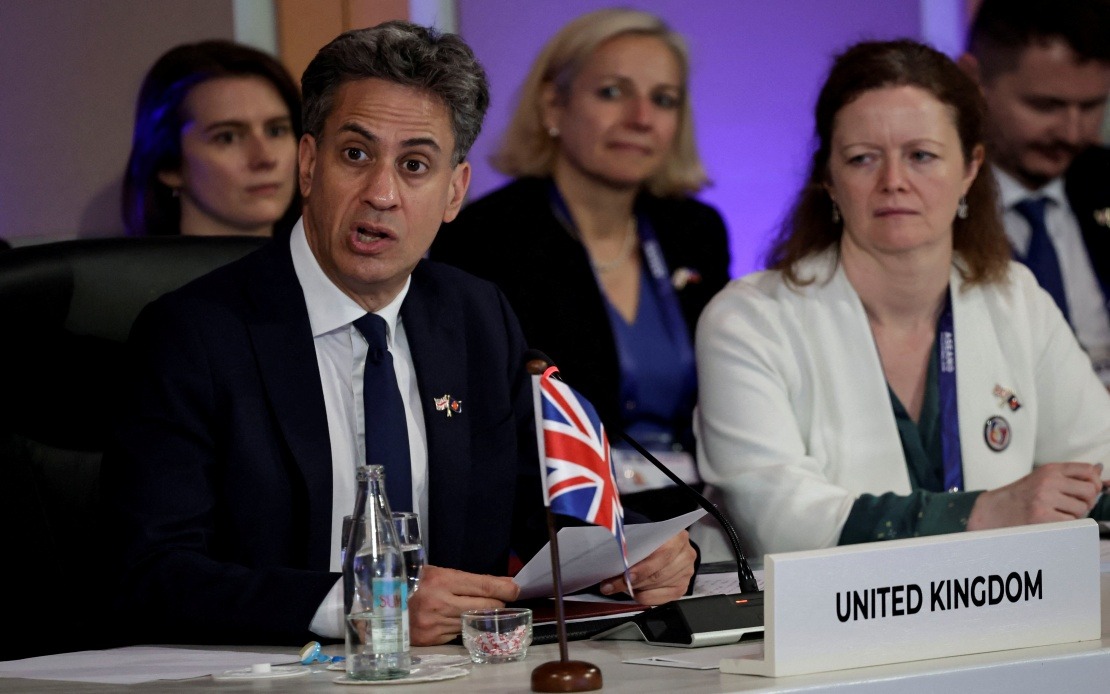
Ed Miliband, the United Kingdom's newly appointed foreign secretary, is using his first official visit to continental Europe to signal London's commitment to strengthening bilateral and multilateral relationships with its nearest neighbours. The diplomat will travel to both France and Spain on Wednesday, marking a significant early move in his tenure that underscores the government's priorities regarding engagement with European capitals.
The timing of Miliband's inaugural continental tour carries particular symbolic weight, as it arrives at a moment when both nations are grappling with severe environmental emergencies that have reshaped political discourse across Southern Europe. Devastating wildfires currently sweeping through the region have forced the evacuation of approximately 330,000 people from France and Spain, creating humanitarian challenges that have captured international attention and domestic political focus in both countries.
Miliband's agenda reflects a deliberate strategy to position Britain as a constructive European partner willing to engage on shared existential challenges. Rather than treating the wildfires as merely background context, the foreign secretary intends to frame the environmental catastrophe as a tangible illustration of the accelerating climate crisis and the necessity for coordinated continental responses. This rhetorical framing allows Britain to situate itself within European climate leadership conversations even as it navigates the complex post-Brexit relationship with EU institutions.
In Paris, Miliband will engage with French Foreign Minister Jean-Noel Barrot in discussions centred on European security architecture, a topic of renewed urgency following regional geopolitical tensions. The bilateral conversation will also address continued British support for Ukraine, a priority that has united Western European governments despite divergences on other matters. By positioning Ukraine as a shared concern, Miliband seeks to identify common ground that transcends the fractious history of Brexit negotiations.
The Paris leg of the visit will additionally explore opportunities for British citizens and enterprises to benefit from expanded commercial and institutional cooperation with the European Union. Whilst the specifics remain undisclosed, this dimension of the visit suggests efforts to address longstanding grievances within British business circles regarding post-Brexit regulatory friction and market access complications. For Southeast Asian observers, these dynamics reflect broader challenges facing nations navigating significant geopolitical realignments.
Miliband's subsequent travels to Madrid will introduce a different regional emphasis, where he will consult with Spanish Foreign Minister José Manuel Albares regarding matters spanning the Mediterranean and beyond. The Gibraltar treaty, a longstanding point of contention between London and Madrid rooted in competing sovereignty claims, represents a significant agenda item where diplomatic progress could demonstrate Miliband's negotiating capacity and the new British government's willingness to resolve inherited disputes.
Security cooperation discussions in Madrid will cover counterterrorism coordination, regional stability in the Strait of Gibraltar, and North African security challenges that directly affect Spanish strategic interests. These conversations carry implications for broader Mediterranean security architecture and NATO cohesion, demonstrating how bilateral foreign secretary meetings often function as crucial venues for addressing multilateral security concerns.
Migration emerges as an implicit yet consequential theme running through both the Paris and Madrid components of Miliband's tour. France and Spain have both experienced significant irregular migration pressures across the Mediterranean and land borders, making them essential partners in any British strategy to manage migration flows. The new Labour government's approach to this politically sensitive issue will likely emphasise burden-sharing and legal pathways rather than the punitive rhetoric that characterised recent Conservative administrations.
The climate crisis is expected to feature prominently in both bilateral meetings, transcending typical environmental policy discussions to encompass broader questions about European resilience, economic transformation, and the relationship between climate vulnerability and geopolitical stability. For Southeast Asian governments watching these developments, the European engagement with climate as a security driver offers relevant lessons regarding how the region might similarly integrate environmental challenges into strategic foreign policy frameworks.
Miliband's visit signals the new British government's desire to reposition the United Kingdom as a collaborative European actor rather than a contentious partner, a recalibration that carries implications for regional power dynamics and the broader Western alliance structure. The choice to prioritise relationships with France and Spain—Europe's second and fourth largest economies respectively—suggests strategic thinking about influence networks and coalition-building capacity within European institutions and forums.
For Malaysia and Southeast Asian nations, Miliband's European tour underscores how major powers are simultaneously consolidating regional partnerships while maintaining global engagement commitments. The visit demonstrates that foreign policy operates across nested scales, with bilateral relationships serving as building blocks for broader strategic alignments that ultimately shape the international environment within which smaller nations operate and pursue their interests.
The substantive outcomes of these meetings—whether concerning new collaborative frameworks, technical agreements, or rhetorical alignments—will reveal the extent to which post-Brexit Britain can successfully reconstruct European relationships. Early signals from Miliband's inaugural continental tour will inform how European capitals assess the new British government's reliability and commitment to shared endeavours, particularly regarding security threats and climate transitions that affect all parties.

