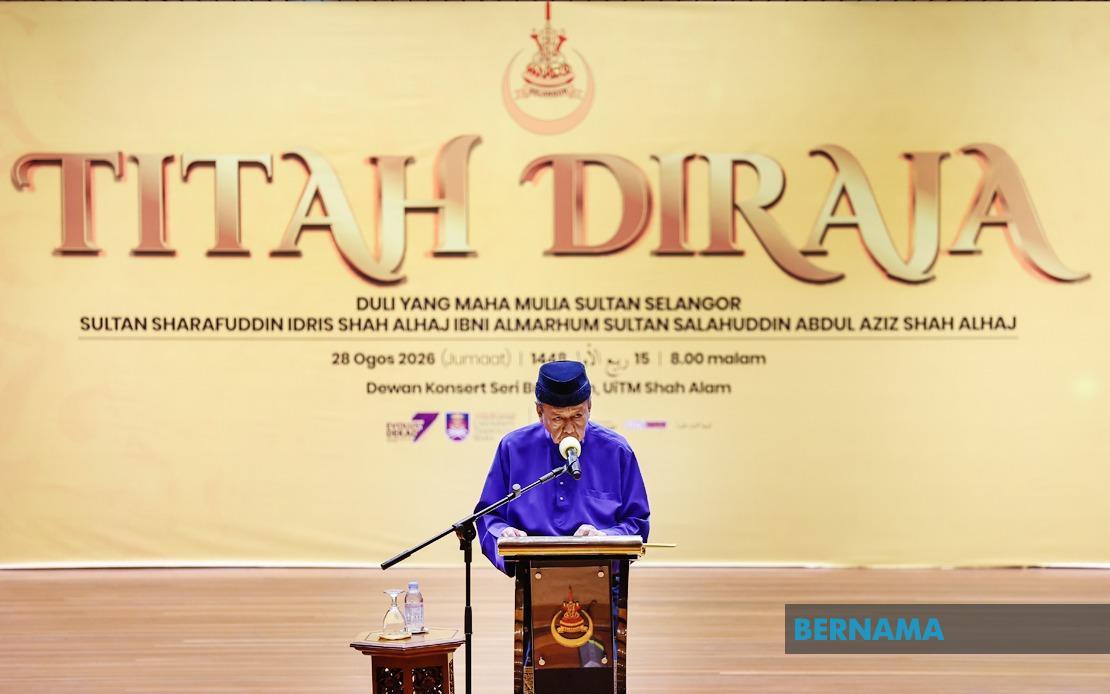
Sultan Sharafuddin Idris Shah has emphasised that Universiti Teknologi MARA (UiTM) must continue serving as a transformative educational gateway for economically disadvantaged Malay and Bumiputera students, particularly those from rural communities and humble family backgrounds. Speaking at the UiTM 2026 Royal Address in Shah Alam, the Sultan stressed that as the institution expands and modernises, it must never lose sight of the demographic it was originally created to uplift—a principle he termed the core spiritual foundation of UiTM's historical mission.
The institution's track record demonstrates the magnitude of its impact on Malaysian society. Since its inception in 1965 with a modest cohort of 219 students and 11 academic staff members, UiTM has evolved into one of Southeast Asia's largest tertiary education providers. The university now produces over 40,000 graduates annually and boasts an alumni network exceeding one million individuals. This expansion, while impressive in scope, raises important questions about whether growth has inadvertently shifted institutional priorities away from its original beneficiary communities.
Sultan Sharafuddin articulated a poignant vision of UiTM's true purpose, one centred on human transformation rather than institutional metrics. He highlighted that the university's ultimate success should be measured not by enrolment figures or graduate statistics, but by the tangible improvement in life trajectories of students from farming families, fishing communities, working-class households, and isolated rural settlements. The Sultan's remarks implicitly acknowledge concerns that rapid expansion and modernisation sometimes inadvertently create barriers—financial or otherwise—for the very constituencies the institution was designed to serve.
A notable feature of the Sultan's address was his innovative proposal for a structured alumni contribution scheme. He suggested establishing a system whereby each UiTM graduate would contribute a minimum of RM10 monthly or RM100 annually to the institution. While framed as optional and modest in individual burden, this scheme could theoretically generate approximately RM100 million per annum given the university's vast alumnus population. The Sultan characterised this as a symbolic gesture of gratitude rather than an onerous obligation, arguing that the sum falls within reasonable financial capacity for working professionals.
The potential revenue from this initiative addresses a critical operational reality facing Malaysian public universities. Government funding constraints have long pressured these institutions to seek alternative revenue streams, and an alumni contribution model represents a relatively non-coercive mechanism compared to substantial fee increases or means-tested levies. The proposed fund could serve a dual purpose: facilitating UiTM's institutional development and expansion while simultaneously establishing a safety net for financially struggling current students—thereby preserving accessibility for economically vulnerable populations.
Sultan Sharafuddin invoked the emotional resonance of UiTM's organisational slogan, "UiTM Dihatiku" (UiTM in My Heart), as a call to translate sentiment into concrete action. He positioned the alumni contribution initiative not merely as fundraising, but as a manifestation of genuine institutional loyalty and reciprocal responsibility. This framing carries particular weight in Malaysian cultural and social contexts, where alumni networks often function as powerful informal support systems and professional advancement mechanisms. By investing financially in the institution, alumni would simultaneously invest in creating conditions for future generations of underprivileged students to access transformative education.
The testimony to UiTM's transformative capacity is evident across Malaysia's professional landscape. The institution's graduates occupy positions spanning accounting, engineering, medicine, law, architecture, academia, entrepreneurship, civil service, corporate management, creative industries, and journalism. Some have ascended to leadership of major organisations, established businesses, generated employment opportunities, and contributed substantially to national economic development. This broad societal penetration underscores how effectively UiTM has functioned as a social mobility mechanism, particularly for constituencies historically excluded from tertiary education access.
The Sultan's emphasis on accessibility reflects broader regional and global conversations about higher education equity. Southeast Asian nations grapple with the tension between expanding educational infrastructure and maintaining affordability for economically vulnerable populations. Malaysia's particular context—with significant rural-urban disparities, persistent income inequality, and constitutional provisions regarding Bumiputera educational access—lends special urgency to this concern. UiTM represents one of the nation's most deliberate institutional commitments to redressing educational inequality, making its preservation of this mission particularly consequential.
Higher Education Minister Datuk Seri Dr Zambry Abd Kadir's presence at the Royal Address signals government acknowledgement of these concerns. The involvement of the Chair of the Malay Rulers Institution and the Adiwangsa Empowerment Office indicates that the conversation transcends single-institution management, reflecting broader constitutional and policy frameworks governing Bumiputera advancement. This institutional alignment suggests potential receptiveness within government circles to supporting mechanisms that preserve educational access whilst improving institutional sustainability.
Implementing the proposed alumni contribution scheme would require careful structural design. Questions remain regarding governance, transparency, collection mechanisms, allocation criteria, and whether contributions would be truly voluntary or create implicit employment-related obligations. Malaysian universities and professional bodies possess experience with alumni engagement programmes, providing potential templates, though establishing genuine voluntary participation across a geographically dispersed alumni base presents logistical challenges. The scheme's success would depend substantially on cultivating genuine alumni commitment grounded in institutional affection rather than perceived obligation.
The Sultan's address carries particular resonance for prospective and current UiTM students from economically disadvantaged backgrounds. His unequivocal reassurance that the institution remains committed to serving children of farmers, fishermen, labourers, and impoverished rural families provides both emotional validation and institutional commitment. For such students navigating higher education whilst managing financial constraints, knowing that their institution's leadership—at the highest constitutional level—explicitly values their presence and aspirations carries psychological and practical significance beyond formal policy frameworks.
Looking forward, UiTM faces the complex challenge of scaling institutional quality and capacity whilst intensifying support for financially vulnerable students. The Sultan's proposal offers one mechanism for addressing this tension, grounded in principles of alumni reciprocity and institutional loyalty. However, sustainable preservation of UiTM's accessibility mission likely requires multifaceted approaches encompassing government funding commitments, targeted scholarship expansion, and perhaps reformed fee structures—alongside alumni contributions. The Royal Address signals that Malaysia's leadership remains committed to this foundational educational equity principle, even as the institution navigates significant growth.

