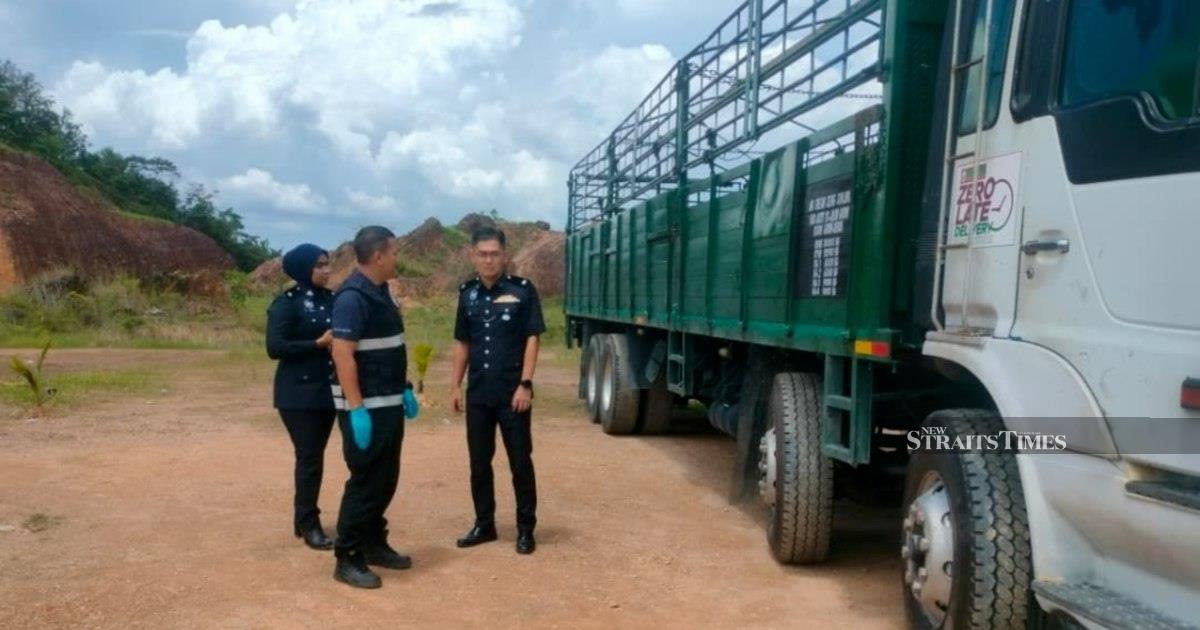
A tragic accident claimed the life of a 2-year-old girl in Sungai Petani today when she was struck by a lorry being reversed by her grandfather. The incident unfolded at a residential property in Kampung Bukit Kuang, leaving the family and local community in shock. Police detained the 61-year-old man to assist investigations into the circumstances surrounding the fatal collision.
Accidents involving vehicles in driveways and residential areas highlight the critical importance of heightened awareness when operating heavy vehicles in confined spaces. The reversing process, which limits driver visibility significantly, remains one of the most dangerous manoeuvres in everyday vehicle operation. Young children, whose small stature makes them virtually invisible from the driver's cabin of larger vehicles, are particularly vulnerable to such tragedies during routine household activities.
The incident represents a sobering reminder for Malaysian families about the hidden dangers present within what many consider the safety of their own homes. Residential areas often present complex spatial challenges, with parked vehicles, narrow driveways, and play areas coexisting in close proximity. Children can move unpredictably and quickly, and their movements may be obscured by the vehicle itself, garden furniture, or other obstacles that further reduce the driver's ability to maintain situational awareness.
Police involvement in such cases follows standard investigative protocols designed to determine contributing factors and establish whether any negligence or breach of safety standards occurred. The detention of the grandfather for assistance with investigations does not necessarily indicate criminality but rather represents a formal process to gather comprehensive information about the accident sequence. Investigators will examine vehicle condition, maintenance records, driveway layout, and witness accounts to construct a complete picture of how the tragedy unfolded.
Malaysia has seen numerous driveway-related accidents over recent years, with children under five years old representing a disproportionately high number of victims. The vulnerability of this age group stems from their limited understanding of vehicle dangers and their unpredictable behaviour patterns. Parents and caregivers often focus on street traffic hazards while overlooking risks present in what feels like controlled domestic environments.
International road safety research consistently identifies reversing accidents as a preventable category of incident. Modern vehicles increasingly incorporate reversing sensors, camera systems, and auditory warnings designed to alert drivers to obstacles behind them. Yet many older vehicles or commercial lorries may lack such safety features, leaving operators dependent entirely on mirrors and physical checks, both of which have significant blind spots.
The grandparent relationship introduces additional complexity to such situations. Extended family members who occasionally supervise children may not maintain the same heightened vigilance that primary caregivers develop through constant interaction. Supervision gaps, combined with reduced awareness of where young family members are located at any given moment, can create dangerous situations in seconds.
Beyond the immediate investigation, this incident will likely stimulate broader discussions among Malaysian families about driveway safety protocols. Expert recommendations typically include establishing clear zones where young children should not be during vehicle operation, ensuring adequate supervision during reversible vehicle manoeuvres, and teaching children age-appropriate awareness of vehicle dangers. Some families choose to restrict reverse parking to designated safe periods when children are indoors and under monitored care.
The lorry driver or vehicle operator's experience level and familiarity with the specific driveway dimensions would factor into investigators' analysis of the accident causation. Larger commercial vehicles require substantially greater clearance and wider turning radiuses than standard passenger cars, and operators of such vehicles bear heightened responsibility for verifying that their manoeuvres can be executed safely within available space.
Such tragic incidents often prompt reflection within communities about whether existing safety practices are adequate. Community education initiatives, coordinated by local authorities and civil society organisations, play important roles in disseminating practical safety information to residential areas where multiple families with young children reside. Simple measures such as installing additional mirrors, improving driveway lighting, or maintaining clear sightlines can meaningfully reduce accident risks.
As investigations proceed, the focus will ultimately rest on understanding the precise sequence of events and identifying preventive measures that might help other families avoid similar tragedies. While legal determinations await completion of police enquiries, the loss itself underscores the fragility of life and the importance of treating every interaction with potentially dangerous machinery, even within familiar domestic spaces, with the utmost care and attention to safety principles.

