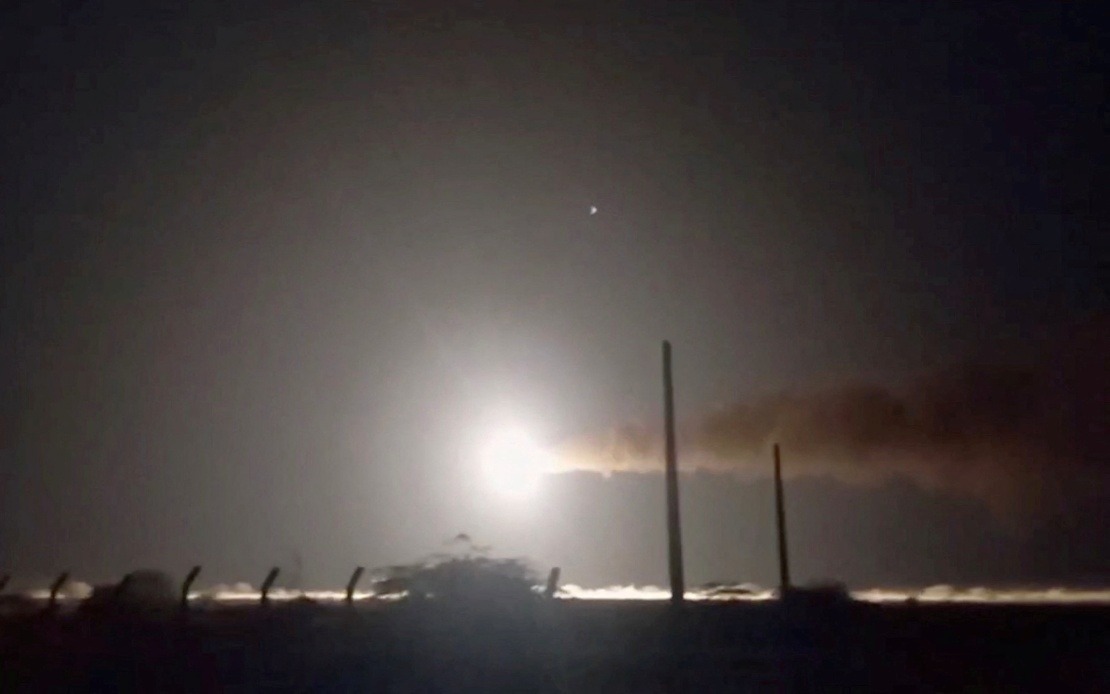
The United States military has confirmed that two service members were killed and one remains unaccounted for following a coordinated Iranian assault on American positions in Jordan on Friday, July 17. The US Central Command announced the casualties on Saturday, revealing that the attack involved both ballistic missiles and unmanned aerial vehicles targeting personnel who were actively defending against the Iranian barrage. The incident underscores the volatile security dynamics unfolding across the Middle East, a region whose instability continues to reverberate through global geopolitics and poses strategic implications for nations with military interests in the area.
The attack represents a significant escalation in regional tensions, though CENTCOM refrained from providing extensive operational details in its initial statement. Four additional service members sustained injuries severe enough to warrant medical evacuation to Jordanian hospitals, though all four have since recovered sufficiently to be discharged. Beyond these cases, several other personnel received treatment for minor injuries sustained during the assault and have returned to their regular duties, indicating that while casualties occurred, the overall capability of the affected unit to function appears largely preserved.
For Malaysian observers and policymakers, this incident carries particular relevance given Malaysia's position within Southeast Asia's increasingly complex security architecture. While geographically distant, developments in the Middle East directly influence regional stability, energy prices, shipping routes through the Strait of Hormuz, and the broader balance of power that affects smaller nations' strategic autonomy. The US military presence in Jordan represents Washington's enduring commitment to Middle Eastern affairs, and any disruption to American operations raises questions about the reliability and sustainability of security arrangements that have underpinned regional order for decades.
The Iranian attack itself reflects Tehran's willingness to employ direct military force against American assets, a shift from previous patterns of proxy engagement that characterized much of the past two decades. This direct confrontation signals a recalibration of Iranian strategic calculations, possibly driven by regional developments, internal political considerations, or shifting assessments of American resolve. For Malaysia and other Southeast Asian nations that maintain diplomatic relations with both the United States and Iran, such escalations complicate already delicate diplomatic balancing acts.
CENTCOM's decision to withhold the identities of the fallen service members until after family notifications reflects military protocol emphasising respect for bereaved relatives. This procedural delay, standard across most armed forces, also underscores the human cost of military deployments in contested regions. Behind the statistics lie individual lives, families, and communities experiencing profound loss—a reality that resonates universally regardless of nationality or geopolitical alignment.
The timing of this attack occurs within a broader context of Middle Eastern tension characterised by competing regional powers, proxy conflicts, and the ongoing complications surrounding nuclear negotiations and sanctions regimes. Jordan itself occupies a precarious position, hosting American military advisors and special operations forces while simultaneously maintaining its own diplomatic and economic relationships with multiple regional actors. The presence of US personnel on Jordanian soil remains a sensitive subject domestically, with the government carefully managing public perception and security arrangements.
From a broader strategic perspective, the incident raises questions about the effectiveness of air defence systems protecting American installations in the region and the resilience of forward-deployed forces against evolving Iranian military capabilities. Successive Iranian missile tests and drone development programmes have received considerable international attention, with analysts debating the precision, reliability, and genuine threat posed by these weapons systems. This actual combat employment provides practitioners and analysts valuable data about real-world performance.
For regional stability and international commerce, such incidents carry implications extending well beyond military casualties. The Middle East remains crucial to global energy supplies and critical shipping lanes, and any sustained escalation between major powers or their proxies could disrupt these flows with cascading economic consequences affecting nations worldwide, including Malaysia. Energy security concerns particularly resonate in Southeast Asia, where many nations depend on Middle Eastern oil and gas imports.
The incident also underscores the complex nature of contemporary Middle Eastern security challenges, where technological advancement has democratised access to sophisticated weaponry previously reserved for major military powers. The combination of ballistic missiles and drones employed in this attack reflects operational integration that demonstrates considerable military competence and planning. This development has implications for how regional and global powers assess threats and configure their defensive postures.
Moving forward, this attack will likely prompt American military reassessment of force protection measures in Jordan and throughout the broader Middle East. Enhanced air defences, modified operational procedures, and potentially repositioned assets may result from command reviews. Simultaneously, diplomatic channels will become increasingly important for preventing further escalation, a role in which smaller nations like Malaysia might contribute constructively through quiet diplomacy and multilateral forums.
The incident serves as a potent reminder that despite technological sophistication and military superiority, no power can completely insulate itself from determined adversaries willing to absorb potential counterattacks to deliver symbolic or strategic messages. The loss of American life in Jordan illustrates that Middle Eastern instability remains a persistent feature of contemporary international relations, with consequences reaching far beyond the region's boundaries.

