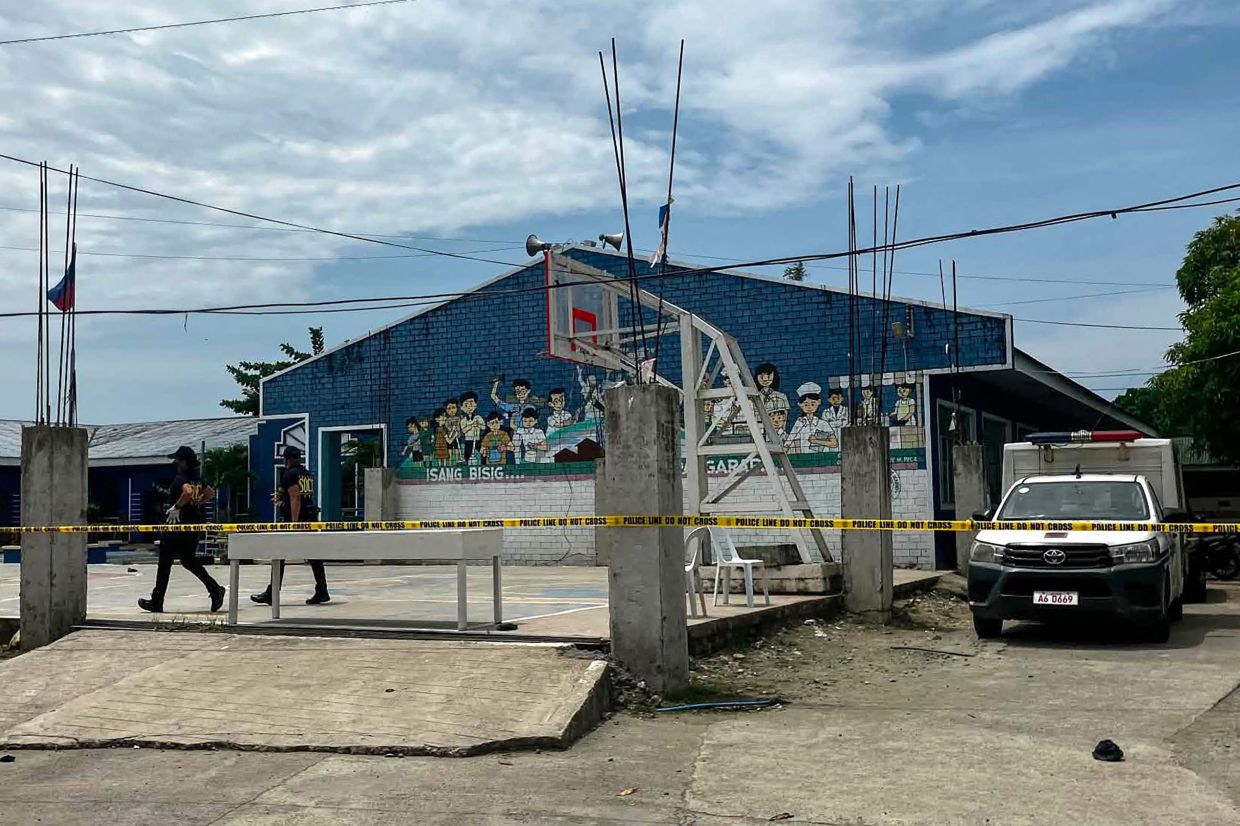
A shocking act of gun violence has shaken the Philippines after two armed teenagers unleashed gunfire at San Jose National High School in Tacloban city on Monday morning, claiming the lives of three fellow students and injuring seven more. The incident has sparked nationwide concern about school safety and the accessibility of firearms among minors in a country already grappling with widespread gun-related crime.
The two suspects, aged 14 and 15, were apprehended following the rampage at the government-run institution, which serves more than 1,500 pupils. According to Brig. Gen. Jason Capoy, the regional police chief overseeing the investigation, both attackers were students at the same school where they carried out their assault. During preliminary interviews with authorities, the teenagers claimed they had been subjected to bullying by other students, though Capoy declined to provide further specifics about the nature or extent of the harassment they allegedly endured.
The weapons used in the attack highlight troubling gaps in firearms regulation and institutional security. One suspect obtained a 9 mm pistol from an aunt who serves as a police officer, a revelation that has now triggered a separate investigation into how the law enforcement member came to provide such a dangerous weapon to a minor. The second teenager carried a cal. 38 revolver. Neither suspect had prior criminal records, underscoring how the incident could not have been predicted through conventional law enforcement monitoring. The pair successfully smuggled their firearms into the school campus despite it being a secure educational institution, with authorities attributing this security lapse to inadequate staffing—only a single security guard was on duty despite multiple entry and exit points scattered across the sprawling facility.
The violence unfolded in a manner suggesting panic and confusion among the student body. After firing in an initial location, the assailants pursued fleeing students into a second classroom, forcing them to move between rooms as terrified pupils scattered in different directions. Video footage recorded by students and shared online captures the harrowing moments when adolescents huddled beneath desks, their cries and screams audible as gunshots continued outside their refuge. Many can be heard calling their mothers, seeking reassurance and help from parents unable to reach them. Other recordings show the chaotic evacuation, with students pouring out of the campus in visible distress, clinging to one another for support and comfort.
The casualties and arrest patterns reveal the chaotic nature of the aftermath. At least forty spent shell casings were recovered at the scene, indicating sustained and repeated firing. The majority of those killed and wounded were female students, though authorities have provided limited additional demographic information. One suspect was detained immediately within the school premises, while the second managed to escape and sought refuge in a nearby residential property. Police located the fugitive only after being alerted by concerned residents living in the area, demonstrating how community vigilance ultimately aided in apprehending the second perpetrator.
The incident has prompted swift action from the nation's highest leadership. President Ferdinand Marcos Jr. directed a comprehensive investigation into the shooting and ordered law enforcement agencies to substantially enhance security protocols across all educational facilities, workplaces, and public gathering spaces throughout the country. Communications Undersecretary Claire Castro conveyed the president's distress over the tragedy, emphasizing the profound emotional toll such an event inflicts not only on affected families but on the broader population. The government's response reflects anxiety about potential copycat incidents and broader societal fears regarding youth violence.
The handling of the suspects will be shaped by Philippine juvenile justice legislation. Because one suspect is 14 years old, he falls below the minimum age threshold for criminal prosecution established by a 2006 law that sets fifteen as the baseline age for criminal liability in minors. Even for the 15-year-old suspect, prosecution is conditional—authorities must establish that the teenager clearly understood the criminal nature of their actions and comprehended the potential consequences. Following investigation completion, both youths are expected to be transferred to government welfare agencies rather than the adult criminal justice system, a provision that has sometimes drawn criticism from those advocating stricter accountability measures.
While gun violence represents an endemic challenge throughout Philippine society, mass shootings at educational institutions remain comparatively uncommon, lending this incident particular shock value within the national consciousness. The proliferation of unlicensed firearms throughout the archipelago fuels high rates of armed crime, yet coordinated attacks by multiple shooters at schools have historically been rare occurrences. A 2022 incident at an elite university campus in the Manila metropolitan area, where a gunman killed a former municipal mayor alongside two additional victims ahead of a graduation ceremony, represents one of the few comparable recent precedents, though that attack involved an adult perpetrator with a long-standing personal grievance rather than school-based tensions.
The Tacloban shooting raises urgent questions about institutional vulnerability and early intervention in cases of adolescent distress. Security experts and educators across Southeast Asia will likely scrutinize how a single guard proved insufficient for protecting a campus housing 1,500 students, and whether warning signs of the alleged bullying experienced by the suspects were identified and addressed by school administrators prior to the violence. The incident underscores how access to firearms combined with insufficient emotional support systems and security gaps can converge with devastating consequences, presenting policy challenges that extend far beyond the Philippines.