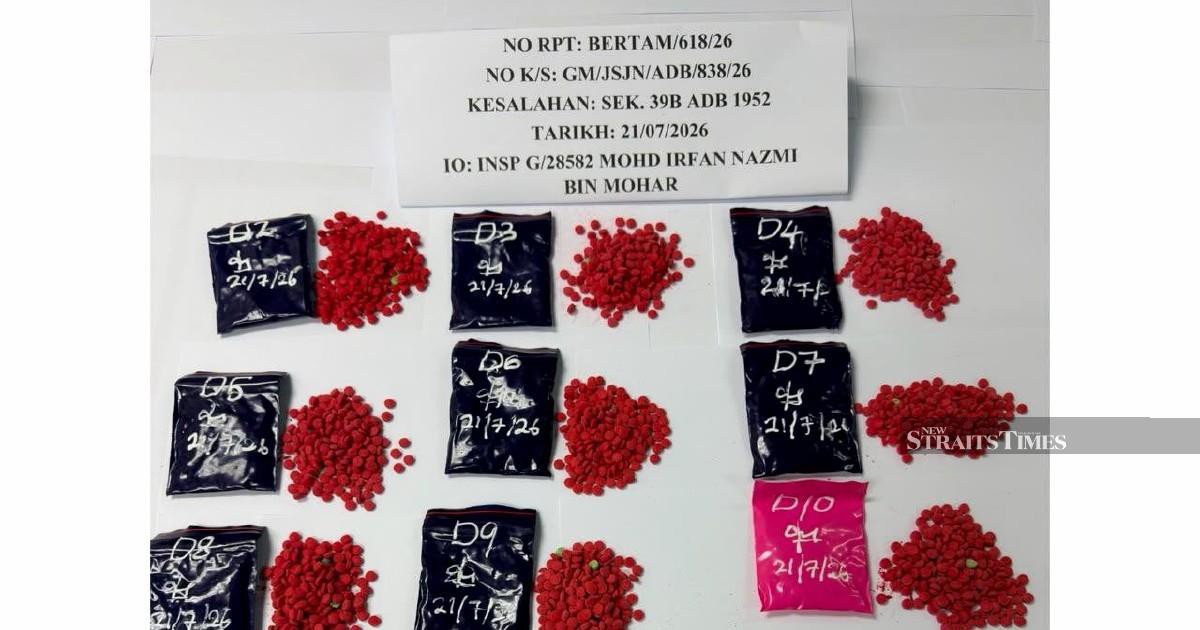
Law enforcement authorities in Kelantan have successfully apprehended two Myanmar nationals following a dramatic pursuit in Gua Musang, marking another significant narcotics seizure in a region that has become increasingly vulnerable to cross-border drug trafficking. The operation, conducted on Wednesday, resulted in the recovery of 6,000 yaba pills with an estimated street value of RM60,000, underscoring the scale of pharmaceutical drug abuse sweeping across Malaysia and neighbouring Southeast Asian countries.
The arrest highlights a persistent vulnerability along Malaysia's porous borders, particularly in the northern states where trafficking networks continue to exploit remote routes and inadequate surveillance infrastructure. Myanmar and Thailand have long been identified as primary sources of yaba, also known as methamphetamine pills, which command robust demand among users throughout Malaysia and Singapore. The Gua Musang incident represents just one of hundreds of similar interceptions that occur annually across the country, yet the consistent high volume of seizures suggests authorities are struggling to stem the tide of incoming contraband.
Yaba pills, typically containing methamphetamine and caffeine, have become a preferred drug of choice among younger demographics across urban Malaysia due to their portability, affordability, and the intense stimulant effects they produce. The 6,000 pills recovered suggest a shipment intended for distribution through local networks rather than personal consumption, indicating the suspects were likely mid-level operatives within larger trafficking hierarchies. Intelligence sources suggest that such quantities would be processed through multiple distribution points before reaching street-level retailers and end-consumers.
The pursuit itself demonstrates the ongoing challenge faced by police in pursuing fleeing vehicles in rural highway settings, where officers must balance apprehension objectives against public safety concerns. Gua Musang, located along the main north-south corridor connecting Kelantan to Perak, has emerged as a critical interdiction point for trafficking syndicates attempting to move contraband southward toward more densely populated markets in the Klang Valley and Selangor. The strategic location makes the town a natural flashpoint for law enforcement operations targeting cross-border networks.
The RM60,000 valuation placed on the seized haul provides insight into the profit margins driving illicit drug trade operations in Malaysia. Street-level yaba pills typically retail for RM40 to RM60 per unit, meaning retailers could potentially generate RM240,000 to RM360,000 in gross revenue from this single consignment once distributed through nightclubs, entertainment venues, and street networks. Such mathematics explains why trafficking organisations continue to operate despite consistent law enforcement pressure and escalating criminal penalties.
Myanmar's prominence as a production source reflects both the country's geographical position along the Golden Triangle and the limited capacity of its own law enforcement agencies to police illicit manufacturing operations concentrated in border regions under the influence of armed non-state actors. Trafficking organisations utilise multiple routing methods, including concealment within legitimate commercial shipments, distribution through individual courier networks, and increasingly sophisticated logistics coordination via encrypted messaging platforms. The two arrested individuals represent replaceable nodes in vast supply chains rather than key strategic figures.
The Kelantan Police Department has maintained relatively consistent performance in drug interdiction operations, though comprehensive data on conviction rates and deterrent effectiveness remains limited. Authorities suggest that coordinated regional efforts involving Thai and Malaysian border agencies have achieved incremental improvements in detection capabilities, yet transnational trafficking continues to accelerate as demand strengthens and prices remain economically attractive relative to other contraband categories. The brief chase preceding the arrest indicates standard operational procedures where suspects attempt evasion rather than immediate surrender.
For Malaysian readers, the implications extend beyond individual criminal proceedings toward broader questions about drug policy effectiveness, border security resource allocation, and international cooperation frameworks. The yaba epidemic has generated documented social consequences across Malaysian society, including elevated rates of methamphetamine-related hospital admissions, psychiatric facility referrals, and crime connections among younger populations. Sustained trafficking at current volumes suggests that supply-side interventions alone prove insufficient without complementary demand-reduction strategies including treatment expansion and community prevention programming.
The arrest contributes to ongoing statistical records maintained by the Narcotics Criminal Investigation Department and feeds into analyses examining trafficking pattern evolution and geographic concentration of seizure activities. Gua Musang's recurring prominence in drug interdiction reports suggests either exceptional police focus in that locality or genuine trafficking corridor concentration—establishing which possibility requires access to detailed operational intelligence rarely disclosed publicly. Either scenario indicates sustained engagement between law enforcement and trafficking networks at specific geographical bottlenecks.
The remand and charging process for the two Myanmar nationals will proceed through Malaysian courts under the Dangerous Drugs Act 1952, where trafficking-quantity seizures typically result in lengthy custodial sentences reflecting legislative intent to impose maximum deterrent penalties. Cooperation from neighbouring authorities may facilitate verification of the suspects' criminal histories and potential links to known trafficking organisations, information that could inform broader intelligence assessments regarding network structure and operational patterns. The case exemplifies the continuous cycle of apprehension, prosecution, and replacement that characterises contemporary drug enforcement across Southeast Asia.

