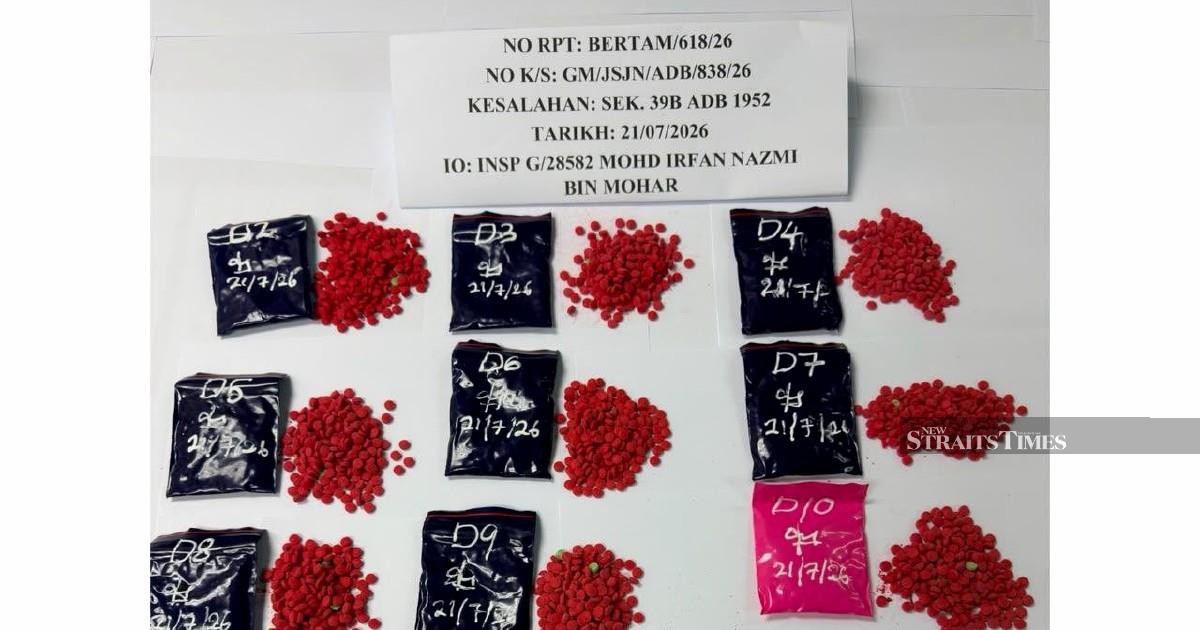
Two Myanmar citizens were arrested during a high-speed police pursuit in Gua Musang yesterday, with authorities recovering a substantial cache of yaba pills in what represents another significant blow against cross-border narcotics operations. The haul of 6,000 tablets, with an estimated street value of approximately RM60,000, underscores the persistent attempts by trafficking networks to channel amphetamine-type stimulants through Malaysia's porous northern frontier.
The arrest occurred in Gua Musang, a district in Kelantan that sits strategically along Malaysia's border region and has historically served as a transit point for contraband. The location's geography, characterised by forested terrain and limited policing resources, has made it particularly vulnerable to smuggling operations. Police engaged the suspects' vehicle following intelligence indicating suspicious activity, initiating a pursuit that ultimately concluded with the successful interception and detention of both individuals.
Yaba, a tablet form of methamphetamine mixed with caffeine, remains one of Southeast Asia's most prevalent synthetic drugs. Its production in clandestine laboratories across the Golden Triangle—the border region encompassing Myanmar, Laos, and Thailand—has created a persistent supply problem that reverberates across the region. The drug commands lower prices than other methamphetamine derivatives, making it particularly attractive to traffickers seeking volume-based profits and to consumers seeking affordable stimulants.
Myanmar's instability and the proliferation of armed groups following the military coup in 2021 have further complicated drug control efforts. Transnational criminal organisations operating within Myanmar's ungoverned spaces have intensified production and trafficking activities, exploiting weakened state capacity and the chaos of internal conflict. The country has become increasingly central to regional drug manufacturing networks, with yaba production experiencing significant growth in recent years despite international countermeasures.
For Malaysia, the challenge presents multiple dimensions. The steady flow of yaba across the northern border reflects both the market demand within domestic urban centres and the logistics efficiency of trafficking networks. Kelantan and other northern states remain vulnerable corridors, with their less densely populated border areas offering opportunities for clandestine crossing points. The recovered quantity—6,000 pills—suggests a mid-level trafficking operation rather than street-level retail distribution, indicating organised networks remain active in moving bulk supplies through the country.
The street value calculation of RM60,000 reflects yaba's relatively affordable positioning within the drug market hierarchy. At approximately RM10 per pill in retail transactions, the recovered quantity represented significant inventory for local distribution networks. The economics of yaba trafficking remain compelling for criminal organisations because production costs in Myanmar remain minimal, while Southeast Asian markets continue absorbing supply despite enforcement efforts and public health awareness campaigns.
Kelantan's vulnerability to such operations extends beyond geography. As a state with substantial rural areas and less urbanisation compared to peninsular Malaysia's central corridor, policing capacity remains distributed across wider territories. Border security, while improving through technology and cross-border cooperation initiatives, still faces resource constraints. The Royal Malaysia Police's narcotics divisions coordinate with state authorities to address trafficking, yet the volume of contraband intercepted suggests many shipments successfully penetrate the border zone.
This arrest exemplifies the broader regional context Malaysian law enforcement navigates. The Association of Southeast Asian Nations recognises drug trafficking as a transnational crime requiring coordinated responses, yet enforcement remains largely national in scope. Intelligence sharing between Malaysia and Myanmar has improved incrementally, but practical cooperation remains limited by Myanmar's internal instability and contested governance following 2021. Thailand, which also faces significant yaba pressures, has pursued aggressive domestic enforcement while attempting to reduce supply at source in Myanmar's border regions—efforts that have proven partially effective but insufficient to stem the tide.
For Malaysian authorities, the ongoing challenge involves balancing border interdiction with domestic supply reduction. The arrest yesterday demonstrates that enforcement mechanisms remain operational and capable of intercepting substantial shipments. However, the persistence of trafficking operations suggests that apprehension rates alone may not substantially reduce market availability. Public health interventions, demand reduction programmes, and alternative livelihood initiatives in Myanmar would require international engagement beyond Malaysia's direct capacity.
The arrested individuals face serious charges under Malaysia's Dangerous Drugs Act, which carries substantial penalties including lengthy imprisonment and potential fines. Their prosecution will likely proceed through Kelantan's courts, with outcomes potentially influencing sentencing precedents for similar cases. The severity of penalties available to Malaysian courts serves as a deterrent, though evidence from the region suggests financial incentives continue attracting traffickers despite enforcement risks.
Beyond this specific case, the incident reinforces pattern analysis that informs broader security policy discussions in Malaysia. The continuous stream of yaba interceptions—this marks another addition to monthly seizure statistics—generates momentum for border technology upgrades and expanded police resources in northern regions. Discussions regarding enhanced screening at entry points and intelligence coordination between federal and state authorities reflect lessons learned from cases like this operation in Gua Musang.
Moving forward, Malaysian enforcement agencies emphasise preventive strategies targeting supply chains before contraband reaches domestic markets. Community engagement programmes, particularly in border communities where economic incentives to participate in trafficking remain significant, form part of a longer-term approach. Education initiatives targeting youth audiences about yaba's health consequences continue expanding, though effectiveness metrics remain inconsistently measured across states.

