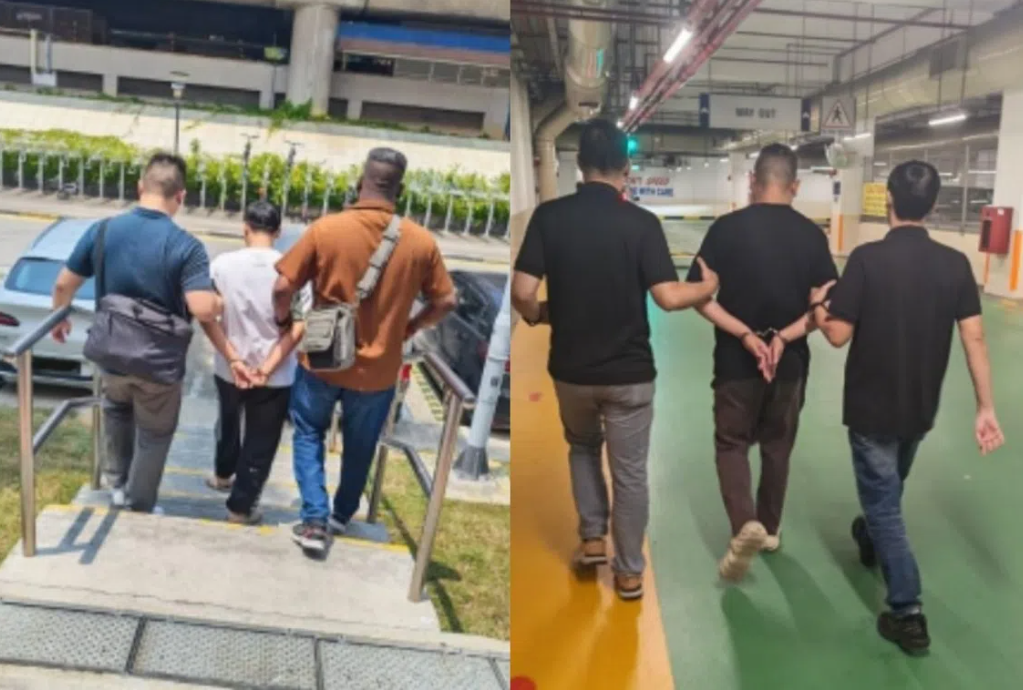
Singapore authorities have arrested two Malaysian nationals employed at mobile phone retail outlets for their suspected roles in an identity theft and financial fraud operation that victimised more than 170 individuals across the city-state. The arrests on 25 August represent a significant development in Singapore's ongoing crackdown on organised fraud networks that exploit weaknesses in digital identity systems to launder illicit earnings.
The two suspects, aged 25 and 47, are accused of systematically extracting Singpass login credentials from unsuspecting customers and using these compromised authentication details to establish unauthorised LiquidPay e-wallet accounts. Singapore's Singpass system serves as the primary digital identity authentication tool for the government and is increasingly integrated with commercial platforms including fintech applications. The exploitation of this trusted infrastructure underscores the vulnerability of identity systems when front-line workers gain access to sensitive information during routine transactions.
According to police statements released on 26 August, the operational methodology was notably brazen in its simplicity. In at least one documented instance, a suspect offering assistance to a customer updating Singpass credentials during a SIM card transaction pivoted that trusted interaction into account creation without consent. This modus operandi—weaponising the trust inherent in customer service interactions—proves particularly effective because victims often fail to detect fraudulent account activity immediately, providing the syndicate with a window to move illicit funds through the system.
Investigations have identified that fraudulently registered Singpass credentials linked to over 160 distinct LiquidPay accounts, each created without the knowledge or authorisation of the legitimate account holders. This numerical disparity—more than 170 compromised Singpass accounts generating over 160 e-wallet registrations—suggests some accounts may have been created but remain dormant, or that duplicate registrations occurred for operational redundancy. The scale of this operation indicates a coordinated, systematic approach rather than opportunistic fraud by individual actors.
The financial dimensions of the scheme reveal its connection to broader scam ecosystems operating across Southeast Asia. Between early March 2026 and the time of these arrests, at least 20 Singapore citizens and foreign workers have entered police investigations for their roles in registering the fraudulent LiquidPay accounts. These accounts collectively received approximately S$110,063 in proceeds attributable to various scam operations, suggesting the e-wallets functioned as money laundering vessels converting illicit gains into digital assets potentially destined for onward transfer or withdrawal.
LiquidPay, the victimised digital payment platform operated by Singapore-based fintech company Liquid Group, has become an inadvertent participant in the fraud ecosystem. The platform's integration with Singpass authentication likely provided the technical foundation for the scheme, as legitimate government-backed identity verification created a veneer of legitimacy for fraudulent accounts. This highlights a critical vulnerability in federated identity systems where compromised upstream credentials cascade through dependent systems without additional verification mechanisms.
The investigation leading to these arrests was conducted by Singapore's Cyber Command division working in coordination with the Singpass Trust & Safety team at the Government Technology Agency of Singapore (GovTech). This interagency collaboration reflects the sophistication now required to address digital fraud operating across government and commercial domains simultaneously. The Cyber Command's involvement signals that authorities categorised this as a cybercrime operation rather than simple theft, acknowledging the technical infrastructure exploited and the distributed nature of victim harm.
For Malaysian readers and businesses operating across the Singapore-Malaysia border region, this case presents several implications. Malaysian nationals working in Singapore's retail and services sectors face heightened scrutiny regarding their handling of customer data and authentication credentials. Employers and regulators may implement stricter protocols for credential management in customer-facing roles. Additionally, the incident underscores risks associated with cross-border employment in high-contact service positions where access to sensitive personal information is routine.
The legal consequences facing the two suspects reflect Singapore's severity in prosecuting digital fraud. They face charges under provisions addressing assisting others to retain criminal benefits, an offence carrying imprisonment up to 10 years, fines reaching S$500,000, or both penalties combined. Separately, investigation of Singpass account holders who voluntarily shared credentials—themselves potential victims or complicit parties—carries maximum penalties of three years imprisonment and S$10,000 fines, suggesting authorities are pursuing accountability across the entire fraud chain.
Broader context reveals this case as part of an escalating pattern of identity system compromise affecting Singapore and the region. Scammers operating across borders increasingly target government identity infrastructure, recognising that Singpass access unlocks not only government services but commercial platforms integrated with this authentication layer. The Malaysia-Singapore border region's dense population flows and integrated labour markets create conditions where this form of transnational fraud can develop rapidly.
The incident raises questions about how fintech platforms vet account registrations and whether additional verification layers should exist beyond Singpass alone. While government authentication systems provide foundational security, they remain only as strong as the human gatekeepers controlling access. This case demonstrates that retail workers at mobile phone shops—low-wage positions with high turnover—can become potential vectors for sophisticated fraud when incentivised or coerced by criminal syndicates.
Going forward, Singapore authorities face the challenge of not only prosecuting individual fraud cases but disrupting the underlying syndicate structures recruiting Malaysian and other regional workers into credential-harvesting schemes. Intelligence cooperation with Malaysian law enforcement regarding the recruitment and operational command chains behind these activities will likely intensify. For ordinary Singaporeans and foreign workers, the case reinforces the imperative of never sharing Singpass credentials, even when requested by seemingly legitimate service providers.

