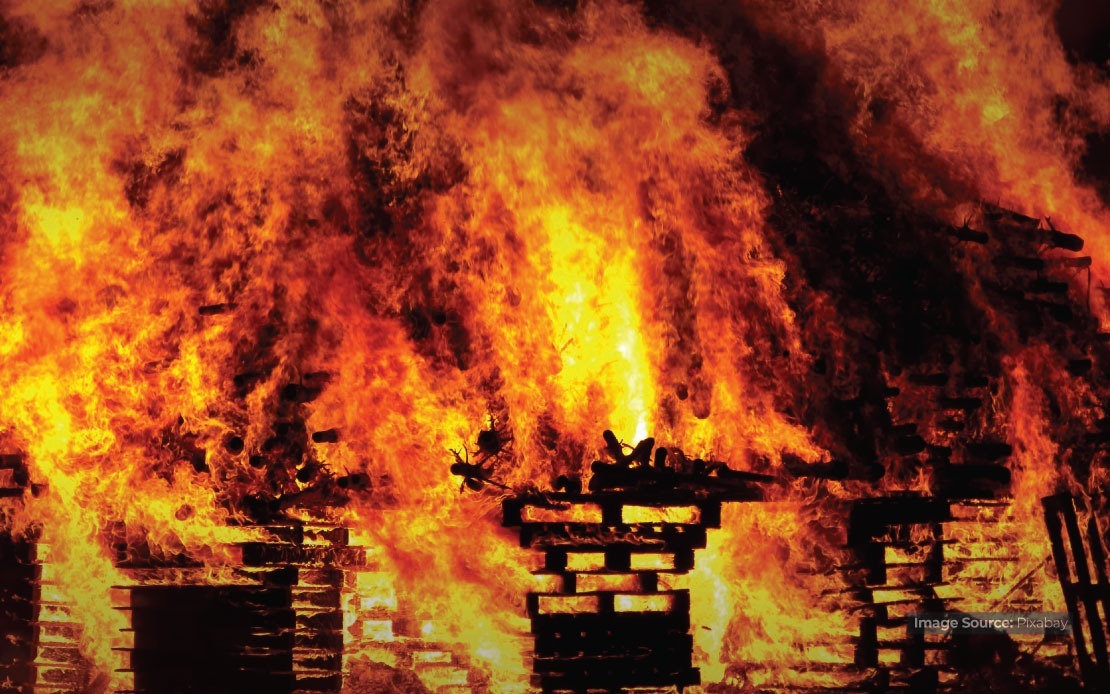
Two firefighters have perished while fighting a fire that erupted near Bordeaux Airport in south-western France, French Interior Minister Laurent Nuñez announced to parliament in Paris on Tuesday. The tragedy marks a significant loss for emergency services responding to the region's escalating fire crisis amid record-high temperatures and dangerous weather conditions.
The fire broke out on land adjacent to Bordeaux Airport's long-term parking area, according to regional newspaper Sud Ouest. The blaze rapidly spread across two buildings, forcing emergency responders into an intense battle against flames and smoke. Both fatalities occurred during active firefighting operations as crews attempted to contain the spreading inferno before it could reach critical airport infrastructure.
The Gironde region, of which Bordeaux is the capital, has been placed under the highest red-level wildfire warning by French authorities. This alert status reflects an exceptionally severe risk environment where forest fires can ignite, spread, and intensify with alarming speed. The timing of this incident underscores the immense pressure facing French emergency services, who are simultaneously managing multiple fire-related emergencies across the region while contending with extreme environmental conditions.
For Malaysian and Southeast Asian observers, this incident provides sobering perspective on the hazards facing first responders operating in high-risk fire conditions. Similar scenarios play out periodically across Southeast Asia during drought seasons, particularly in Indonesia and Malaysia where transboundary haze and wildfires pose recurring threats. The loss of trained personnel highlights the genuine dangers that emergency workers face when confronting large-scale fire incidents.
Airport operations experienced significant disruption as the fire raged nearby. Departures from Bordeaux Airport were suspended temporarily as a precautionary measure to prevent aircraft from being caught in smoke or to ensure runway safety. Incoming flights were permitted to land, suggesting that authorities maintained runway accessibility for emergency aircraft and essential traffic. An evening departure scheduled for Munich was expected to proceed as planned, indicating that operations gradually stabilized as firefighting efforts progressed.
Local fire services coordinated closely with Bordeaux Airport's dedicated firefighting unit to mount an effective response. This inter-agency cooperation demonstrates how airport facilities maintain their own emergency capacity precisely for situations such as this. The coordination between municipal and airport-based firefighting resources amplified response capabilities and enabled faster deployment of equipment and personnel to critical areas.
Airborne firefighting assets were mobilized to augment ground-based efforts. A dedicated firefighting aircraft joined the battle against the blaze, spraying fire suppressant from above to help contain the flames' spread. This aerial component represents a significant escalation in response intensity and reflects the fire's severity and the determination of authorities to prevent further expansion into surrounding areas or airport facilities.
The fire generated towering columns of smoke that were clearly visible from Bordeaux city centre, located several kilometres away. These dramatic plumes indicated both the fire's intensity and the massive scale of combustible material involved. For local residents, the visible smoke served as a stark reminder of the region's vulnerability to fire and the proximity of danger, even to urban areas typically considered safe from such incidents.
The broader context of this tragedy reveals how climate and weather patterns increasingly place strain on emergency response systems. The red-level wildfire warning affecting the Gironde region reflects conditions where traditional firefighting approaches may prove inadequate. As global temperatures rise and drought periods lengthen, incidents like this may become more frequent, requiring countries across Southeast Asia and elsewhere to invest more heavily in firefighting capacity, personnel training, and equipment.
For France specifically, this incident will likely prompt further review of airport emergency preparedness protocols and interagency coordination mechanisms. The loss of two experienced firefighters represents not merely a statistical tragedy but the removal of skilled personnel from the region's emergency workforce during a period when such expertise is most urgently needed. Their sacrifice underscores the genuine human cost embedded within the broader climate and fire management challenges confronting modern societies.
The incident serves as a reminder that even in developed nations with advanced emergency infrastructure, wildfires and associated incidents remain inherently unpredictable and dangerous. The deaths near Bordeaux Airport will undoubtedly influence how emergency managers across Europe and beyond assess risk and allocate resources during high-alert fire seasons. For regional observers in Southeast Asia, the event reinforces the necessity of robust investment in firefighting capabilities and the importance of international cooperation in addressing transboundary fire threats that increasingly characterize the region's environmental landscape.

