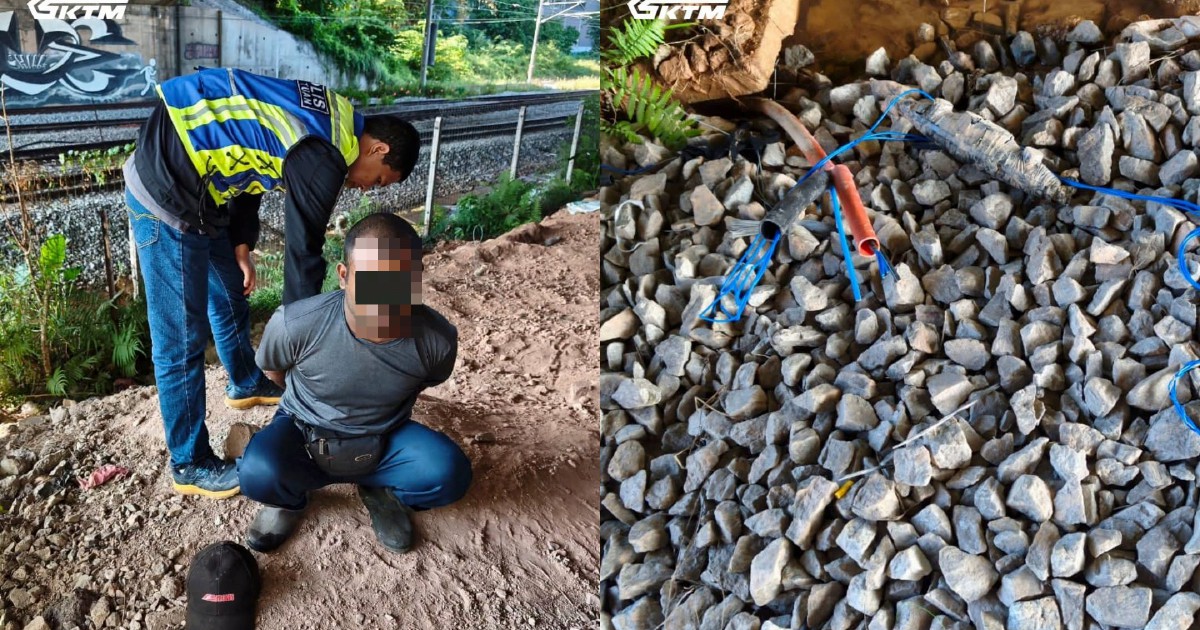
Railway authorities have stepped up enforcement operations following a successful apprehension of two individuals caught attempting to pilfer valuable cables from railway infrastructure in Shah Alam. The arrests, conducted by Keretapi Tanah Melayu Bhd (KTMB) auxiliary police officers, underscore the persistent challenge of metal theft targeting Malaysia's rail network and the protective measures now in place to safeguard critical transport assets.
Theft of railway cables represents a significant operational and financial concern for KTMB, as these components are essential for signalling systems, electrical supply, and telecommunications infrastructure that keep trains running safely and on schedule. The materials command considerable value on the scrap metal market, making them attractive targets for organised scavenging operations despite the serious consequences of disrupting rail services. Cables installed across rail corridors throughout the Klang Valley and beyond represent millions of ringgit in replacement costs when damaged or removed, beyond the disruption caused to commuters and freight operations.
The Shah Alam incident demonstrates that cable theft remains a persistent security concern across Malaysia's rail network, particularly in urban and semi-urban areas where access points are more numerous and coordination with local crime syndicates may facilitate rapid removal and sale of stolen materials. Previous years have witnessed multiple incidents involving organised groups targeting railway copper and aluminium cables, sometimes coordinating with insiders or exploiting maintenance schedules to extract materials with minimal detection risk.
KTMB's auxiliary police force plays a critical protective role for the national railway operator, patrolling stations, depots, and track corridors to prevent such incidents before they occur. The apprehension in Shah Alam reflects improved vigilance and faster response protocols that have been gradually implemented across the rail network. These officers work in coordination with local law enforcement agencies and employ surveillance technology to identify suspicious activities around vulnerable infrastructure points.
The timing of this arrest comes as KTMB continues modernising its security infrastructure and training personnel to recognise and respond to theft attempts. Railway operators worldwide face similar challenges, particularly in developing economies where metal prices remain elevated and underground markets for stolen materials operate with relative impunity. The introduction of more rigorous patrolling schedules and improved lighting at strategic locations has proven effective in deterring opportunistic thieves, though organised syndicates remain more difficult to counter.
For Malaysian commuters, railway cable theft carries indirect but meaningful consequences. Disrupted services due to cable damage create delays affecting millions of daily rail users across the Selangor and Kuala Lumpur regions. Emergency repairs divert maintenance resources and operational budgets that could otherwise fund service improvements or infrastructure expansion. The Shah Alam station itself serves as a crucial interchange point in the regional rail network, making security breaches at this location particularly problematic for service reliability.
The arrest also highlights broader concerns about metal theft ecosystems in Malaysia, where recycling facilities and scrap dealers sometimes operate with insufficient oversight of material provenance. Regulations requiring proper documentation and verification of sellers' identity have been strengthened in recent years, but enforcement remains inconsistent across different states. Breaking the supply chain that converts stolen cables into cash requires coordination between railway operators, law enforcement, local authorities, and the metal recycling industry—a challenge that demands sustained commitment.
KTMB's proactive approach includes community engagement programmes encouraging residents near railway corridors to report suspicious activities, recognising that local awareness can identify theft attempts before materials are removed from vulnerable sections. The auxiliary police force has expanded in recent years specifically to address persistent security challenges including cable theft, trespassing, and station-based criminal activity. This investment in security personnel appears to be yielding measurable results, as evidenced by the Shah Alam arrests.
The investigation into the apprehended individuals will likely reveal details about their intended distribution network and whether they were operating independently or as part of a larger syndicate. Such intelligence helps KTMB and police identify patterns and strengthen countermeasures at particularly vulnerable locations. Previous investigations have uncovered connections between railway cable thieves and organised criminal groups involved in broader metal smuggling operations, adding complexity to law enforcement efforts.
Moving forward, sustained success in preventing railway cable theft will require continued investment in security personnel, technological surveillance systems, and community cooperation. The Shah Alam operation exemplifies the enforcement approach KTMB has adopted, demonstrating that visible policing and rapid response can deter and intercept theft attempts. Commuters and stakeholders in Malaysia's rail network benefit directly from such success, as every prevented incident translates to maintained service reliability and reduced long-term operational costs that might otherwise necessitate fare increases.

