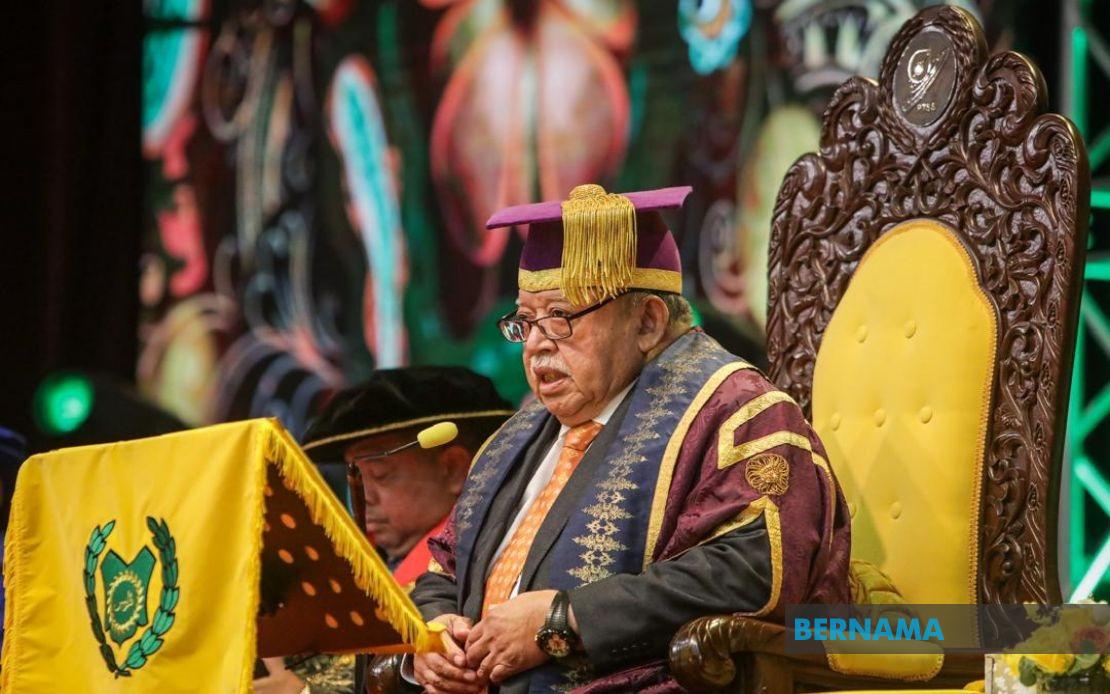
Technical and vocational education has emerged as a cornerstone in Malaysia's strategy to cultivate a workforce capable of meeting the demands of an increasingly complex and technology-driven global economy. Speaking at a convocation ceremony in Arau, Tuanku Syed Sirajuddin Jamalullail, the Raja of Perlis, stressed that polytechnic and community college education transcends traditional skill development, serving instead as a catalyst for producing creative thinkers and problem-solvers equipped to navigate transformative industrial shifts.
The monarch's intervention comes at a pivotal moment when Southeast Asian nations are reassessing their human capital strategies amid accelerating technological disruption. Artificial intelligence, automation, robotics, and digital transformation have fundamentally reshaped labour markets across the region, rendering conventional qualifications increasingly inadequate. In Malaysia's context, where manufacturing and service sectors compete for talent against higher-wage economies, TVET institutions occupy an essential position in bridging the skills gap that threatens to widen without deliberate intervention.
Tuanku Syed Sirajuddin articulated a vision of TVET that extends well beyond technical competency, positioning innovation as a non-negotiable expectation rather than an aspirational add-on. This framing reflects an understanding that survival in the modern economy demands not merely trained hands but inventive minds capable of translating theoretical knowledge into practical applications that solve real-world challenges. The emphasis on innovation culture within polytechnic ecosystems signals recognition that Malaysia cannot compete solely on cost or basic production capacity, but must instead foster environments where continuous improvement and creative problem-solving become ingrained institutional values.
The integration of moral principles and ethical conduct into the development of technically skilled graduates represents a deliberate counterbalance to purely utilitarian approaches to vocational training. The Raja's insistence that excellence encompasses honesty, trustworthiness, and patriotism alongside professional capability acknowledges a growing concern among Malaysian policymakers about the quality of character in emerging professionals. This holistic framework for graduate development recognizes that technical prowess divorced from integrity and social responsibility can undermine institutional credibility and national cohesion.
The 2026 Northern Zone Polytechnic and Community College Convocation Ceremony, held at Politeknik Tuanku Syed Sirajuddin in Perlis, gathered approximately 6,104 graduates from three states—Perlis, Kedah, and Penang—constituting a substantial portion of the nation's annual TVET output. This geographic concentration reflects the increasing centralization of polytechnic infrastructure in northern Malaysia, a development with implications for educational equity and regional economic development. The participation of community college graduates alongside polytechnic graduates underscores the government's commitment to expanding vocational pathways beyond traditional four-year diploma programmes, addressing demand for shorter, more specialized training routes.
The recognition of Teerti Ganapathi Rao, a 22-year-old Diploma in Digital Technology graduate, as recipient of the Director-General of Polytechnic and Community College Education Award exemplifies the priority placed on information and communication technology competencies. The award's attribution to a digital technology specialist reflects strategic alignment with global trends toward digitalization and the emerging dominance of tech-adjacent skills across virtually all sectors. This recognition also demonstrates commitment to identifying and celebrating exemplary graduates who embody the innovation and excellence principles articulated by the Raja.
From a Malaysian policy perspective, the royal endorsement of TVET's strategic importance carries significant weight in shaping public perception and government prioritization. In a society where traditional academic pathways have historically enjoyed greater prestige, such high-level advocacy helps legitimize vocational training as a equally respectable and economically vital educational option. This symbolic elevation becomes particularly crucial when competing with neighbourhood countries like Singapore and Thailand, which have aggressively marketed their vocational systems as pathways to middle-class stability and entrepreneurial opportunity.
The emphasis on preparing graduates for future challenges rather than immediate job placement suggests a philosophical shift in how Malaysia conceptualizes TVET's purpose. Rather than viewing vocational education primarily as unemployment mitigation or factory-floor preparation, this approach positions polytechnics as incubators for adaptability and lifelong learning capacity. For Malaysian students entering rapidly evolving sectors, the ability to continuously acquire new skills matters as much as any single credential, particularly given technological disruption timelines that compress career relevancies into five-to-ten-year windows.
Regional competitiveness considerations loom large behind these initiatives. Vietnam, Indonesia, and the Philippines have invested substantially in vocational infrastructure, competing for the same multinational manufacturing investments and service sector contracts that Malaysia has historically attracted. By elevating TVET's status and explicitly linking it to innovation and economic advancement, Malaysian leadership signals commitment to maintaining competitive advantage through human capital quality rather than wage undercutting—a necessary repositioning given rising regional labour costs and demographic headwinds.
The geographical focus on the northern zone, encompassing three states with distinct economic profiles, reveals nuanced understanding of regional labour market variations. Penang's electronics and semiconductor concentration, Kedah's agricultural and light manufacturing base, and Perlis's emerging tourism and small-to-medium enterprise sectors each require tailored TVET responses. Convocation events that gather graduates destined for these varied sectors underscore institutional recognition that one-size-fits-all vocational curricula inadequately serve regionally differentiated economies.
Looking forward, the challenge for Malaysia's TVET sector extends beyond rhetorical elevation to institutional capacity and resource allocation. Building innovation culture within polytechnics demands investment in laboratory facilities, faculty professional development, and industry partnership infrastructure that frequently lags behind traditional universities. Moreover, sustaining emphasis on moral development and patriotic values while equipping graduates for globally mobile careers requires carefully calibrated curriculum design that avoids parochialism while maintaining cultural anchoring.
The convocation ceremony ultimately reflects broader Malaysian recognition that TVET deserves parity with academic education in national strategic planning and investment. As technological disruption accelerates and demographic shifts constrain labour force growth, the nation's ability to deploy its vocational graduates effectively will substantially influence whether Malaysia successfully transitions from middle-income to high-income status. The Raja's articulation of TVET's role in this transformation provides both moral legitimacy and policy direction for institutions tasked with developing the skilled, innovative, and ethically grounded professionals that sustained national competitiveness demands.

