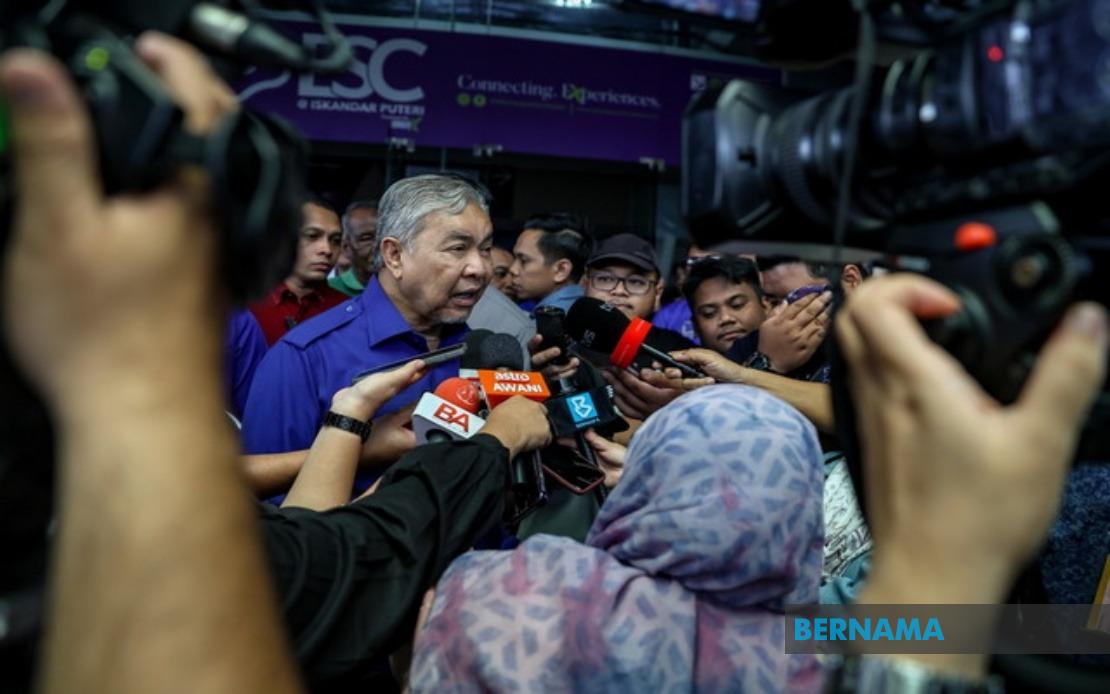
The Malaysian government is moving closer to establishing a dedicated Technical and Vocational Education and Training (TVET) Commission, with Deputy Prime Minister Datuk Seri Dr Ahmad Zahid Hamidi confirming that the institutional overhaul will be completed before the year runs out. The new body will supersede the existing National TVET Council, marking a significant structural shift in how Malaysia manages its technical and vocational education framework. Speaking at the Johor Darul Ta'zim TVET MARA Roadshow in Iskandar Puteri, Ahmad Zahid outlined the timeline for establishing the commission alongside formal parliamentary procedures to pass the enabling legislation.
The creation of a standalone commission represents an institutional maturation of Malaysia's approach to skills development, reflecting a deliberate policy choice to grant greater operational autonomy and enforcement capacity to the sector's governing body. Ahmad Zahid, who chairs the existing National TVET Council, explained that the commission would inherit and expand upon the council's mandate but with substantially enhanced powers. Notably, the new institution will move beyond the traditional remit of policy development to assume direct responsibility for implementing and enforcing the frameworks it develops—a structural distinction that mirrors approaches adopted by economically advanced nations with robust technical education systems.
The establishment process has entered an advanced stage following extensive consultations with stakeholders across the TVET ecosystem. Ahmad Zahid disclosed that dialogue sessions with key participants are underway, with the expectation that their completion will trigger submission of a Cabinet memorandum for formal approval. While the government has already secured policy-level endorsement for the initiative, the procedural pathway to parliamentary tabling remains subject to completion of legal review procedures. This deliberate approach underscores the constitutional and legislative complexity involved in transitioning from a council-based to a commission-based governance model within Malaysia's federal framework.
The parliamentary process itself carries distinct significance within Malaysia's bicameral system, requiring coordination between the Dewan Rakyat and Dewan Negara. Ahmad Zahid indicated that securing clearance to present the legislation in both chambers involves intricate legal considerations that cannot be rushed. The delay in parliamentary tabling, despite earlier policy approval, reflects the government's commitment to ensuring the commission's constitutional grounding is unassailable and that procedural protocols are meticulously observed. This measured approach, while potentially frustrating for those eager for institutional reform, provides assurance that the commission will operate from a position of solid legislative legitimacy.
From a regional and developmental perspective, Malaysia's recalibration of its TVET governance structure carries significance beyond domestic policy circles. As Southeast Asian economies compete for technological advantage and skilled workforce advantage, the structural strengthening of vocational education systems becomes increasingly consequential. By granting the TVET Commission direct implementation and enforcement authority, Malaysia signals intent to elevate the profile and effectiveness of technical training pathways, potentially creating a competitive model that other regional economies might examine. The commission's enhanced capacity to monitor and enforce standards across TVET institutions could improve consistency and quality across the diverse landscape of public and private training providers.
The initiative also reflects broader efforts within government to modernize institutional frameworks in response to evolving educational and economic demands. Ahmad Zahid's emphasis on the comparative international experience with commission-based TVET governance suggests that officials have studied operational models from countries with mature technical education sectors. This benchmarking approach indicates that the institutional design will incorporate proven elements from successful international precedents, potentially accelerating Malaysia's progress toward developing a world-competitive vocational education system. The deliberate reference to established practice in developed economies frames this reform as part of Malaysia's trajectory toward higher economic sophistication.
The roadshow event in Iskandar Puteri itself underscores the government's simultaneous focus on building grassroots support and visibility for technical education pathways. Held at the Educity Sports Complex and attended by Deputy Rural and Regional Development Minister Datuk Rubiah Wang and MARA chairman Datuk Dr Asyraf Wajdi Dusuki, the occasion served multiple purposes: demonstrating government commitment to regional development in Johor while simultaneously communicating to stakeholders—educators, students, and families—that vocational training represents a valued career trajectory. The presence of senior officials and statutory body leadership conveyed institutional weight behind the TVET agenda.
Beyond the commission establishment, Ahmad Zahid addressed the demographic reshaping of Malaysia's electorate through constitutional amendments lowering voting age to eighteen. He observed that voters aged forty and below now constitute approximately fifty-two percent of Johor's registered electorate, a striking demographic reality with profound implications for electoral competition and policy priorities. This younger cohort's electoral prominence means that parties and state governments must increasingly articulate visions and policies addressing youth employment, skills development, and economic opportunity. The TVET Commission initiative can be understood partly as responsive to this demographic imperative—demonstrating tangible commitment to pathways through which young Malaysians can acquire market-valued skills.
The emphasis on Johor's youth electorate also intersects with internal Barisan Nasional positioning regarding state leadership. Ahmad Zahid framed Menteri Besar Datuk Onn Hafiz Ghazi as a young leader whose advancement aligns with generational continuity, seeking to mobilize youth support behind the incumbent leadership. This political dimension reveals how institutional developments like the TVET Commission launch become woven into broader electoral strategies and leadership succession narratives. The confidence expressed regarding youth affinity with the state leadership reflects calculated assessment that technical education initiatives and demonstrated commitment to youth opportunity create electoral advantage.
The timeline for completing the TVET Commission establishment by year-end represents an ambitious target that will require coordinated movement across multiple governmental processes. Cabinet paper preparation, legal review, parliamentary coordination, and drafting of subsidiary legislation must all advance in parallel or sequence during the remaining months. While Ahmad Zahid's public commitment to this deadline reflects confidence in the process trajectory, implementation challenges or unforeseen procedural complications could potentially compress timelines further. Nonetheless, the public articulation of a specific endpoint signals seriousness of intent and creates institutional accountability for delivery.
For Malaysian stakeholders in technical and vocational education—institutions, industry partners, educators, and prospective students—the commission's establishment promises enhanced governance clarity and potentially improved coordination between educational delivery and employer demand. The expanded implementation and enforcement mandate suggests future TVET regulation will operate with greater institutional capacity to ensure quality consistency across providers and to align training curricula more responsively with evolving sectoral skill requirements. This structural strengthening, when combined with demographic realities elevating youth electoral prominence, indicates that technical education will command increasing policy attention and resource allocation in Malaysia's developmental agenda over the coming years.

