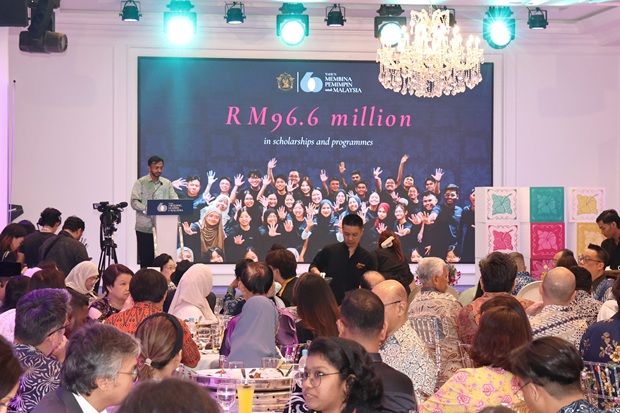
The Tunku Abdul Rahman Foundation marked a significant milestone by celebrating six decades of service to Malaysian youth on August 13 at Bangunan Sultan Abdul Samad. The commemoration recognises a remarkable institutional journey that began as a grassroots initiative honouring Malaysia's first Prime Minister and evolved into a cornerstone national body dedicated to expanding educational access across the country. The event underscored the foundation's enduring commitment to investing in the nation's human capital during a period when quality higher education remained beyond reach for many deserving students.
The foundation's origins reveal the democratic spirit of its establishment. What started as a proposal to create an education fund in the name of Tunku Abdul Rahman Putra al-Haj gained momentum through a nationwide fundraising campaign initiated by Utusan Melayu on the late premier's birthday. The initiative mobilised ordinary Malaysians to contribute to the cause, eventually accumulating more than M$60,170.20—a sum equivalent to approximately RM380,000 in contemporary currency. This bottom-up approach demonstrated how public support for educational access could drive institutional change even in Malaysia's early years as an independent nation.
Recognising the significance of this community-led effort, Education Minister Tan Sri Mohamed Khir Johari proposed formalising the initiative through government action. The Tunku Abdul Rahman Foundation Fund Act 1966, formally known as Act 43, transformed what began as individual contributions into a structured national institution. This legislative framework established YTAR as the custodian of a mission far larger than any single donor or government agency could accomplish alone. The foundation became emblematic of post-independence Malaysia's belief that education formed the foundation for national development and social mobility.
Six decades of operation have yielded substantial measurable impact. YTAR has extended support to more than 12,000 Malaysian youths irrespective of ethnicity, religion, or socioeconomic background. The foundation's disbursements have reached RM96.6 million cumulatively, a figure announced by National Unity Minister Datuk Aaron Ago Dagang during the anniversary ceremony. Beyond raw financial figures, this investment has translated into tangible careers and contributions spanning education, medicine, law, civil service, and public leadership. The foundation's alumni populate virtually every sector of Malaysian professional and civic life, each carrying forward an understanding that their advancement came through collective national investment.
The foundation's evolution reflects changing national needs and educational landscapes. What began primarily as a loan and scholarship provider has expanded into a comprehensive talent identification and development ecosystem. The organisation now offers not only financial assistance but also employability programmes, mentorship, and skills development initiatives. This expansion acknowledges that access to funds represents merely the first step; Malaysian youth require holistic support spanning academic preparation, professional training, and character formation. National Unity Minister Aaron Ago emphasised that private corporations should similarly prioritise education and talent development within their corporate social responsibility frameworks, partnering with institutions like YTAR to amplify reach and impact.
CEO Kularetnam Vijayakumar articulated a crucial institutional philosophy during the ceremony: the foundation's achievements belong not to individuals but to generations of Malaysians who have championed and supported its mission. This perspective reflects YTAR's positioning as a national trust rather than a personalised charity. The foundation's survival across six decades of political and economic change testifies to its grounding in principles that transcend individual leadership cycles. The belief that educational investment represents Malaysia's most prudent national expenditure has remained consistent even as the foundation's operational methods adapted to contemporary realities.
Tunku Abdul Rahman's own articulation of this philosophy, offered in 1964, remains remarkably prescient: both Malaysia's present and future depend substantially on the youth of a young nation. This statement captured the existential importance of educational access during nation-building. The late prime minister understood that formal independence meant little without creating structures enabling talented Malaysians from all backgrounds to acquire skills and knowledge necessary for contributing to development. His granddaughter, YTAR Chairperson Datin Sri Sharifah Menyalara Syed Hussein, emphasised that her grandfather conceived education not merely as academic credentials but as the foundation for character, purpose, and meaningful social contribution. This holistic vision continues guiding YTAR's programmes and selection processes.
The anniversary ceremony recognised two remarkable alumni whose trajectories exemplify YTAR's transformative potential. Dr Zakaria Ali, among the foundation's earliest recipients, evolved into a pioneering figure in Malaysian fine arts, establishing himself as painter, writer, educator, and academic leader. His scholarship journey began unexpectedly when an American instructor from Texas, impressed by Zakaria's potential despite his junior role as a processing assistant, coordinated applications to Southwestern University in Austin. Facing financial insurmountable barriers, Zakaria's instructor wrote appeals to the King, education minister, and prime minister at the time—efforts culminating in his successful scholarship interview and subsequent academic success. Upon reflection, Zakaria expressed profound gratitude for circumstances that aligned to transform his trajectory.
Ch'ng Kim See's experience similarly illustrates the profound human impact of educational investment. Facing financial hardship during her first university year, she had exhausted conventional scholarship channels without success. When the YTAR scholarship arrived unexpectedly in 1967, it provided not merely financial relief but psychological affirmation during vulnerable circumstances. Ch'ng subsequently became one of Malaysia's most distinguished librarians, establishing regional leadership in Southeast Asian history alongside contributions to library and information science. Her response to this transformative support exemplified a commitment to pay forward assistance: whatever capacity she could offer to help deserving students, she deployed willingly. Her journey demonstrates how educational access at critical moments can unlock potential benefiting individuals, families, institutions, and ultimately the nation.
These individual narratives, multiplied across 12,000 beneficiaries, accumulate into profound national impact. Tunku Scholars populate positions as educators, civil servants, medical professionals, lawyers, and frontline leaders across Malaysia's diverse sectors. Their shared experience of receiving educational opportunity through collective national investment instilled understanding of interdependence and mutual obligation. Many have directed their professional success toward ensuring other talented Malaysians similarly access opportunity. This ripple effect—where educational investment in one generation of leaders subsequently enables investment in subsequent generations—constitutes perhaps the foundation's most significant legacy beyond scholarships awarded or financial disbursements recorded.
Looking forward, YTAR announced the opening of nominations for the 2026 Pingat Tunku Award beginning August 31 through September 30. Significantly, the foundation introduced self-nomination eligibility for the first time, welcoming applications from public and private higher education institution graduates throughout Malaysia. This expansion acknowledges that identifying and recognising excellence need not depend solely on institutional recommendations. By enabling direct applicant participation, YTAR democratises recognition processes and potentially identifies outstanding contributors who might otherwise escape formal notice. This policy adjustment reflects evolution in how modern institutions identify and celebrate merit while remaining faithful to foundational principles emphasising broad access and inclusive identification of Malaysian talent.
As Malaysia navigates complex development challenges spanning digital transformation, economic restructuring, and regional competition, the foundation's commitment to systematic talent identification and development grows increasingly strategically vital. The 60-year commemoration occasion does not simply celebrate historical achievement but renews institutional commitment to the principle that Malaysia's most precious resource remains its people and their potential. In an era when educational access gaps persist and talent remains unevenly distributed across socioeconomic strata, YTAR's expansion of programmes and broadened nomination processes signal determination to ensure that Malaysian potential—wherever located—receives opportunity for development and national contribution.

