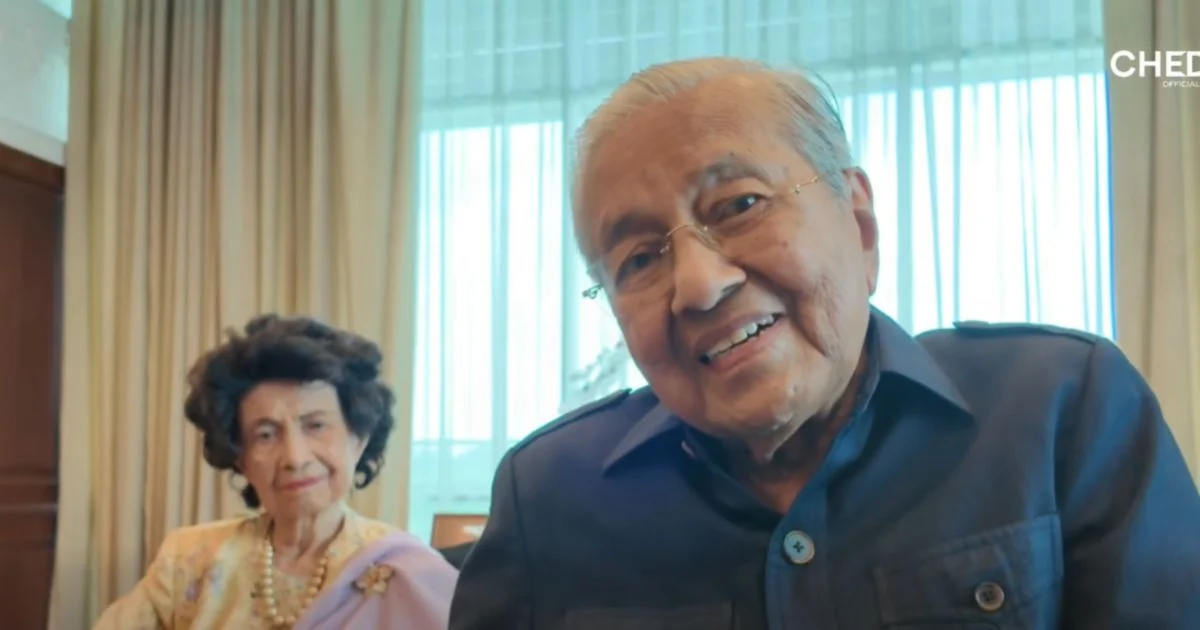
Former Prime Minister Tun Dr Mahathir Mohamad has publicly expressed his appreciation for the numerous birthday wishes and greeting cards that arrived following his milestone 101st birthday celebration. The veteran statesman, speaking from Kuala Lumpur, conveyed his gratitude to the Malaysian public for the outpouring of warmth and recognition of the occasion.
The avalanche of birthday messages reflects the enduring affection many Malaysians hold for the figure who shaped the nation's political and economic trajectory across multiple decades. At 101 years of age, Tun Mahathir remains a towering presence in the country's public consciousness, commanding respect even among those who may have disagreed with aspects of his leadership during his time in office.
Birthday celebrations for elder statesmen in Malaysia often serve as informal referendums on their legacies and contemporary standing. The volume and tone of messages received typically indicate the level of reverence or at minimum the recognition accorded to such figures by the broader population. In Tun Mahathir's case, the reception underscores the complexity of Malaysian political memory, where even controversial figures are often remembered with a degree of national pride for their contributions to the country's development.
The former prime minister's longevity itself has become remarkable in Malaysian public life. Having served as the nation's fourth and longest-serving prime minister from 1981 to 2003, then returning to office from 2018 to 2020, Tun Mahathir has witnessed and guided Malaysia through transformative periods including industrialization, the Asian financial crisis, and the country's emergence as a middle-income nation. His passage into his second century of life carries symbolic weight beyond the individual.
For many Malaysians, particularly those who came of age during the 1980s and 1990s, Tun Mahathir represents an era when the nation pursued ambitious infrastructure projects and assertive foreign policies. The Petronas Twin Towers, the Multimedia Super Corridor, and Malaysia's Look East Policy became hallmarks of an assertive national vision. This generational connection continues to resonate, explaining why birthday acknowledgments for the octogenarian statesman often acquire the character of national sentiment rather than mere personal courtesy.
The practice of publicly noting and responding to birthday wishes has become an important element of political communication and public relations in Malaysia. Such gestures, when executed gracefully, allow public figures to maintain visibility and demonstrate their continued engagement with the nation, even as they age. Tun Mahathir's acknowledgment of the messages serves multiple purposes: it demonstrates gratitude, confirms his continued vitality and mental sharpness, and reinforces his position as a respected elder in Malaysian society.
The greeting cards and messages that reached the former premier likely came from diverse quarters of Malaysian society. Government officials, fellow politicians from various parties, business leaders, and ordinary citizens typically contribute to such occasions. This cross-spectrum engagement suggests a level of national consensus around recognizing the milestone, transcending partisan political divisions that might otherwise dominate public discourse.
Tun Mahathir's advanced age has made his continued presence and public commentary something of an institution in Malaysian political discourse. Whether commenting on current events, offering historical perspective, or receiving recognition on personal occasions, he remains a figure whose words carry weight. His 101st birthday thus assumes significance beyond a mere personal celebration, becoming an occasion for the nation to reflect on its history and political continuity.
The significance of reaching 101 years also invites reflection on longevity and legacy. For a figure who spent more than two decades directly governing Malaysia and subsequently remained influential in public debates, the extended lifespan has allowed for a longer arc of historical perspective. Those who opposed his policies during the 1990s and early 2000s now frequently reference his commentary on contemporary challenges, suggesting a mellowing of historical assessments and a recognition of his prescient observations on various matters.
From a regional perspective, Malaysia's recognition of Tun Mahathir as a significant elder statesman reflects broader Southeast Asian patterns of respect for founding generation leaders. Across the region, similar celebrations for former leaders who presided during critical formative periods often draw comparable recognition. This places Malaysia's engagement with its political history within a recognizable regional context.
The public expression of gratitude for birthday wishes also provides a window into contemporary Malaysian national sentiment. The apparent breadth of messages suggests a nation that, despite deep political divisions on many contemporary issues, maintains respect for historical figures who are credited with contributing to national development and stability. This capacity to separate personal respect from policy disagreement indicates a mature approach to national memory and historical judgment.
As Tun Mahathir continues into his second century, such occasions provide opportunities for younger Malaysians to connect with the nation's recent history through a living link. The former prime minister has effectively become a repository of institutional memory and continuity, embodying Malaysia's transformation from a newly independent nation to a regionally significant middle-income economy. His expressed appreciation for birthday wishes thus carries layers of meaning beyond simple courtesy, representing a nation's acknowledgment of historical transition and continuity.

