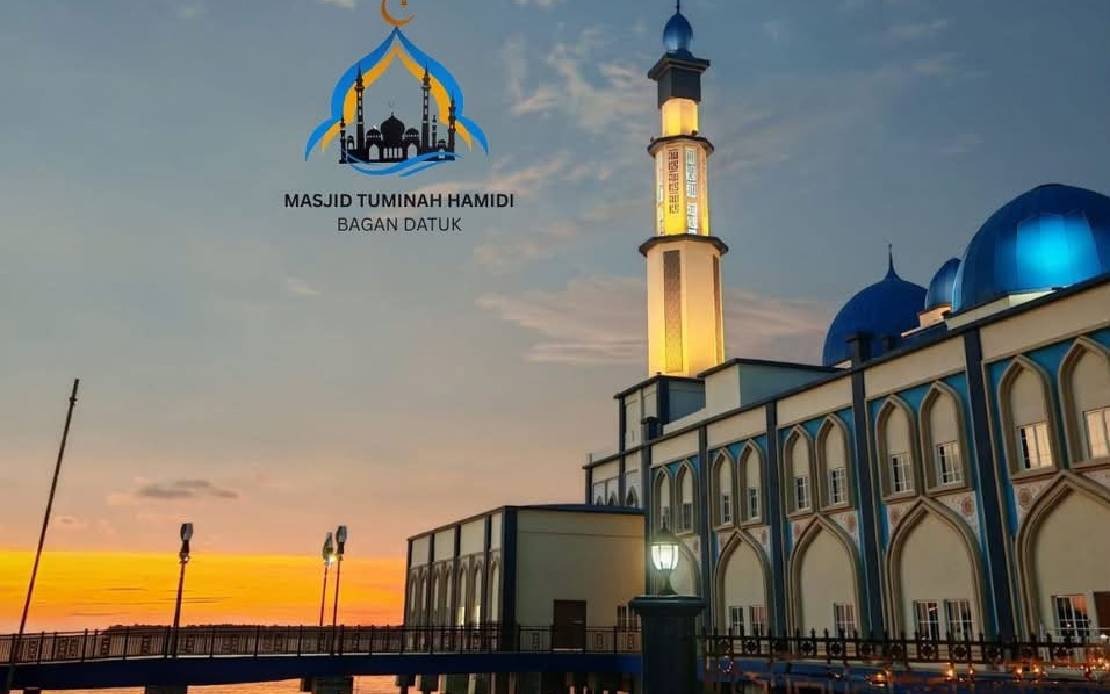
Malaysia will host its inaugural National Mosque Open Day at Tuminah Hamidi Mosque in Bagan Datuk, marking a significant shift in how religious institutions engage with the broader community. The three-day event, running from August 13 to 15, represents an ambitious effort by the Islamic Tourism Centre (ITC) under the Ministry of Tourism, Arts and Culture to reposition mosques not merely as spiritual sanctuaries but as dynamic hubs where people across all demographics can gather, learn and connect.
The initiative underscores a deliberate strategy to strengthen Malaysia's reputation as a Muslim-friendly tourism destination while simultaneously fostering interfaith understanding and cultural appreciation domestically. By opening the Bagan Datuk mosque to visitors regardless of religious affiliation, the programme challenges conventional perceptions of religious spaces as exclusively reserved for the faithful. This approach aligns with global trends where cultural institutions increasingly serve as bridges between communities, creating opportunities for meaningful dialogue and mutual respect.
The opening day on August 13 will focus on spiritual and cultural enrichment through carefully curated performances and guidance. The Nur Ahli Badar group will present Qasidah, a traditional Islamic vocal art form that has deep roots in Malaysian Islamic heritage. This will be complemented by tausiyah (brief spiritual messages) from Ustaz Habib Ali Zaenal Abidin Alhamid and Ustaz Habib Najmuddin Othman Alkhered, whose contributions are intended to provide intellectual and spiritual substance to visitors seeking deeper understanding of Islamic values and teachings.
The centrepiece of the celebration will occur on August 15 at Dataran Bagan Datuk, where organisers plan a vibrant community festival designed to appeal to diverse interest groups and age categories. The morning will commence with a brisk walk featuring actor Bell Ngasri, setting an energetic and inclusive tone for the day's festivities. This opening activity symbolically invites all community members, regardless of physical ability or background, to participate in a shared experience.
The festival programme reflects sophisticated event design aimed at engaging multiple demographics simultaneously. Traditional games provide continuity with Malaysian cultural heritage, while the 3x3 street soccer tournament and e-sports competitions cater to younger audiences and those interested in contemporary leisure activities. Archery and khat demonstrations offer hands-on engagement with both recreational and cultural-artistic pursuits, ensuring that intellectual, physical and creative interests are all represented.
Children's participation remains central to the programme's philosophy of building long-term community engagement and appreciation. A colouring contest provides young visitors with creative expression opportunities while their families explore the mosque's architectural and spiritual dimensions. This multi-generational approach recognises that attitudes towards religious and cultural institutions often form during childhood, making youth participation strategically important for sustained community integration.
The event will feature performances and appearances from entertainment personalities including Aril Pilus and Elly Mazlein, alongside live demonstrations and exhibitor presentations. The inclusion of lucky draw elements and cultural showcases throughout the day maintains festive momentum while creating informal opportunities for visitors to engage with Islamic heritage in relaxed, accessible settings. An azan (call to prayer) competition represents a particularly thoughtful inclusion, inviting participation in one of Islam's most recognisable and spiritually significant traditions.
Deputy Prime Minister Datuk Seri Dr Ahmad Zahid Hamidi will formally launch the National Mosque Open Day 2026, signalling high-level governmental commitment to the initiative. This political endorsement carries considerable weight, legitimising the programme as a national priority rather than a marginal cultural exercise. The involvement of top-level leadership demonstrates that religious and cultural engagement now occupies strategic space within Malaysia's broader national narrative and tourism positioning.
The Mosque Open Day programme represents an expansion of ITC's existing monthly activities at various mosques across the country. This scaling up from routine monthly engagements to a nationally publicised inaugural celebration indicates growing institutional confidence in mosque-centred community programming. The monthly model has apparently demonstrated sufficient success to warrant elevation to flagship status, suggesting that previous iterations have successfully attracted diverse audiences and generated positive community feedback.
For Malaysian and Southeast Asian observers, this initiative carries significant implications. Malaysia's role as a predominantly Muslim nation navigating pluralistic democracy and multicultural society has frequently generated both internal and international scrutiny. Programmes like the National Mosque Open Day represent proactive efforts to demonstrate that Islamic institutions can simultaneously serve spiritual purposes while embracing inclusive, welcoming engagement with broader society. This contrasts sharply with narratives, sometimes prevalent in international discourse, that position religious institutions and modern pluralism as inherently antagonistic.
Admission is entirely free and explicitly welcomes visitors regardless of race, religion or nationality. This framing removes financial and cultural barriers to participation, recognising that accessibility determines whether inclusive intentions translate into genuinely diverse attendance. The multilingual and multi-platform promotion strategy, including mymuslimtrip.com and social media channels, ensures that information reaches audiences through contemporary communication channels preferred by younger and digitally-engaged demographics.
The Tuminah Hamidi Mosque's selection as the inaugural venue may reflect its location in Bagan Datuk, a district with particular historical and cultural significance. The venue choice itself carries messages about geographic inclusion, ensuring that this celebration does not concentrate solely in major urban centres but reaches communities beyond Kuala Lumpur and other metropolitan areas. This distribution approach acknowledges that Malaysia's Islamic heritage and contemporary Muslim communities extend throughout the peninsula and beyond.
As Malaysia continues positioning itself within competitive global tourism markets, programmes combining cultural authenticity with genuine inclusivity offer distinct advantages. The National Mosque Open Day demonstrates sophisticated understanding that contemporary tourism and cultural engagement demand more than superficial exoticism or performative multiculturalism. By inviting authentic participation and meaningful learning opportunities, Malaysia signals that it welcomes visitors interested in substantive engagement with Islamic heritage and contemporary Muslim Malaysian society. This approach potentially distinguishes Malaysian offerings from competitors while advancing the genuine interfaith understanding that sustainable community harmony requires.

