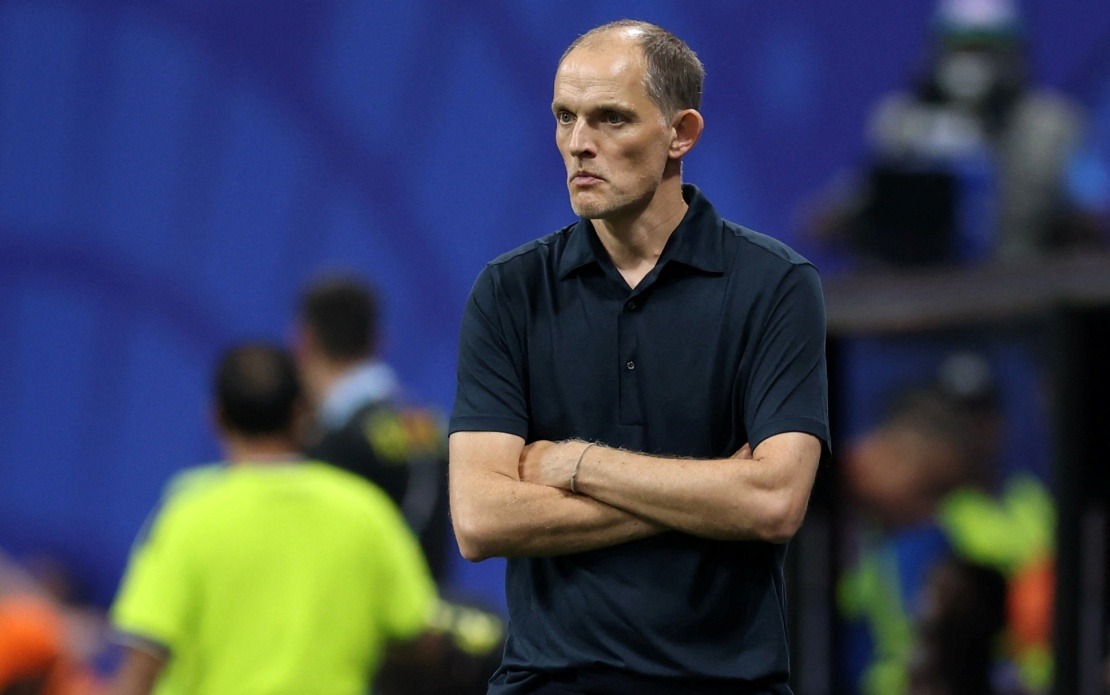
Thomas Tuchel has acknowledged that England surrendered their competitive edge after establishing an early advantage in their World Cup semi-final showdown against Argentina, ultimately finishing on the wrong side of a 2-1 result that ended their campaign in Atlanta on Wednesday. The German tactician was quick to identify the shift in his team's approach following Anthony Gordon's 55th-minute goal, which had briefly handed the Three Lions control of the match. However, Tuchel stopped short of expressing regret over the decisions he made on the sidelines, maintaining confidence that his strategic framework remained sound despite the eventual outcome.
The match unfolded as a tightly contested affair that saw England take the initiative through Gordon's well-taken strike. For a period thereafter, the hosts appeared positioned to build upon their advantage and secure passage to the final. Yet the narrative shifted dramatically in the closing stages, with Enzo Fernández drawing Argentina level with just five minutes of regular time remaining before Lautaro Martínez delivered a stoppage-time winner that proved decisive. The defending champions' ability to strike twice in quick succession exposed vulnerabilities in England's defensive setup during the critical final stretch.
Tuchel's post-match analysis pinpointed passivity as the primary culprit behind the collapse. In the immediate aftermath of going ahead, the England team appeared to lose their aggressive intent, retreating into a more conservative shape that allowed Argentina to dictate play. The South American side subsequently generated considerable attacking pressure, testing England's backline with frequency and precision. The manager emphasised that his charges had failed to maintain the intensity and proactivity that had characterised their earlier phases, particularly in ball retention and winning possession in key areas of the pitch.
The substitution decisions drew considerable scrutiny from observers and supporters alike, with many questioning whether Tuchel's personnel changes had inadvertently encouraged defensive inertia. The manager addressed these critiques directly, rejecting the notion that his structural adjustments had fundamentally altered the team's approach or created vulnerabilities. He clarified that England maintained their 4-4-2 formation throughout, suggesting that the tactical framework itself had not shifted. Rather, Tuchel attributed the deterioration to execution and mentality, emphasising that his squad had struggled to sustain their earlier performance level once ahead.
When pressed on whether offensive reinforcements might have provided a solution, Tuchel outlined his reasoning for the conservative approach. He acknowledged the natural desire to extend the lead through additional attacking impetus, yet maintained that introducing more attacking players would not have reversed the underlying issues manifesting on the pitch. The fundamental problem, in his assessment, stemmed from England's inability to control the game's tempo and rhythm rather than from any absence of attacking prowess. Without the capacity to win the ball consistently or maintain possession in dangerous areas, additional attacking options would merely have compounded the team's structural difficulties.
The performance created a paradox that Tuchel himself seemed to wrestle with in his reflections. By conventional assessment, England had produced one of their superior displays of the tournament, executing a well-organised approach that had justified their 1-0 advantage. The team had demonstrated tactical discipline and operational efficiency for substantial periods. Yet the inability to convert territorial and positional dominance into a second goal, coupled with the sudden capitulation when pressed, suggested fundamental shortcomings in either execution or composure under pressure.
Tuchel's defence of his decisions carried undertones of frustration with the broader discourse surrounding football tactics and decision-making. His wry observation that countless observers seemed to possess superior hindsight reflected the perpetual tension between managers' real-time decision-making and post-match analysis. The manager appeared to accept that such criticism was inevitable and perhaps even unavoidable in professional football, yet maintained conviction in the reasonableness of his choices given the information available during the match itself.
The narrow margin separating success from failure in World Cup football was evident in this semi-final encounter. England's inability to convert or control the match's final stages, rather than any obvious tactical miscalculation, appeared to have cost them a place in the final against France. This reality informed Tuchel's stance that regret was misplaced, as the team had performed creditably in most respects. The cruel nature of international tournament football meant that marginal moments and closing-stage composure often proved determinative, sometimes regardless of tactical sophistication or strategic preparation.
For Malaysian and Southeast Asian observers, the match illustrated broader patterns evident in contemporary football wherein defensive resilience and closing-stage intensity increasingly separate elite teams from their aspirations. England's tournament exit highlighted how maintaining concentration and aggression throughout ninety minutes remains essential, particularly against opponents of Argentina's technical quality and tournament experience. The semi-final defeat also underscored the unpredictability inherent in knockout football, where slight adjustments in momentum can dramatically alter trajectories within minutes.

