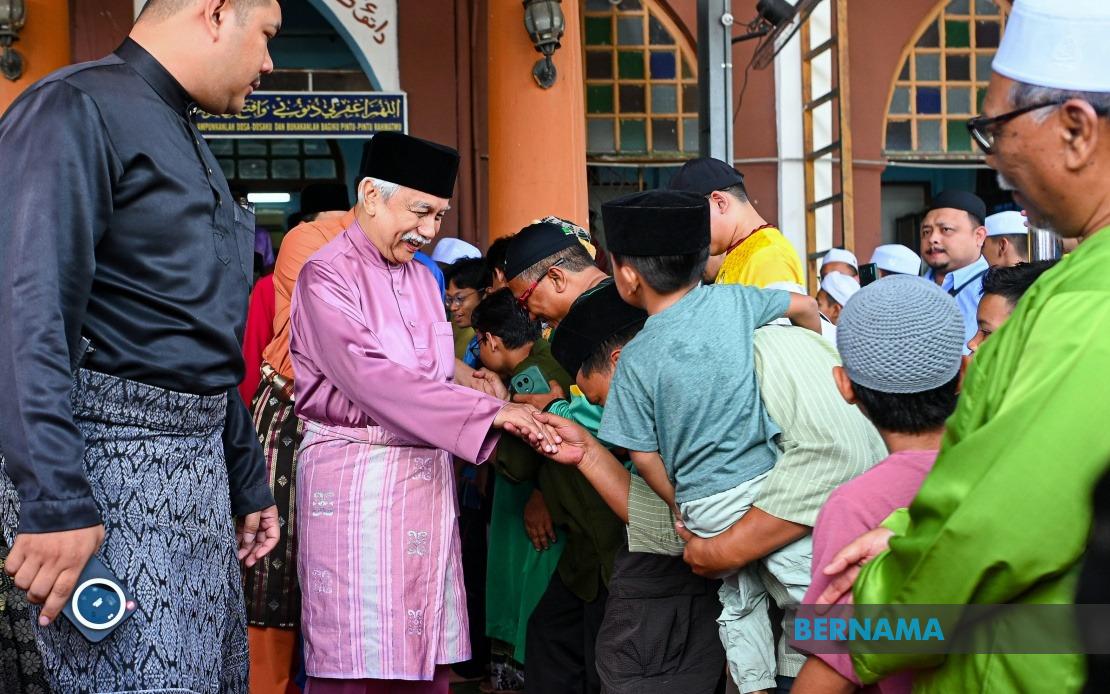
The Yang Dipertuan Besar of Negeri Sembilan, Tuanku Muhriz Tuanku Munawir, joined a congregation of more than 500 Muslims for Friday prayers at Masjid Kariah Pantai in Seremban on July 17, reaffirming the significant role that the state's traditional leadership plays in religious observances and community engagement. The presence of the royal household at public religious gatherings serves as a visible demonstration of the monarchy's commitment to Islamic values and its connection to the ordinary citizens of Negeri Sembilan.
Tuanku Muhriz attended the service accompanied by his two sons, Tunku Besar Seri Menanti Tunku Ali Redhauddin and Tunku Zain Al-'Abidin, underscoring the importance of intergenerational participation in religious activities within the royal family. This public appearance of multiple family members signals continuity in the state's religious leadership and represents a form of civic participation that resonates particularly within Malay-Muslim communities across the region.
The mosque gathering also drew attendance from prominent state officials, including the Undang of Luak Sungei Ujong Datuk Klana Petra Muhammad Faris Johari and Menteri Besar Datuk Seri Aminuddin Harun. The convergence of royal and administrative leadership at a single religious venue underscores the integrated nature of governance and spiritual life in Negeri Sembilan, where traditional institutions and modern state administration work in concert.
Prior to the communal prayer, Imam Amru Zubair Abu Hanifah delivered a sermon that addressed contemporary challenges facing Islamic faith. By framing the Friday message around current threats to religious practice and belief, the imam engaged the congregation with issues that resonate beyond the walls of the mosque, connecting spiritual guidance to the lived reality of Malaysian Muslims navigating an increasingly complex social landscape.
The sermon's focus on threats to faith reflects broader concerns within Malaysian Muslim communities regarding religious authenticity, cultural pressures, and the preservation of Islamic values in an increasingly secular and globalized world. For readers across Southeast Asia, such religious discourse illustrates how traditional Islamic institutions continue to address modern anxieties and maintain relevance in contemporary society.
Following the conclusion of formal prayers, Tuanku Muhriz and his sons engaged directly with worshippers, moving through the congregation to exchange greetings and build personal connections. This informal interaction between the ruler and ordinary citizens creates moments of accessibility that strengthen social bonds and reinforce the perception of the monarchy as genuinely invested in the welfare and spiritual life of the state's population.
The distribution of contributions to children who attended the Friday prayers demonstrates an intentional focus on the younger generation's participation in religious life. By providing tangible rewards and recognition, the royal household encourages youth engagement with Islamic practices and community worship, addressing concerns within Malaysian society about declining attendance among younger Muslims at religious gatherings.
The event reflects longstanding traditions in Negeri Sembilan where the Yang Dipertuan Besar assumes an active ceremonial and spiritual role that extends beyond purely constitutional functions. This approach to leadership—where the ruler embodies both administrative authority and religious significance—represents a distinctive feature of Malaysian governance that differs markedly from secular systems elsewhere.
For regional observers, such gatherings illustrate how Malaysia's constitutional monarchy maintains legitimacy and popular support through consistent engagement with religious and community institutions. The visibility of the ruler at religious events serves multiple purposes simultaneously: it affirms the state's Islamic character, demonstrates leadership accountability to citizens, and reinforces the hierarchical social structures that remain influential in Malaysian society.
The attendance of state officials alongside the royal family indicates how Negeri Sembilan's administration coordinates secular governance with religious authority. This integration reflects the reality that in Malaysian states, religious affairs remain deeply intertwined with state structures and leadership, making Friday prayers not merely personal devotion but also occasions for demonstrating political unity and shared values.
The mosque gathering on July 17 exemplifies how religious observance in Malaysia functions as both spiritual practice and social spectacle, where the presence of high-ranking figures transforms ordinary worship into an affirming demonstration of collective identity and shared purpose within Negeri Sembilan's Muslim-majority population.

