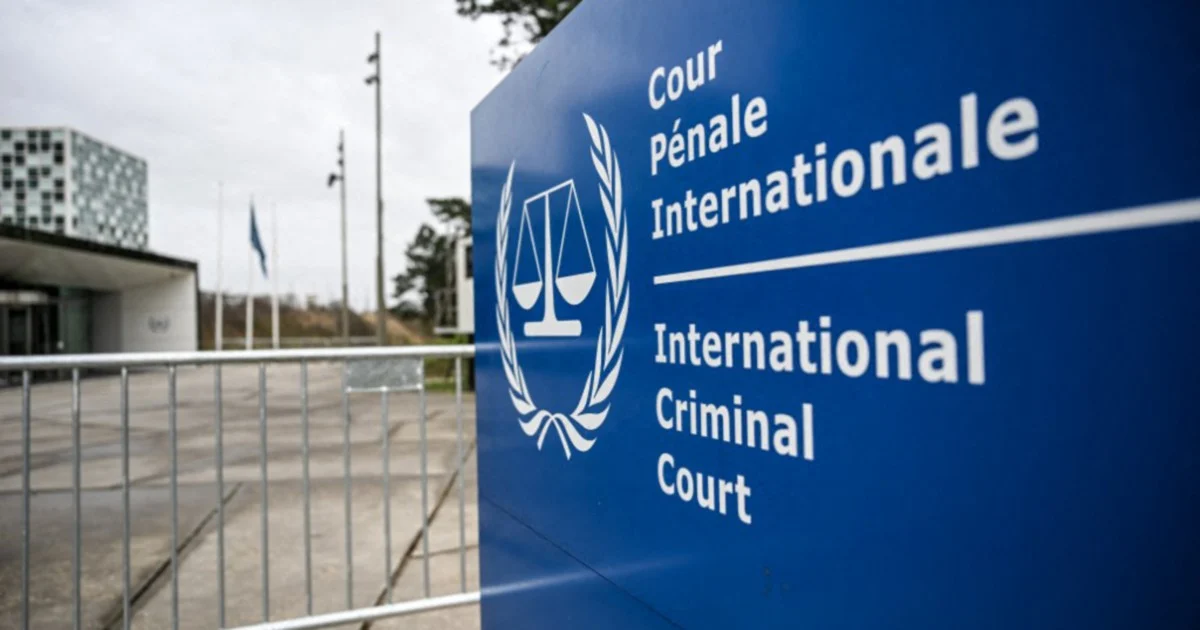
Two American advocacy groups have launched a legal challenge against the Trump administration's recent sanctions regime targeting the International Criminal Court, asserting that the measures fundamentally infringe upon constitutional protections for free speech and political expression. The lawsuit, filed on Wednesday, comes as US officials have intensified diplomatic efforts this week designed to undermine the court's functioning and authority—a campaign that the groups argue extends far beyond conventional foreign policy disagreement into territory that threatens fundamental rights protected by the American constitution.
The advocacy organisations contend that the sanctions imposed on the ICC represent an unprecedented overreach of executive authority, particularly given that they appear designed to punish the court for activities that remain strictly within its lawful mandate. The International Criminal Court, headquartered in The Hague, operates as an independent judicial institution established by international treaty and serves as a forum of last resort when national courts are unwilling or unable to prosecute serious crimes including genocide, crimes against humanity, and war crimes. The Trump administration's decision to target the institution through economic sanctions marks a significant departure from previous American diplomatic approaches.
Central to the advocacy groups' legal argument is the assertion that the sanctions effectively silence certain voices and restrict the ability of civil society organisations to engage in protected speech regarding international justice matters. The plaintiffs maintain that when the federal government deploys economic coercion against an institution, it sends a chilling message to citizens, journalists, researchers, and advocacy organisations who wish to support, study, or engage with the court's work. This mechanism of suppression, they argue, operates indirectly but powerfully to restrict First Amendment protections that would ordinarily shield such activities from government interference.
The diplomatic campaign referenced by the groups characterises a broader effort by the current administration to pressure other nations and institutions into abandoning support for the ICC. Officials have reportedly engaged in high-level conversations with allies and partners, offering incentives for cooperation with American positions whilst threatening consequences for those who maintain alignment with the court. Such coordinated pressure tactics, when combined with unilateral sanctions, create what the advocacy organisations describe as an coercive environment designed to reshape international institutional architecture according to American preferences rather than legal principles.
The timing of this lawsuit carries significance for Southeast Asian observers and institutions concerned with international law governance. Many nations in the region, including Cambodia and the Philippines, have complex relationships with international justice mechanisms. Some have embraced the ICC's jurisdiction whilst others have withdrawn or resisted its involvement. The Trump administration's aggressive posture toward the court potentially signals a broader willingness to abandon multilateral frameworks and international legal systems that have underpinned regional stability and dispute resolution mechanisms for decades.
Previous American administrations, while sometimes critical of the ICC, maintained formal participation in international legal structures and negotiated through established diplomatic channels. The current approach represents a more confrontational model that rejects institutional engagement in favour of economic coercion and pressure campaigns. This departure may have implications extending beyond US-ICC relations, potentially encouraging other powerful actors to similarly circumvent international institutions when their interests diverge from institutional outcomes.
The constitutional dimensions of this case warrant careful examination, particularly regarding what constitutes permissible government action when foreign policy intersects with domestic First Amendment protections. The advocacy groups appear positioned to argue that sanctions designed to punish or eliminate support for a foreign institution necessarily restrict domestic speech rights by making such support costly or legally perilous. Courts will need to weigh the government's undisputed authority to conduct foreign policy against established protections for citizens' rights to engage in speech and advocacy regarding international matters.
The lawsuit also raises broader questions about American credibility in international law matters, particularly at a moment when many nations are reassessing their commitments to rules-based international systems. The ICC was established partly through American diplomatic encouragement, yet the United States has never become a state party to the Rome Statute creating the court. This peculiar position—supporting the court's creation whilst refusing formal membership—has long created tensions. The current sanctions regime transforms those tensions into direct institutional conflict.
For Malaysia and other Southeast Asian nations observing these developments, the case presents an important moment for reflection about international institutional participation and resilience. If the United States successfully circumscribes the ICC's authority through economic pressure and diplomatic campaigns, other institutions addressing regional concerns—including mechanisms for maritime dispute resolution, environmental protection, and human rights protection—could face similar pressure from powerful states dissatisfied with particular outcomes. The precedent being established extends beyond the single case of the ICC to encompass broader questions about whether multilateral institutions can maintain independence and functionality when challenged by major powers.
The outcome of this litigation remains uncertain, as courts must balance genuine deference to executive foreign policy authority against constitutional commitments to free expression. However, the case itself signals that American civil society retains capacity to challenge executive actions on constitutional grounds. The lawsuit's success or failure will likely establish important precedent affecting how future administrations can deploy sanctions mechanisms whilst respecting domestic constitutional constraints, with implications reaching well beyond the specific question of American-ICC relations into fundamental questions about executive power and individual liberty.

