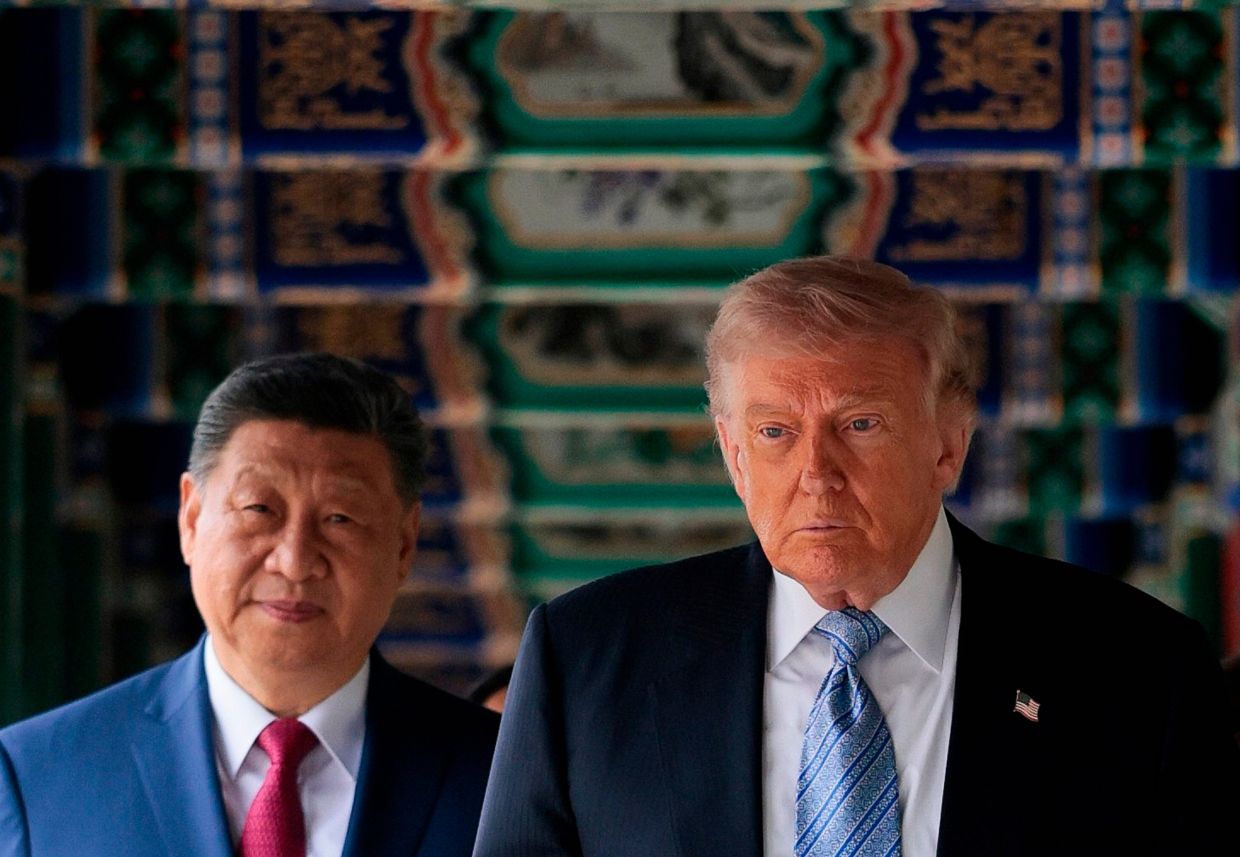
The Trump administration's approach to China continues to oscillate between confrontation and conciliation, with the latest tensions centring on allegations that Beijing is supplying weapons to Iran despite earlier assurances to the contrary. When confronted with reports detailing the transfer of military equipment from western China through Pakistan in a deal valued between US$60 million and US$70 million, Trump adopted a posture of measured disappointment rather than outright condemnation, revealing the delicate equilibrium he maintains between rhetorical pressure and diplomatic necessity.
Trump's response to the weapons allegations suggests he views Xi's verbal commitments as credible, at least for now. During their May meeting in Beijing, the Chinese leader apparently assured Trump that Beijing would not support Iran militarily under any circumstances. Trump indicated he was willing to accept this assurance at face value, noting that "considering our relationship, I take him at his word." Yet this apparent trust is heavily qualified—Trump simultaneously issued a veiled threat, warning that if China were indeed supplying weapons to Iran, it would prove disadvantageous to Chinese interests and damage their bilateral relationship. This simultaneous embrace and threat represents the core paradox of Trump's China engagement strategy.
China's foreign ministry swiftly rejected the weapons trafficking allegations as "untrue and not factual at all," reiterating Beijing's purported commitment to de-escalating regional tensions. This denial mirrors China's previous categorical rejection of similar accusations made before Trump's May visit to Beijing. The pattern suggests that both Washington and Beijing have developed a script for managing such controversies—official denial from Beijing, measured skepticism from Trump, and continued engagement regardless. For Malaysian policymakers and regional observers, this dynamic underscores how great power diplomacy operates in practice: public positions often mask more nuanced private understandings.
The timing of these allegations matters considerably, arriving just as preparations advance for Xi's scheduled visit to the United States on September 24. Rather than derailing the visit or triggering immediate sanctions, the Trump administration has permitted planning to continue uninterrupted. This choice reflects Trump's calculation that maintaining the diplomatic channel with Beijing serves American interests better than escalating over allegations that, while serious, remain contested and difficult to verify definitively. For regional countries concerned about great power stability, this restraint provides some reassurance that Washington and Beijing retain mechanisms for managing crises.
Parallel to the weapons controversy, Trump has renewed long-standing accusations against the coronavirus's origins, targeting prominent US health official Anthony Fauci with particular vehemence. Trump has repeatedly championed the theory that Covid-19 leaked from a laboratory in Wuhan, a claim that contradicts the broader scientific consensus pointing towards natural spillover from animals to humans. By asserting that Fauci has consistently sought to "protect China" through his resistance to the laboratory leak theory, Trump conflates epidemiological science with geopolitical loyalty, a rhetorical move that serves domestic political purposes whilst complicating bilateral scientific cooperation.
This weaponisation of the Covid-19 origin debate alongside diplomatic engagement with China exemplifies how Trump's approach fuses multiple, sometimes contradictory policy strands. In the same breath that he promises to take Xi "at his word" regarding Iran, Trump accuses the Chinese government of orchestrating events designed to undermine American interests. Last week, Trump simultaneously claimed that China and Russia were not participating in support for Iran whilst earlier having accused Beijing of committing "the largest compromise of election data in history." That speech included claims that China had obtained 220 million US voter files and was described as an "unprecedented election security nightmare."
Yet remarkably, this extraordinary allegation of election interference has produced no new sanctions, trade penalties, or formal diplomatic consequences. No additional measures targeting China have been announced since Trump's prime-time address twelve days prior. This absence of concrete follow-up suggests either that Trump was using rhetorical escalation for domestic political effect or that private diplomacy is addressing concerns through channels beyond public view. For Southeast Asian nations deeply invested in US-China stability, this gap between Trump's inflammatory rhetoric and his administrative actions offers limited clarity about American intentions.
The broader pattern reveals an administration willing to maintain productive dialogue even whilst making serious accusations and employing heated language. Trump's calculated ambivalence toward the weapons-to-Iran allegations—expressing disappointment while accepting Xi's assurances and continuing diplomatic preparations—reflects his conviction that the bilateral relationship with China serves multiple American objectives simultaneously. Economic relations, security concerns, technological competition, and great power status all feature in this complex calculus.
For Malaysia and other Southeast Asian states, Trump's approach toward China carries significant implications. The region's prosperity depends partly on stability between Washington and Beijing, yet Trump's unpredictability and simultaneous engagement and confrontation create uncertainty about American commitment to regional alliances and economic frameworks. Countries must navigate between American pressure to limit Chinese influence and the reality of China's deep integration into regional economies and security architectures. Trump's willingness to maintain diplomatic channels despite serious public accusations suggests that US policy toward China will remain transactional and fluid rather than ideologically consistent.
The September 24 visit by Xi will provide an opportunity to assess whether the private conversations between the two leaders can resolve or at least manage the underlying tensions evident in public exchanges. Trump's mixture of threat and conciliation—warning of consequences for weapons supplies whilst accepting Chinese denials—suggests that both sides recognise the costs of genuine confrontation. Yet the fundamental competition between Washington and Beijing over technological dominance, regional influence, and great power status ensures that future friction points will emerge, each threatening to disrupt the fragile diplomatic equilibrium that Trump and Xi have thus far maintained.

