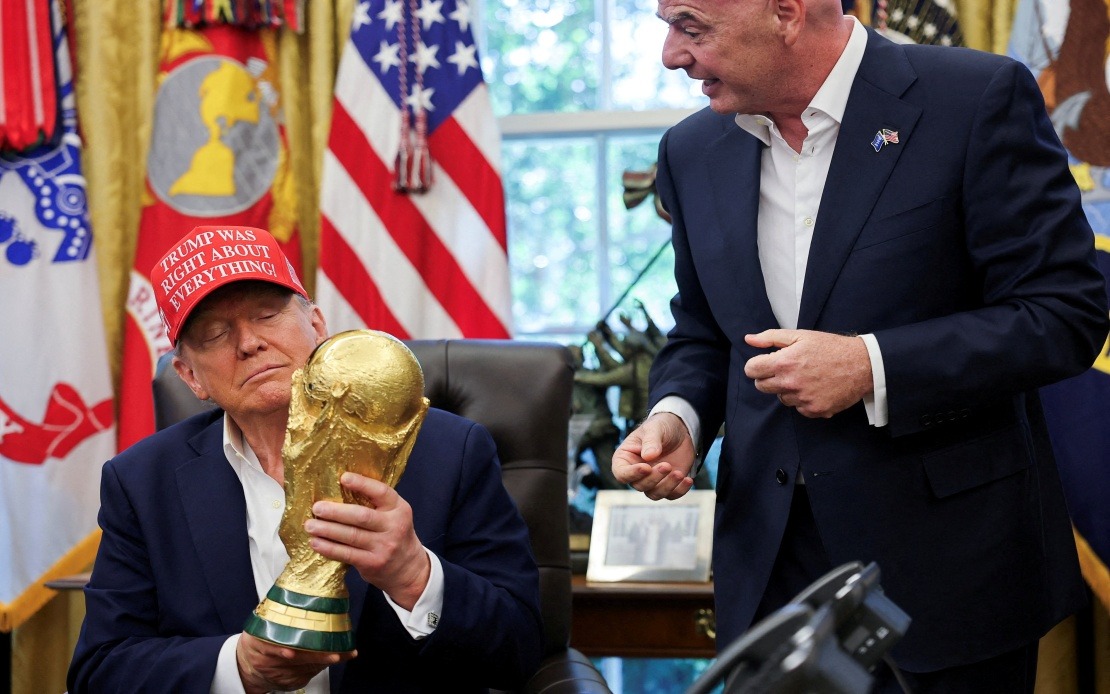
The sharp reversal in tone underscores the unpredictability that has come to characterise American foreign policy under Donald Trump's renewed presidency. Speaking to journalists in Istanbul on July 20 following Spain's 1-0 victory over Argentina in the FIFA World Cup final, Trump declared himself free of any animosity towards Spanish Prime Minister Pedro Sanchez, a statement that stands in stark contrast to his inflammatory comments delivered merely weeks earlier at a NATO summit in Ankara, Türkiye.
Trump's compliments for Spain's performance on football's grandest stage marked a dramatic departure from the scorching assessment he had delivered in early July. At that NATO gathering, the American president had denounced Spain as a "wasted cause" and labelled the nation a "terrible partner" within the alliance, citing Madrid's unwillingness to grant American military forces unrestricted access to Spanish bases during potential military operations against Iran. Beyond those specific grievances, Trump had expressed deep frustration over Spain's refusal to commit to spending five per cent of its gross domestic product on defence, a threshold he has repeatedly demanded from European allies.
The intensity of Trump's earlier condemnation had been startling even by contemporary standards. Speaking at the NATO summit press conference, he had announced sweeping economic measures, instructing aides to "cut off all trade with Spain, please, including visits." His language had grown increasingly derisive, dismissing Spanish officials as "hopeless, bad people" and instructing journalists not to engage with Spanish representatives. These pronouncements suggested a fundamental rupture in bilateral relations that many analysts believed would require months of diplomatic repair work.
Yet the World Cup triumph appeared to create an opening for reconciliation that Trump seized upon. When asked about Spain's victory over Argentina, Trump acknowledged that the Spanish squad had simply "played better," conceding that while the match itself remained competitive, the outcome reflected superior Spanish performance on the field. He extended official congratulations to Spanish officials, characterising both their team and the tournament itself as exemplifying sporting excellence. These remarks, though modest in scope, represented a significant psychological reset in the public presentation of US-Spain relations.
The episode illuminates a broader pattern in Trump's approach to international relations, wherein geopolitical disputes and economic leverage can be rapidly subordinated to other considerations, whether sporting celebration or the desire to project an image of cordiality. His assertion that he harboured "no tension with anybody" served to frame the earlier threats as tactical negotiating positions rather than expressions of genuine hostility, though it remained unclear whether substantive changes to American demands regarding NATO spending or military base access had actually occurred.
For Spain and other European nations attempting to navigate their relationships with Washington, the volatility presents significant challenges. Madrid must balance genuine concerns about its security interests and budgetary constraints against the unpredictable nature of American demands and the threat of economic sanctions imposed through presidential decree. The rapid oscillation between condemnation and cordiality offers little guidance for long-term strategic planning, forcing European capitals to remain perpetually prepared for sudden shifts in American policy.
The context extends beyond bilateral Spanish-American relations into the broader architecture of NATO and European security. Trump's criticism of defence spending commitments reflects genuine frustration among some American constituencies about the distribution of security burdens within the alliance, concerns that have historical roots extending back decades. However, his willingness to weaponise trade threats and employ inflammatory rhetoric suggests a negotiating style fundamentally at odds with the consensus-building and institutional respect that traditionally characterised American leadership within Western alliances.
Spain itself occupies a delicate position within this dynamic. As a NATO member with significant strategic value due to its geographic position and military infrastructure, Madrid carries importance beyond what its spending levels might suggest. Spanish bases and territorial waters remain crucial for American operations in both the Mediterranean and Atlantic, giving Trump leverage but also ensuring that complete severance of the relationship would exact costs on all sides. The nation's reluctance to increase defence spending to five per cent reflects not defiance but rather domestic political realities and economic priorities that Spanish governments must navigate.
For Malaysia and Southeast Asian observers, the incident offers instructive lessons about engagement with an American administration prone to dramatic rhetorical shifts. Nations in the region pursuing defence partnerships or trade relationships with Washington cannot necessarily rely on institutional continuity or predictable policy trajectories. The capacity to shift rapidly between hostility and friendliness, driven by factors ranging from sporting events to tactical considerations, suggests that Southeast Asian capitals must develop their own diversified diplomatic strategies rather than concentrating too heavily on any single relationship.

