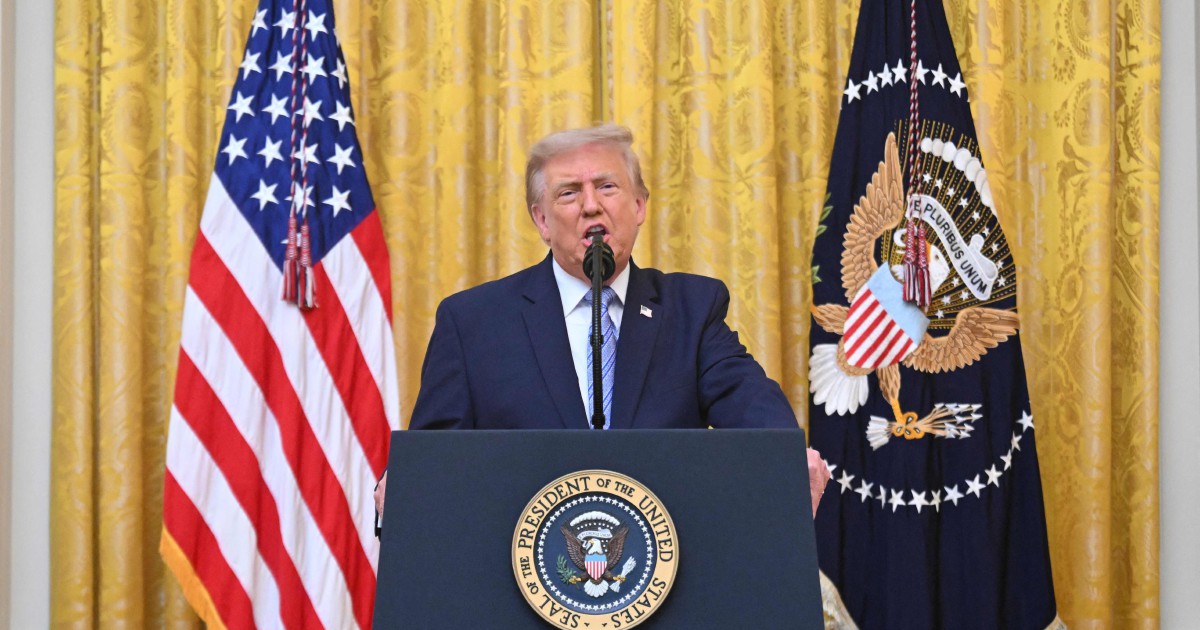
Donald Trump has reignited claims of widespread fraud and external interference in the 2020 American presidential election, assertions that have been thoroughly investigated and rejected by election officials, courts, and independent analysts. During a recent address, the former US President alleged that China orchestrated the theft of millions of American voter files whilst simultaneously suggesting that Venezuela possessed the technical capacity to compromise American voting infrastructure. These contentions resurrect narratives that have circulated since Trump's defeat nearly four years ago.
The allegations regarding Chinese cyber-theft of voter registration data conflate multiple technical concepts and misrepresent known security incidents. Whilst election security experts have documented various attempts by foreign actors to probe election-related systems, investigators found no evidence that China or any other nation successfully accessed and exfiltrated millions of voter records during 2020. The Department of Homeland Security's Cybersecurity and Infrastructure Security Agency conducted extensive reviews of election infrastructure and concluded that while foreign actors showed interest in American electoral systems, no successful compromise affected vote counting or election outcomes.
Trump's claims about Venezuelan capability to manipulate voting machines represent another longstanding mischaracterisation. Election security researchers have demonstrated that modern American voting infrastructure, particularly in jurisdictions using paper ballots, contains multiple redundancies and security layers that would be extraordinarily difficult for foreign actors to penetrate remotely. Venezuela's stated technical sophistication, meanwhile, remains substantially limited compared to the capabilities that would be necessary for such an undertaking. The assertion conflates capability with actual evidence of interference, a critical distinction that has been overlooked in repetition of these claims.
The persistence of these allegations in American political discourse reflects deeper concerns about election integrity and foreign interference that merit serious consideration. However, the distinction between documented vulnerabilities in election systems and unsubstantiated claims of successful fraud represents a crucial line that policymakers and the public must maintain. Security researchers have identified legitimate areas requiring improved safeguards, but these findings exist entirely separately from evidence supporting the specific allegations Trump has advanced.
Several official investigations have examined claims of 2020 election interference. The Election Assistance Commission, state election officials from both parties, the Department of Justice, the Department of Homeland Security, and Trump's own appointed Attorney General all concluded that the election was conducted securely and that fraud claims lacked factual foundation. Court cases challenging election results were dismissed across multiple jurisdictions, with judges noting insufficient evidence to support allegations. These institutional responses occurred across different government levels and included officials appointed by Trump himself, lending credibility to the conclusions.
For Malaysian audiences, Trump's resurrection of these claims carries relevance beyond American domestic politics. Election security and foreign interference represent transnational concerns that affect democracies globally, including in Southeast Asia. The manner in which misinformation about elections spreads and persists offers instructive lessons about information ecosystems. When political leaders amplify unsubstantiated claims despite contradictory evidence, it contributes to broader erosion of trust in institutional findings and undermines public confidence in democratic processes generally.
The strategic impact of repeatedly promoting discredited narratives extends to international relations. Allegations of Chinese involvement in American elections, when presented without evidentiary support, contribute to escalating tensions between major powers. Similarly, references to Venezuela function partly as geopolitical messaging in a region where American influence competition with other powers remains active. Southeast Asian nations navigating relationships with multiple global powers must assess how American internal political divisions manifest in international relations and rhetoric.
Election security remains a legitimate policy domain requiring ongoing attention and investment. Protecting voter data, securing voting infrastructure, and maintaining transparent election administration benefit from continuous improvement. The challenge lies in distinguishing between evidence-based security enhancements and politically motivated claims lacking factual grounding. Responsible governance requires engaging with genuine vulnerabilities whilst rejecting conspiracy theories, a balance that demands rigorous adherence to evidentiary standards.
The repeated assertion of claims contradicted by official investigations across party lines illustrates how political polarisation can override institutional findings. When leaders reject conclusions from institutions they previously led or appointed officials to, they accelerate broader institutional delegitimisation. For observers in stable democracies and emerging ones alike, the American experience demonstrates risks to democratic resilience when foundational consensus about election integrity dissolves.
Moving forward, the sustainability of democratic institutions depends partly on whether political actors accept unfavourable electoral outcomes and work within constitutional frameworks. Trump's continued promotion of 2020 fraud claims, nearly four years after the election and despite comprehensive investigations, suggests that this acceptance remains absent. This persistence will likely continue shaping American political dynamics and international perceptions of American institutional stability during a period when Southeast Asian nations observe American politics with considerable interest.

