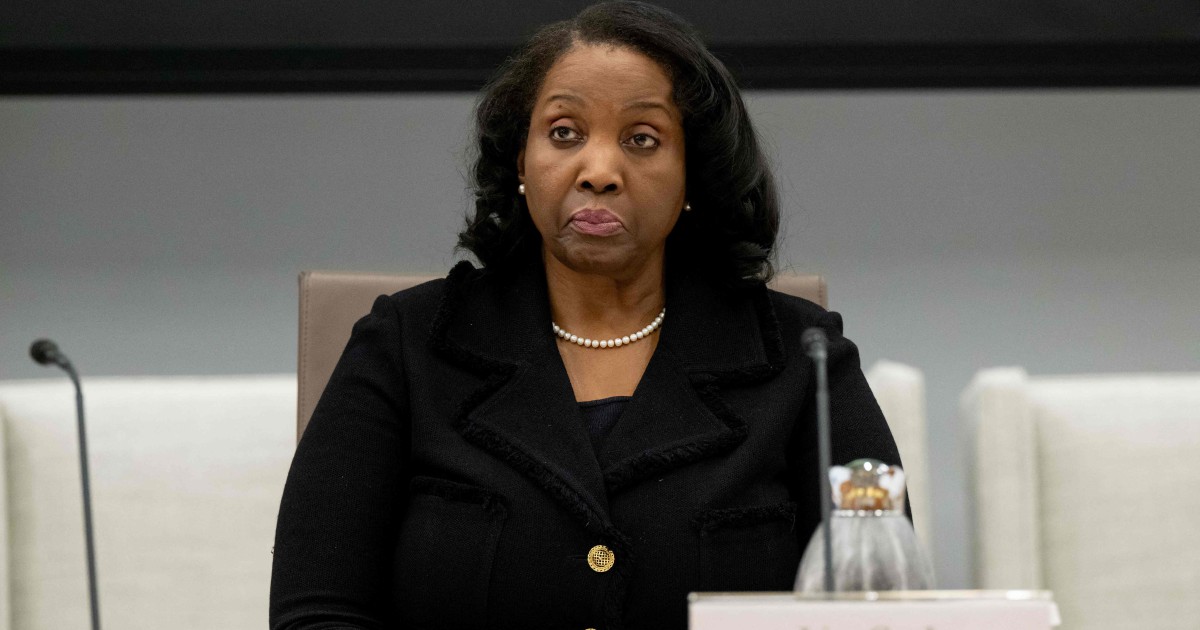
President Donald Trump is pressing ahead with efforts to remove Lisa Cook from her position as a Federal Reserve Governor, reigniting a dispute that the nation's highest court had previously curtailed. A White House communication reviewed by international news agencies on Friday confirms the administration's determination to pursue this course of action, representing the second major push after the Supreme Court declined to intervene in June.
The underlying basis for Trump's removal campaign centres on mortgage fraud allegations directed at Cook. These accusations form the substantive justification articulated by the White House for seeking her departure from the influential central banking institution. The precise nature of these allegations and their evidentiary foundation remain points of contention within policy and legal circles.
Cook's position as a Federal Reserve Governor places her among the leadership cadre of the world's most consequential monetary authority. The Federal Reserve's decisions on interest rates, money supply, and credit conditions reverberate through global financial markets, making the governance of the institution a matter of genuine consequence for emerging markets including Malaysia. Any instability or contested leadership within the Fed generates uncertainty that can ripple through currency markets and capital flows across Asia and beyond.
The previous Supreme Court ruling in June represented a significant legal setback for Trump's original removal attempt. The justices' decision to decline intervention suggested reluctance to entangle the judiciary in executive-legislative disputes over Fed appointments. This institutional deference reflects longstanding jurisprudence regarding the separation of powers and the independence of central banking institutions from partisan political pressure.
Trump's renewed offensive indicates his administration intends to navigate removal through alternative channels, potentially leveraging different legal theories or procedural mechanisms than those evaluated by the Supreme Court. The strategic recalibration suggests White House lawyers identified openings within regulatory or statutory frameworks that might prove more hospitable to the removal argument.
The Federal Reserve operates under a carefully balanced governance structure designed to insulate monetary policymaking from short-term political considerations. Governors serve fourteen-year terms, and removal authority is constitutionally circumscribed. The Fed's independence, whilst sometimes contested by elected officials, has historically been defended across both Democratic and Republican administrations as essential to credible inflation-fighting capability and long-term economic stability.
Cook's tenure has already been marked by considerable political controversy, extending beyond her economic philosophy to encompass her personal history and professional background. Her appointment by the Biden administration became a flashpoint in ideological conflicts over central bank leadership, with different political camps viewing her nomination through deeply partisan lenses.
For Malaysian policymakers and investors, the internal American political drama surrounding the Federal Reserve carries tangible implications. The stability and predictability of US monetary policy directly influences ringgit exchange rates, the dollar-denominated debt servicing costs for Malaysian corporations, and capital flows into regional markets. Sustained institutional discord at the Fed creates uncertainty that typically strengthens the dollar as investors seek the safest possible harbours during periods of governance ambiguity.
The broader pattern of executive action against Fed officials marks a notable departure from post-World War II norms in which presidents generally deferred to the institution's operational autonomy, even when disagreeing with specific policy decisions. Trump's willingness to challenge Fed governance directly reflects shifting American attitudes toward technocratic independence and the proper balance between democratic accountability and institutional expertise.
Legal scholars remain divided over whether substantive grounds exist for removing a sitting Fed Governor on the basis of mortgage fraud allegations without formal criminal conviction or congressional impeachment proceedings. The technical legal landscape governing Fed removal is notoriously murky, with constitutional provisions offering limited guidance and statutory law remaining underdeveloped.
The outcome of this renewed effort will likely establish precedent regarding executive authority over the Federal Reserve. Should Trump succeed, the implications would extend far beyond Cook's individual fate, potentially reshaping the institutional boundaries between the White House and central banking authorities. Conversely, if removal efforts fail again, the Fed would emerge with strengthened de facto protection against presidential removal threats.
Southeast Asian observers and financial professionals should monitor this dispute closely. The Federal Reserve's independence ultimately undergirds confidence in dollar-denominated assets and US financial stability, both matters of profound importance to regional economies deeply embedded within dollar-based trading and financing networks. Political pressure on the Fed's autonomy, whether successful or not, introduces an element of governance risk that affects broader Asia-Pacific financial stability.

