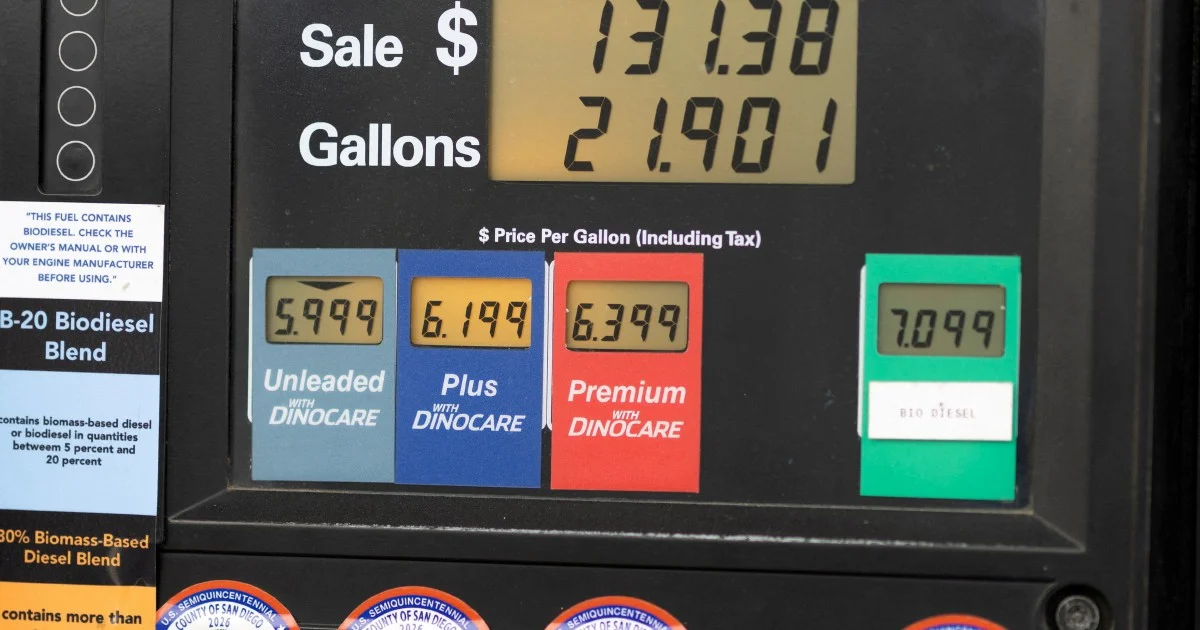
Donald Trump has moved to launch a formal investigation targeting major oil corporations over concerns that petrol prices have not declined at a pace he considers acceptable. The US President announced the directive on Wednesday, signalling heightened scrutiny of the nation's energy sector as political pressure mounts around fuel affordability and the economic consequences of regional instability. The investigation reflects broader frustration within the administration at what it perceives as insufficient price reductions despite global market conditions that might ordinarily support such movement.
The inquiry comes at a moment when tensions in the Middle East continue to shape global energy dynamics. The ongoing conflict in that region has kept markets on edge, supporting crude prices at levels that constrain retail petrol pump prices across America. Trump's focus on the oil industry suggests an attempt to redirect blame away from geopolitical factors and towards corporate conduct, positioning energy companies as responsible for maintaining high consumer costs even as the administration grapples with the knock-on effects of Mideast instability.
For Malaysian and regional readers, Trump's intervention in US energy markets carries significant implications. Malaysia's own economy remains sensitive to crude oil price fluctuations, particularly given the nation's status as an energy producer and refiner. The approaches the Trump administration takes toward oil companies can influence global crude valuations, which in turn affect domestic fuel pricing policies across Southeast Asia. An escalation in regulatory pressure on US oil majors could theoretically support higher crude prices globally, offsetting any benefits consumers might otherwise experience.
The investigation itself represents a blending of political messaging and genuine regulatory concern. By publicly announcing action against oil producers, Trump signals to voters that he is actively tackling the cost-of-living challenges they face at the pump. Yet the underlying complexity involves whether investigation alone can meaningfully affect pricing behavior or supply decisions made by private corporations responding to international market forces. The practical limitations of executive action against global energy companies operating across multiple jurisdictions remain a substantial question.
The relationship between geopolitical conflict and energy prices forms the critical backdrop to this inquiry. The Middle East war has introduced uncertainty into supply chains and investor sentiment around crude availability, creating upward pressure on global benchmarks. Petrol prices for American consumers reflect not only the crude cost but also refining capacity, distribution networks, and retail margins. Disentangling which factors genuinely result from corporate behavior versus those driven by external supply disruptions presents a considerable investigative challenge.
Oil companies themselves face pressure from multiple quarters. Beyond Trump's investigation, energy firms navigate investor expectations for returns, shareholder activism over climate concerns, and workforce demands. The investigation may constitute the latest in a series of political efforts to pin domestic fuel costs on industry actors rather than acknowledging the limited tools available to any single government in managing commodity markets ultimately determined by global supply and demand dynamics.
For Southeast Asian observers, including Malaysia, the precedent carries weight. Should Trump's administration successfully pressure US oil companies into specific behavioral changes, similar tactics might be replicated by governments elsewhere, potentially affecting how multinational energy corporations operate in the region. The investigation signals that energy pricing has become sufficiently politically sensitive in the US that sustained scrutiny of corporate conduct will continue regardless of the actual effectiveness of such measures.
The timing of the investigation also reflects domestic US political calculations. With criticism mounting over petrol prices and their contribution to consumer cost-of-living pressures, the administration has opted for a decisive gesture aimed at corporate targets. This approach allows the leadership to claim it is acting while deflecting responsibility for geopolitical realities largely beyond US control. The investigation may yield regulatory findings or recommendations, though translating these into actual price reductions remains an open question.
Globally, the investigation reinforces a pattern wherein governments increasingly scrutinize energy companies during periods of high prices. Whether such scrutiny produces meaningful results or primarily serves political purposes continues to divide energy economists and policy analysts. What remains clear is that oil markets operate according to forces that transcend any individual national regulator's authority, making purely domestic investigations a potentially limited tool for addressing consumer price concerns in an interconnected global economy. For Malaysia and the wider region, monitoring how this investigation unfolds will provide insights into how major global powers increasingly approach energy sector governance.