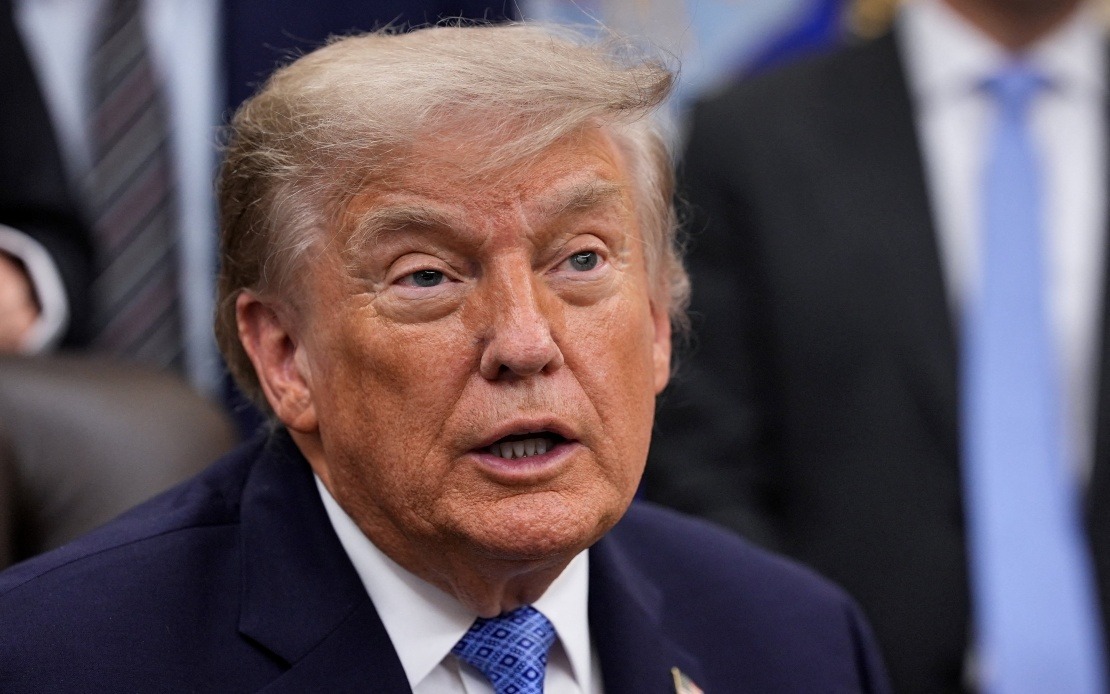
US President Donald Trump has escalated tensions with Canada over cross-border wildfire smoke, using the environmental crisis as grounds for potential economic penalties. In a Friday statement on his Truth Social platform, Trump indicated that the financial burden resulting from air pollution should be reflected through higher tariffs on Canadian goods already subject to import duties. His remarks signal a willingness to weaponise environmental disputes in pursuit of his protectionist trade agenda, a pattern that has characterised his approach to economic relations with Canada.
The air quality crisis stems from dozens of wildfires raging across Ontario and Minnesota, which have blanketed large swathes of North America's northeast in smoke. Major population centres including Toronto, Chicago, Detroit, and Washington have all experienced significant degradation of air quality. New York residents reported particularly hazardous conditions, with visual range severely compromised and the acrid smell of distant fires permeating the atmosphere. The smoke's reach underscores how environmental challenges transcend political boundaries and affect millions of people regardless of which side of the border they inhabit.
Trump attributed responsibility for the situation to Canadian forest management practices, asserting that inadequate maintenance of woodlands and failure to clear dead vegetation and debris had created conditions conducive to uncontrolled burning. His criticism centred on alleged negligence in land stewardship, framing the smoke as an unwanted incursion into American territory that the Canadian government could have prevented through proper forestry protocols. He described the incoming air as "filthy, polluted, and unhealthy," characterising it as an unacceptable invasion that warranted concrete retaliation through trade mechanisms.
Trump further indicated his intention to contact Prime Minister Mark Carney directly to demand explanation and action. This threatened bilateral discussion carries significant weight, as it sets the stage for potential negotiations where trade leverage could be exercised to compel Canadian cooperation on wildfire mitigation. The implicit suggestion that failure to resolve the smoke issue would result in tariff increases frames environmental compliance as a negotiable matter linked to commercial advantage, a approach that fundamentally treats transnational ecological problems through a trade-dispute lens.
However, the scientific consensus on North American wildfire causation presents a starkly different picture than Trump's assessment. Research consistently links the intensification and frequency of wildfires across the continent primarily to climate change rather than forest management failures alone. Rising temperatures, extended dry seasons, and shifting precipitation patterns create ideal conditions for fire initiation and rapid spread. While proper forest maintenance remains a component of wildfire mitigation strategy, attributing the current crisis predominantly to Canadian negligence oversimplifies the complex interplay of climatic, ecological, and management factors at work.
Ontario Premier Doug Ford responded to Trump's criticism with an emphasis on cross-border cooperation and reciprocal assistance. Ford highlighted that the United States and Canada have routinely supported each other during natural disasters and environmental crises, suggesting that complaints should yield to collaborative responses. His statement implicitly rejected the framing of wildfire management as a unilateral Canadian obligation and appealed instead to principles of mutual aid that have traditionally governed transnational emergencies. This counterposition emphasised partnership over blame as the appropriate framework for addressing shared environmental challenges.
The dispute carries implications for broader North American trade relations already strained by Trump's protectionist policies. Linking environmental crises to tariff threats establishes a precedent whereby ecological emergencies become fodder for economic coercion. For Malaysian observers, the exchange illustrates how developed nations approach trade disputes and climate-related issues, revealing a model where environmental concerns are subordinated to commercial interests rather than integrated into unified policy responses. It demonstrates how political relationships can weaponise natural disasters, transforming catastrophes into leverage points.
The practical impact on both Canadian and American citizens experiencing severe air quality degradation remains paramount. Smoke-related health effects, reduced visibility creating transportation hazards, and economic losses from disrupted outdoor activities affect millions regardless of the political rhetoric surrounding causation. Schools and businesses in affected regions have adjusted operations, outdoor events have been cancelled, and vulnerable populations including children and those with respiratory conditions face heightened health risks. The human cost of the smoke crisis transcends the political dimensions of responsibility and blame that dominate diplomatic discourse.
For Southeast Asian nations including Malaysia, this dispute illustrates how climate-driven environmental challenges increasingly intersect with trade relations and geopolitical tensions. As regional economies become more integrated with North American markets and as climate impacts grow more pronounced across Asia, the precedent of linking environmental issues to tariffs could influence how transnational ecological crises are negotiated in coming years. The willingness of major trading powers to use environmental disputes as bargaining leverage in commercial negotiations may reshape expectations around how shared environmental responsibilities are allocated and enforced in an era of intensifying climate change.
The resolution of this specific wildfire smoke crisis remains uncertain as diplomatic channels engage, but the underlying pattern appears set to continue. Trump's approach signals his administration's comfort in treating environmental emergencies as extensions of commercial policy rather than as imperatives demanding unified, science-based responses. Whether such tactics prove effective in producing substantive changes to Canadian forest management practices or instead merely deepen bilateral resentment awaits developments in forthcoming negotiations between Washington and Ottawa. The smoke itself will eventually disperse, but the precedent it sets for climate diplomacy may linger considerably longer.

