A lawsuit filed in Manhattan federal court this week directly challenges a new monetization strategy that grants wealthy subscribers early access to statements from the sitting U.S. president through his Truth Social platform. The Intercept and the Freedom of the Press Foundation initiated legal action against Truth API, a service operated by Trump Media & Technology Group that charges customers as much as $100,000 per month for expedited access to posts from ten prominent Truth Social accounts, including that of Donald Trump himself.
The timing of Truth API's August 1 launch proved particularly sensitive in Washington. Just four days earlier, Democratic Senators Elizabeth Warren of Massachusetts and Adam Schiff of California had formally requested an investigation by the U.S. Securities and Exchange Commission into whether the nascent service posed risks to financial market integrity. The senators specifically alleged that the fee-based early access scheme would benefit Wall Street professionals, wealthy insiders, and Trump himself by allowing subscribers to trade on market-moving announcements before the general public receives them.
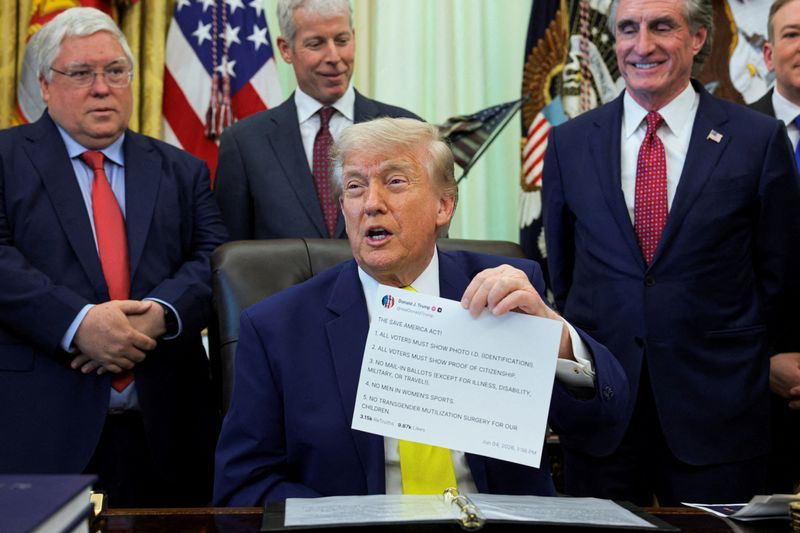
Trump has demonstrated throughout his political career a propensity to break news through informal social media channels rather than traditional executive communication mechanisms. His Truth Social posts have addressed consequential policy matters ranging from trade tariffs to Middle East conflicts—announcements that demonstrably influence asset prices across multiple markets. This pattern forms the factual foundation of the plaintiffs' constitutional argument: that restricting government announcements to a subscription-based platform fundamentally undermines principles of democratic transparency and equal access to official information.
The legal complaint articulates a two-pronged constitutional challenge. First, plaintiffs argue the Truth API arrangement violates the First Amendment's guarantee of equal access to government communications, contending that no legitimate state interest justifies selling presidential announcements to private subscribers. Second, they point to Trump's direct financial stake in Truth Media's success as evidence of personal enrichment through public office—a concern that resonates with longstanding ethics questions surrounding the intersection of presidential power and private business interests.
According to court filings, Trump issued between 9,000 and 11,000 posts and reposts during his second term in office, with many never receiving accompanying official White House statements distributed through conventional government channels. This pattern suggests Truth Social functions not merely as a personal communication platform but as a de facto presidential announcement medium, lending additional weight to arguments that monetizing access violates public information principles.
Financial disclosures reveal the magnitude of Trump's personal stake in this arrangement. Through his Donald J. Trump Revocable Trust, managed by his eldest son Donald Trump Jr., the president holds 41.3 percent of Trump Media, a position worth approximately $950 million according to market analysis. Every new Truth API subscription theoretically increases the company's valuation, thereby directly enriching the president's personal portfolio. This structural alignment between Trump's presidential authority to make market-moving announcements and his incentive to maximize subscriber revenue creates the appearance, if not the reality, of corruption.
Trump Media's public response dismissed the lawsuit as a partisan attack on its founder. A company spokesperson characterized the legal action as an attempt by "left-wing activists" to weaponize the courts against Trump while harming the company's shareholders. The company further argued that countless news platforms and subscription services already distribute Trump's content, positioning Truth API as merely one additional information distribution channel among many. This defense sidesteps the core constitutional concern: none of those competing platforms possess the publisher's simultaneous status as president with authority over market-moving announcements.
During a recent earnings call, Trump Media's interim Chief Executive Kevin McGurn defended Truth API by claiming the service delivered news only "fractionally faster" than other distribution methods, attempting to minimize the competitive advantage granted to paying subscribers. Yet this characterization seems at odds with the premium pricing structure, which presumably reflects the substantial value that subscribers assign to even marginal temporal advantages in accessing presidential announcements.
The accounts accessible through Truth API extend beyond Trump personally. Vice President JD Vance, Health and Human Services Secretary Robert F. Kennedy Jr., FBI Director Kash Patel, and the White House institutional account all participate in the scheme, amplifying concerns about government-wide use of a subscription platform for official communications. This breadth suggests a systemic problem rather than an isolated case involving the president's personal account.
The lawsuit arrives at a complex moment for financial market regulation. The SEC's three sitting commissioners are Republicans, meaning the regulatory agency unlikely to intervene aggressively against Trump or his business interests absent extraordinary circumstances. This political reality may explain why Democratic senators opted for public pressure and legal challenge rather than banking on executive branch action. For Malaysian and Southeast Asian observers, the case illustrates tensions within American governance between the imperatives of democratic transparency and the president's capacity to profit from his unique access to information markets.
The lawsuit's ultimate success remains uncertain, but its filing forces uncomfortable questions about whether sitting presidents and cabinet officials should operate subscription-based information services. Malaysian readers will recognize parallels in debates over government accountability and transparent communication of market-sensitive announcements—concerns relevant across any democratic system where official information flow intersects with commercial interests.

