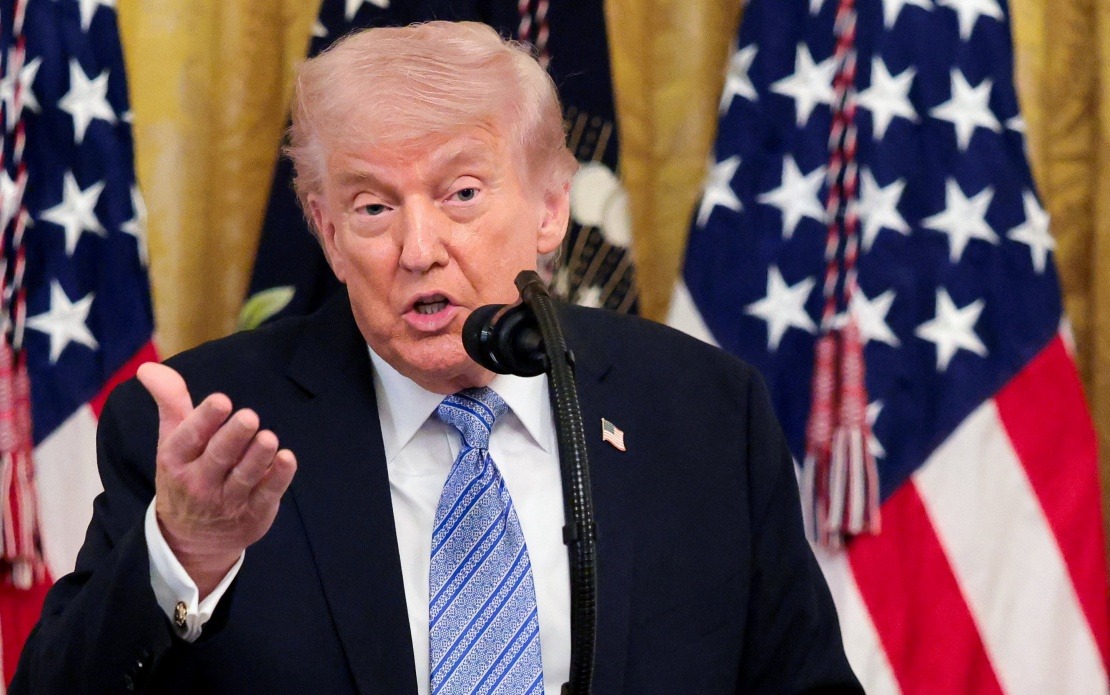
US President Donald Trump is pushing for an unconventional choice to lead the United Nations: FIFA President Gianni Infantino, according to reports citing sources close to the American leader. The move reflects Trump's broader dissatisfaction with the international organisation's effectiveness and his preference for figures he believes can transcend traditional diplomatic boundaries. Infantino, 56, has cultivated a notably strong relationship with Trump in recent years, particularly during the 2024 World Cup season when the football administrator made deliberate overtures toward strengthening ties with the US president.
Trump's rationale for the nomination centres on Infantino's perceived diplomatic qualities and international standing. According to Trump's associates, the FIFA president possesses what the administration views as an exceptional capacity to unite disparate nations and interests—a quality the US leader deems essential for revitalising the UN's role in global affairs. This characterisation stands in sharp contrast to Trump's persistent criticism of the organisation's handling of major international conflicts and its apparent inability to broker meaningful resolutions. By nominating someone from the sports world rather than traditional diplomatic circles, Trump may be signalling his desire for fresh thinking in international multilateral institutions.
The relationship between Trump and Infantino deepened significantly during this year's World Cup, with the FIFA chief making strategic moves to cultivate favour with the American president. Most notably, Infantino presented Trump with FIFA's inaugural Peace Prize in December, a gesture that underscores their growing rapport and Infantino's willingness to engage directly with influential political figures. Such positioning reflects Infantino's own understanding of the value of aligning with powerful world leaders and his capacity for political manoeuvre within international sporting governance.
The timeline for this potential appointment is notably distant. The current UN secretary-general, António Guterres, will complete his tenure at the end of 2026, with his successor taking office on January 1, 2027. This five-year succession window provides time for the nomination process to develop, though considerable obstacles remain. Under Article 97 of the UN Charter, the process requires recommendation from the 15-member Security Council, where each of the five permanent members—the United States, Russia, China, France, and the United Kingdom—holds veto power. Any single permanent member's opposition could derail Infantino's candidacy, making unanimous or near-unanimous support essential.
Beyond the Security Council hurdle, Infantino would require approval from the full UN General Assembly, adding another layer of political complexity. The General Assembly comprises 193 member states, each with their own interests and relationships with potential candidates. Infantino's outsider status could prove both advantageous and problematic; while some nations might welcome fresh perspectives, others could resist what they perceive as inappropriate American influence over UN leadership selection. The sporting world's complex geopolitical dimensions, including ongoing controversies over FIFA's governance and the 2022 Qatar World Cup, could provide ammunition for opponents of his candidacy.
Trump's documented frustration with the UN reflects a longstanding skepticism of multilateral institutions that he views as ineffectual or contrary to American interests. Since returning to the White House, his administration has substantially curtailed US financial contributions to UN operations and withdrawn American participation from multiple UN-affiliated agencies. Most significantly, Trump withdrew the United States from the World Health Organization (WHO), a move that reverberated through global health governance structures and signalled his willingness to act unilaterally when dissatisfied with international bodies.
Last year, Trump's administration established the US-led Board of Peace, a mechanism designed to facilitate international conflict resolution outside traditional UN frameworks. This initiative sparked widespread speculation that the Trump administration was essentially constructing an alternative to the UN rather than attempting to reform it from within. Trump subsequently denied these claims, insisting that the Board of Peace complemented rather than competed with UN efforts. Nevertheless, the board's existence reflects Trump's conviction that traditional UN mechanisms have failed to deliver meaningful results on critical global challenges.
For Southeast Asian nations and Malaysia specifically, Trump's proposed nomination of Infantino carries several implications. The region's countries depend on UN mechanisms for addressing transnational issues including maritime security, climate change, and human rights. An unconventional leader without diplomatic background might either revitalise UN effectiveness or further distance the organisation from its foundational purpose. Malaysia's position as a significant Asian economy and regional player means it would have a voice in UN General Assembly proceedings but limited direct influence over Security Council dynamics, where the permanent five members exercise dominant control.
The nomination also reflects broader trends in global governance where traditional boundaries between sectors blur. Infantino's ascendancy in international sports administration demonstrates that non-governmental figures can accumulate substantial geopolitical influence. His ability to navigate complex negotiations within FIFA, an organisation spanning nearly every nation on earth, provides relevant experience in managing diverse constituencies. However, sports administration differs fundamentally from diplomatic crisis management, and whether football governance skills translate to UN leadership remains an open question.

